Campus
M1.1 🌱 Foundations & Soil 📖 30 parties ☀️ Terroir tropical & sahélien 🌐 English

Fundamentals of Bio-intensive Market Gardening in Living Soil

Discover the pillars of bio-intensive market gardening in living soil: permanent beds, gentle global irrigation, autonomous composting, and ecological intensification.

📋 Sommaire des chapitres (30 parties) Afficher / Masquer
1
PARTIE 1 SUR 30 Here we present the foundations of the "bio-intensive market gardening on living soil" method: a method
Here we present the foundations of the "bio-intensive market gardening on living soil" method: a method

Here we present the foundations of the "bio-intensive market gardening on living soil" method: a method

simple, effective, and respectful of the soil, health, and the environment.

2
PARTIE 2 SUR 30 THE FUNDAMENTALS OF
THE FUNDAMENTALS OF

THE FUNDAMENTALS OF

BIO-INTENSIVE MARKET GARDENING IN LIVING SOIL DISCOVER AND UNDERSTAND THE CORE PRINCIPLES OF THE METHOD

3
PARTIE 3 SUR 30 What is this method?
What is this method?

What is this method?

What is this method?

4
PARTIE 4 SUR 30 Produce More
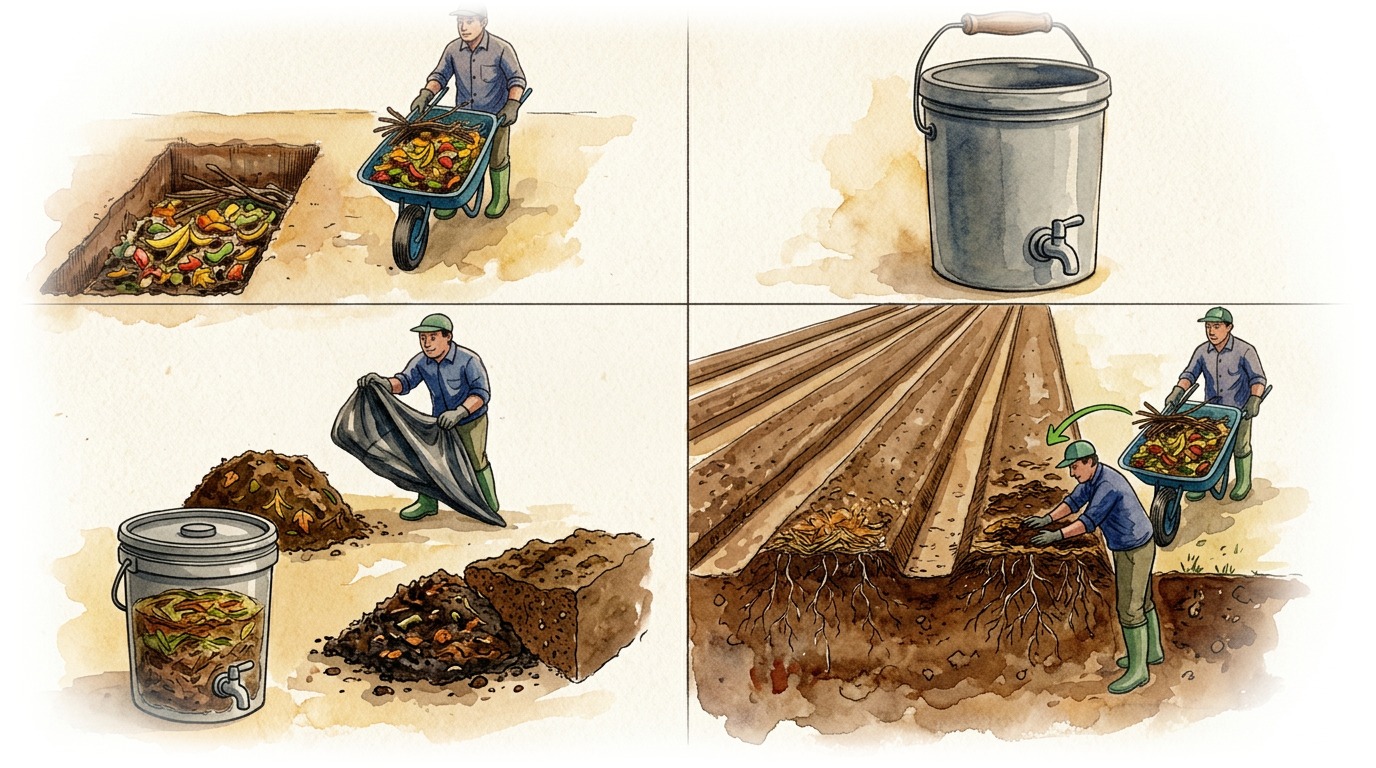
Produce More

Produce More

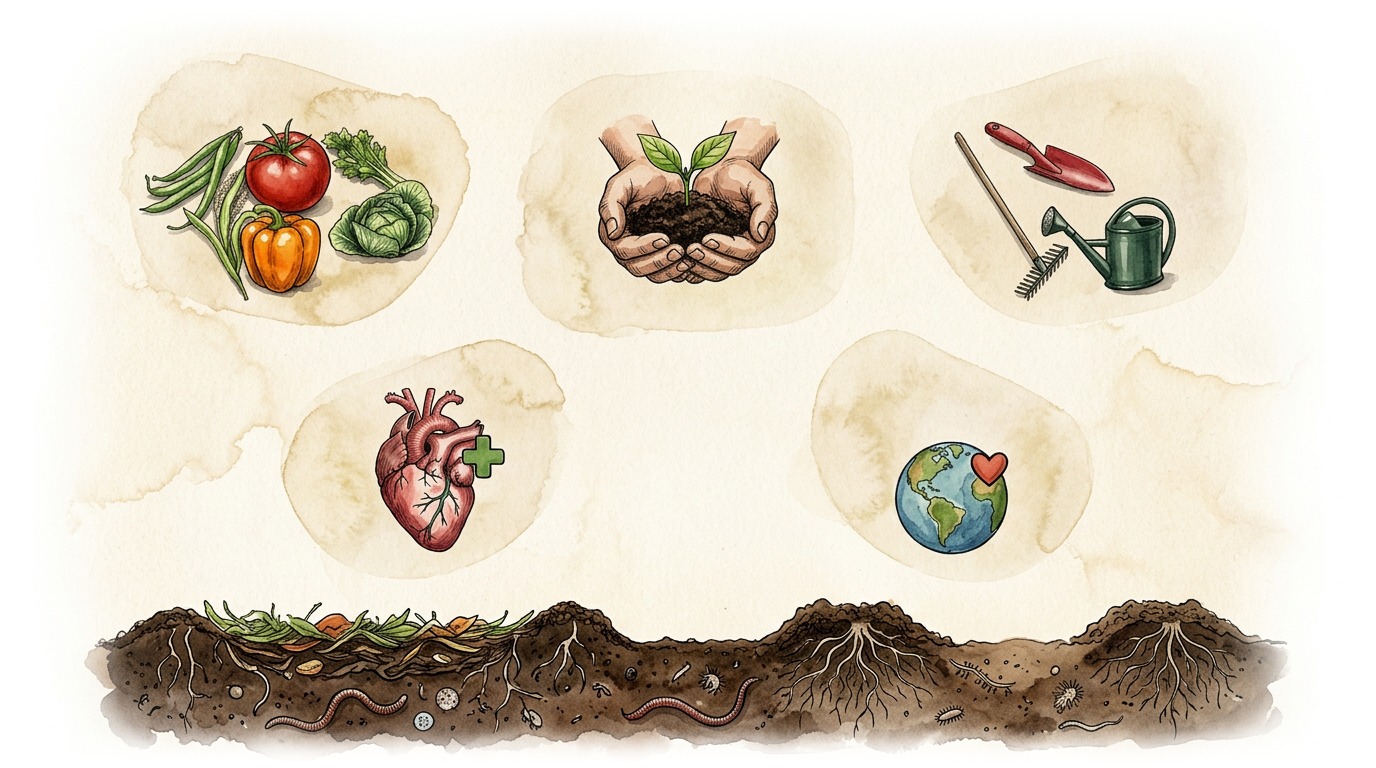
Taking care of the soil

Respecting our health

Simple techniques

Respecting our environment

Bio-intensive market gardening on living soil allows for increased production while building, season after season, a more fertile, more living, and more structured soil.

This method relies on simple, reproducible agricultural techniques that respect both health and the environment.

5
PARTIE 5 SUR 30 Bio-intensive and Living Soil: The Two Pillars of the
Bio-intensive and Living Soil: The Two Pillars of the

Bio-intensive and Living Soil: The Two Pillars of the

method

6
PARTIE 6 SUR 30 LIVING SOIL
LIVING SOIL

LIVING SOIL

BIO-INTENSIVE

The method is based on two main pillars:

  • Living soil: regenerating the biological life of the soil to naturally nourish plants.
  • Bio-intensive: producing more with less, by optimizing space and resources.
7
PARTIE 7 SUR 30 Living Soil
Living Soil

Living Soil

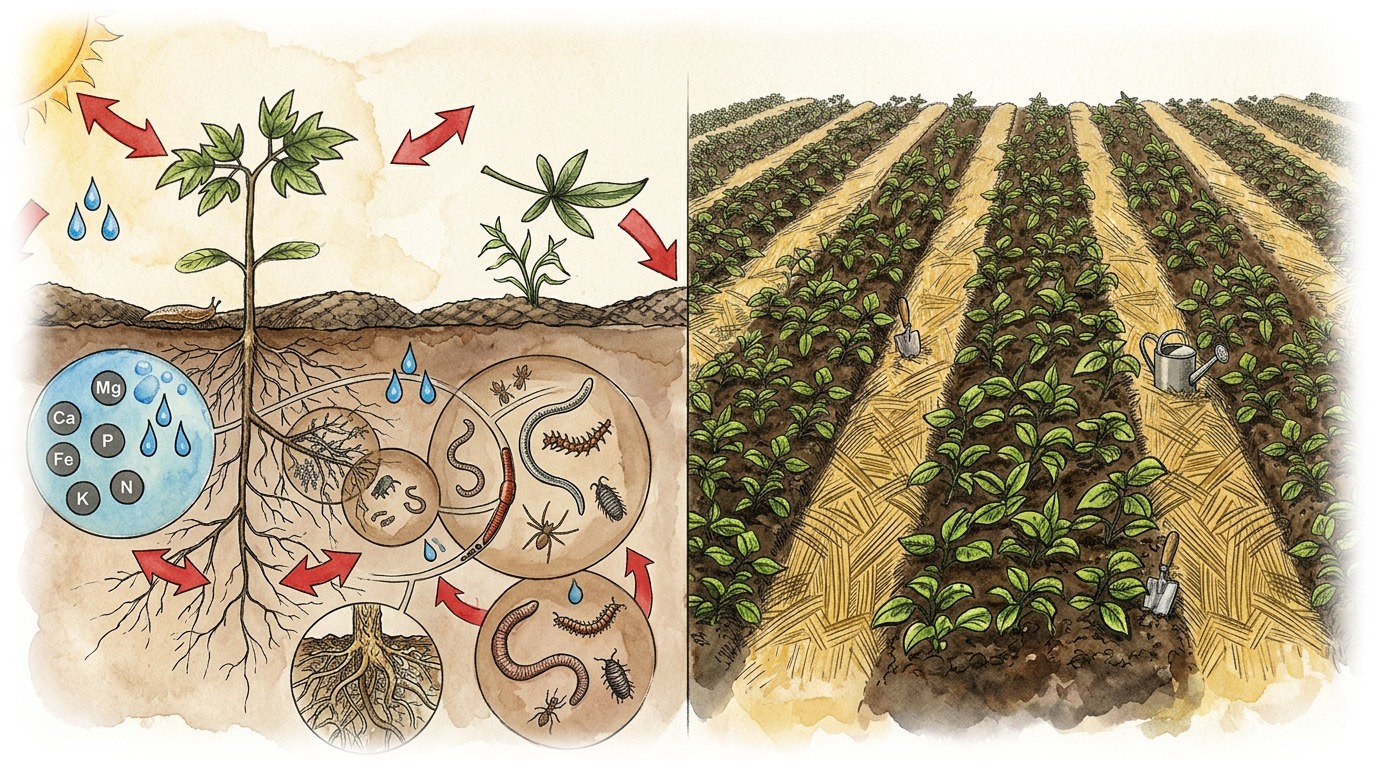
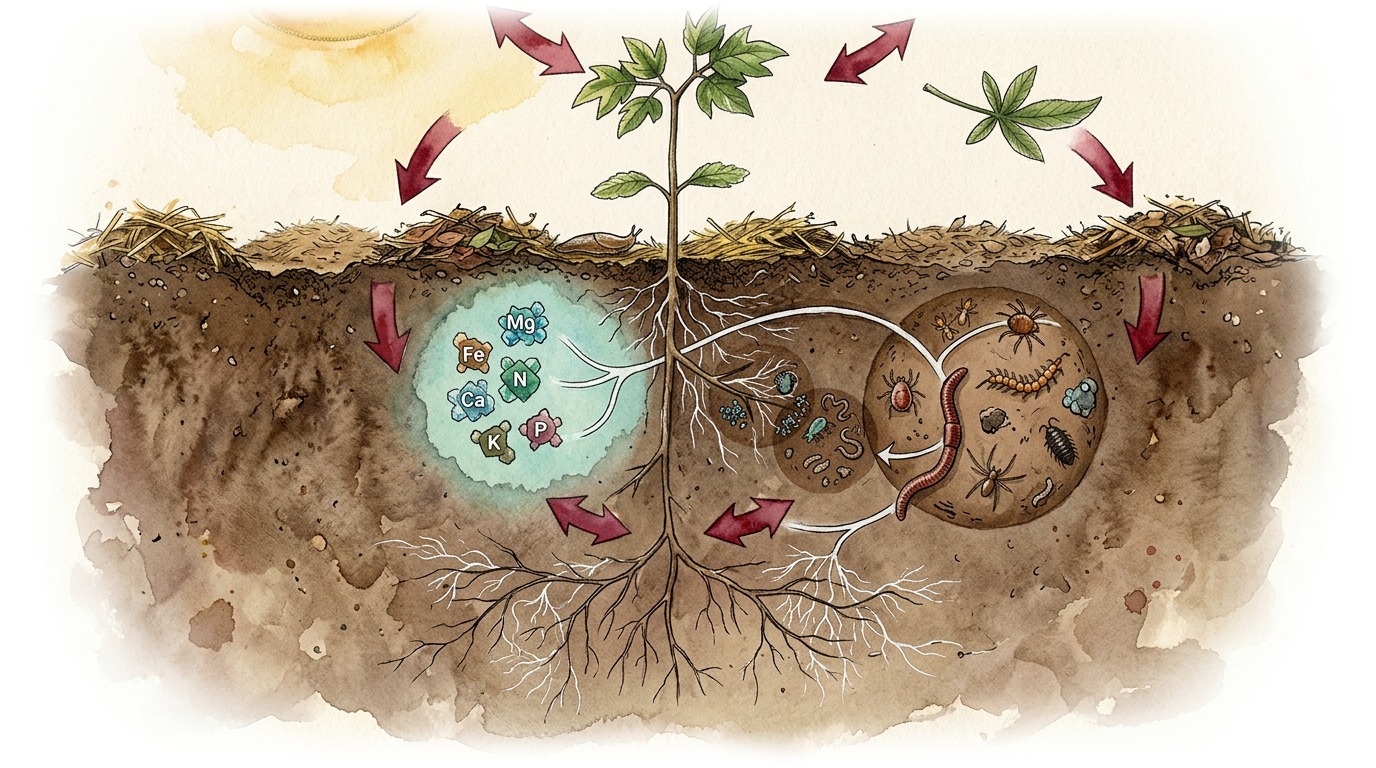
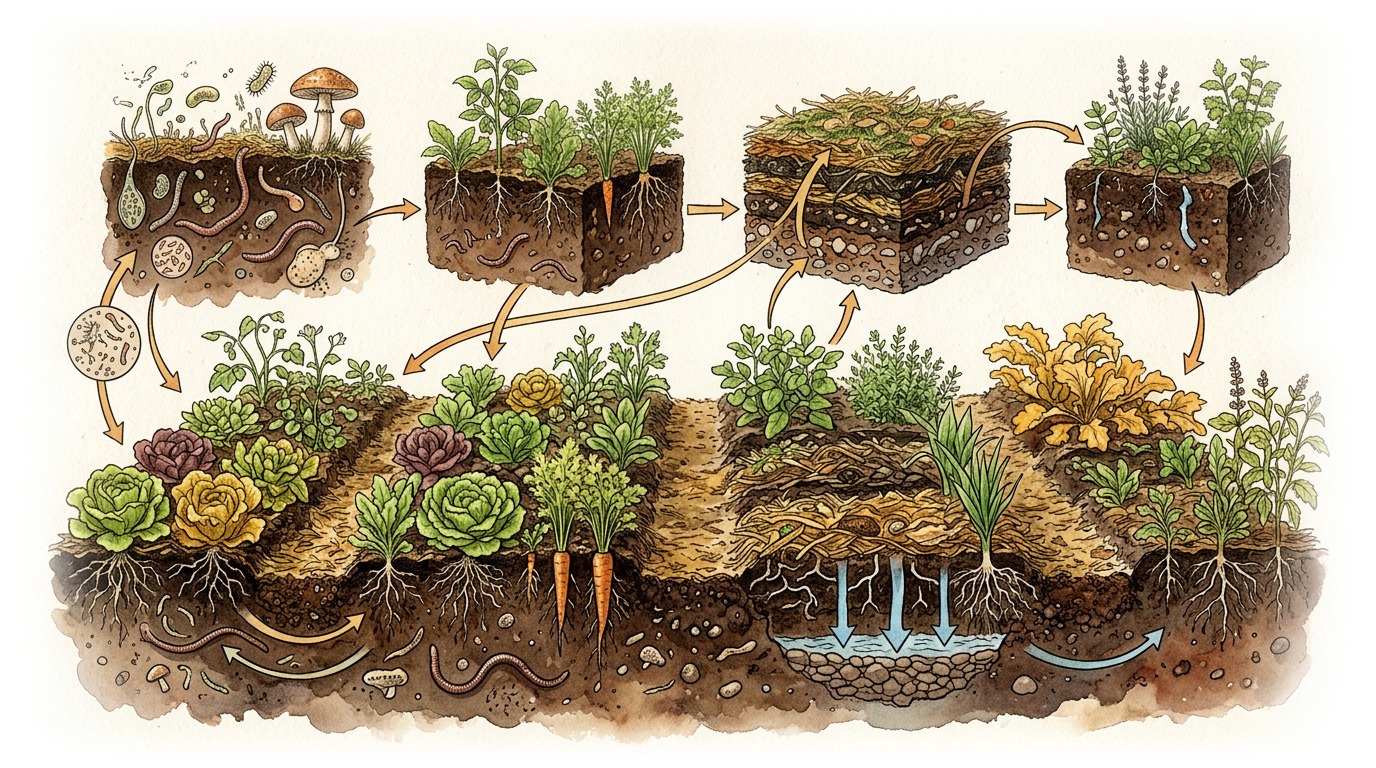
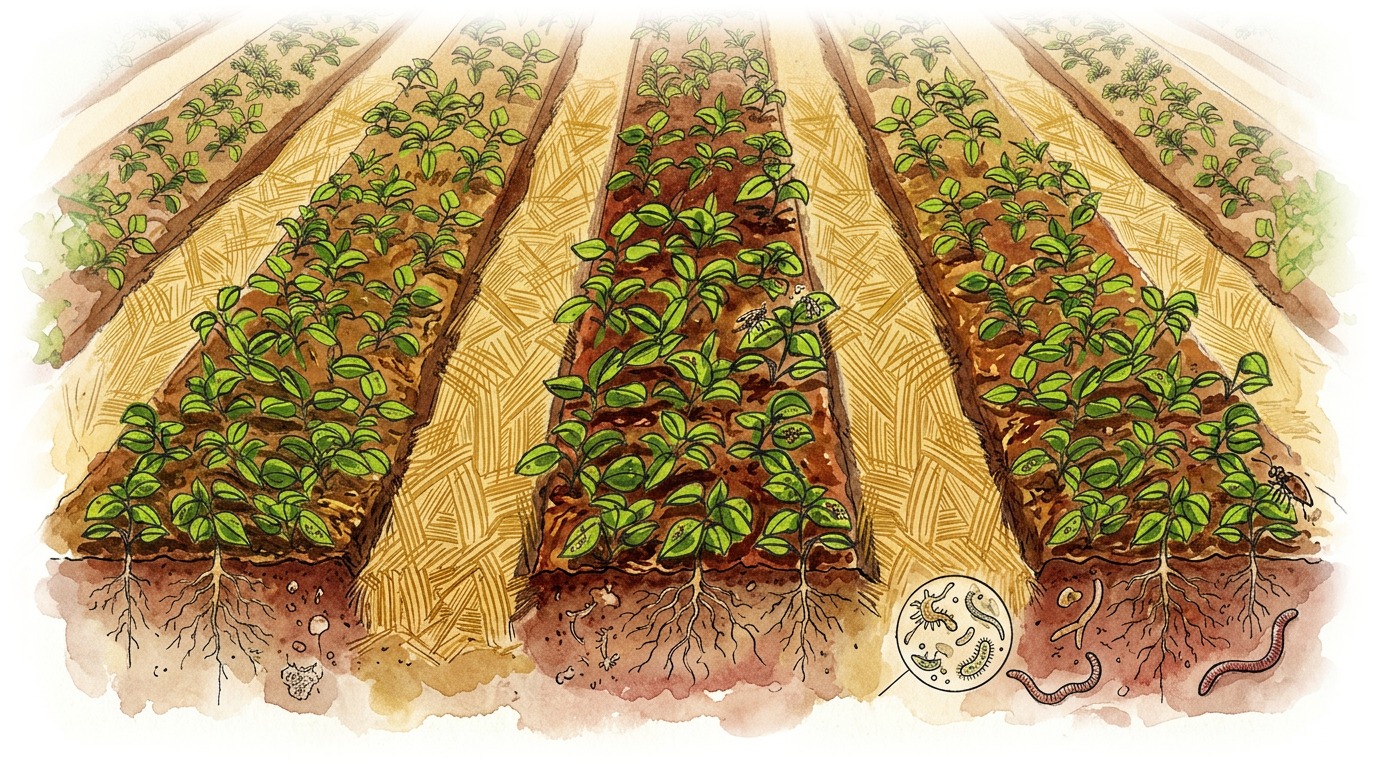
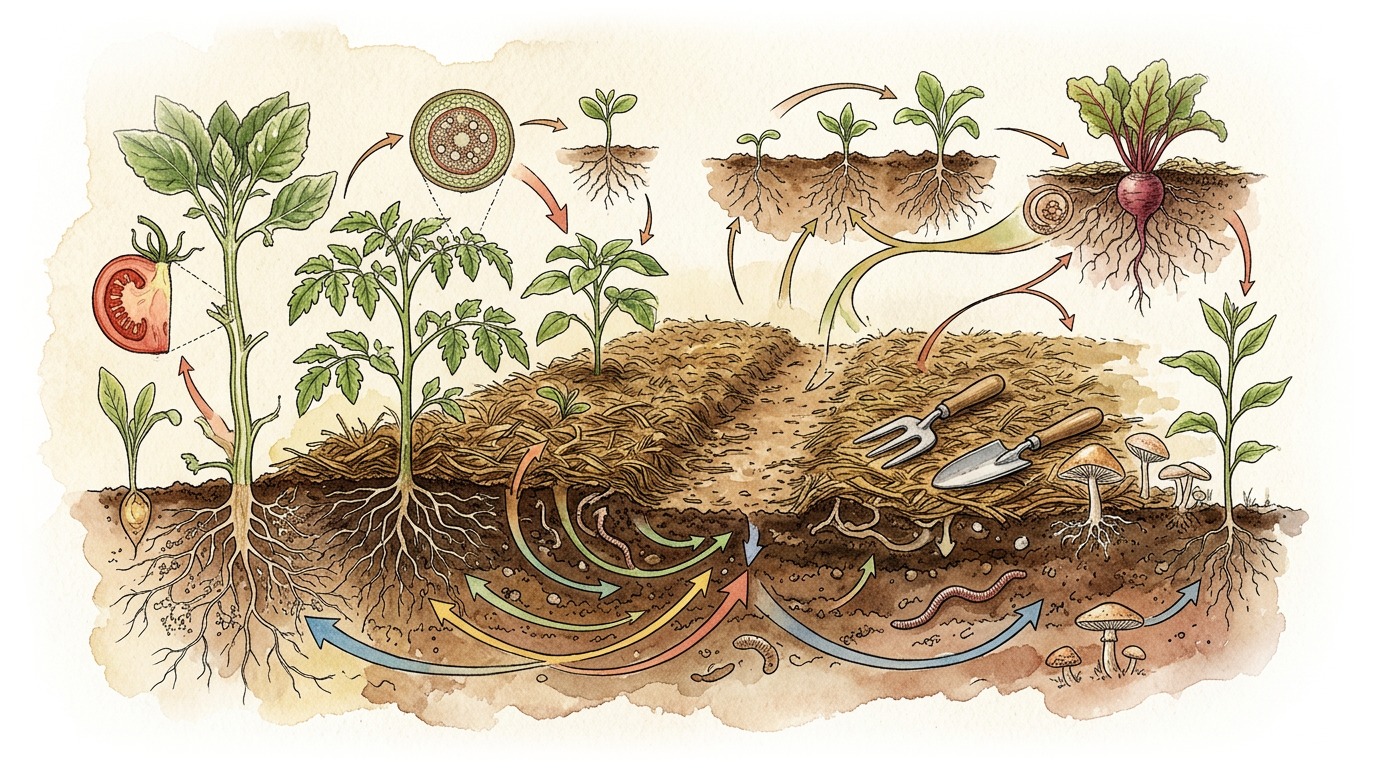
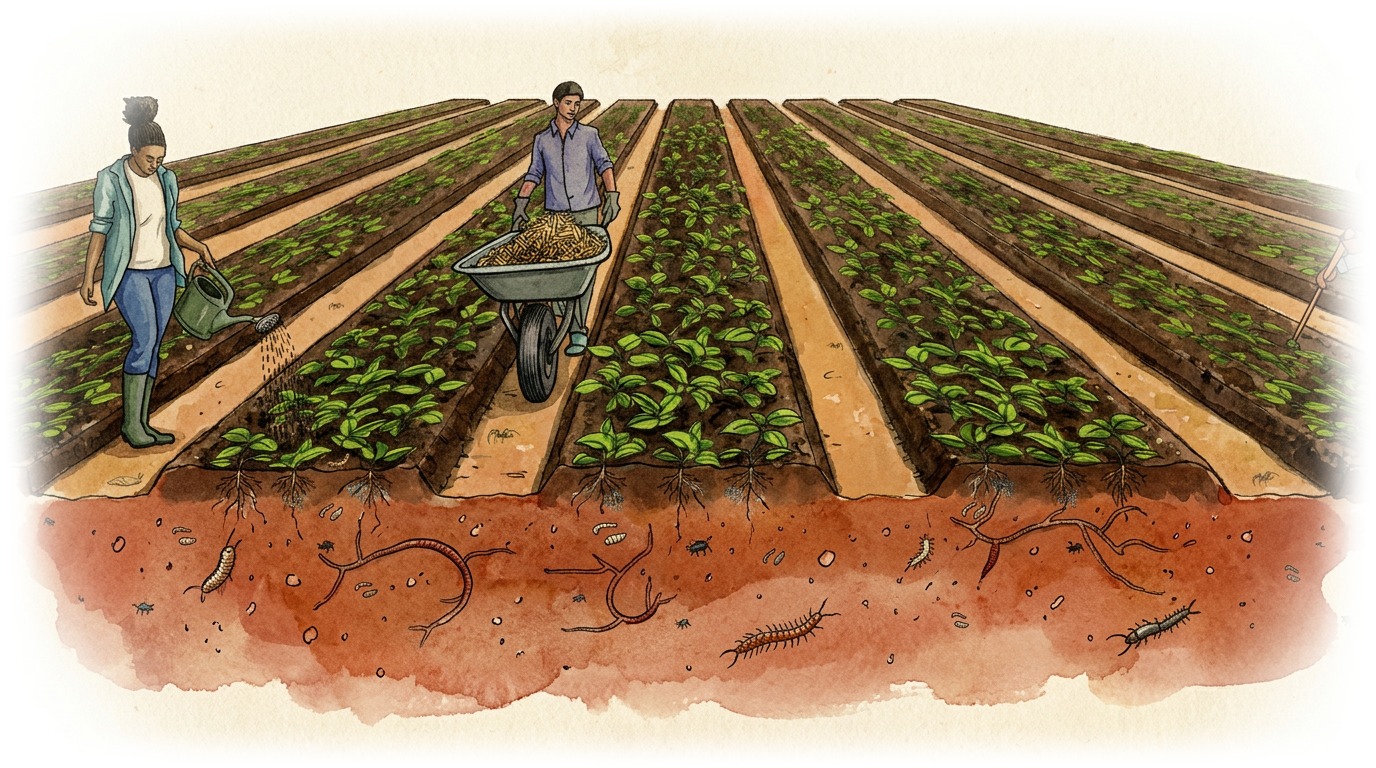
Living soil is soil that contains life: earthworms, insects, bacteria, fungi...

Together, they transform and improve the soil, allowing it to naturally nourish and strengthen plants.

8
PARTIE 8 SUR 30 Living Soil
Living Soil

Living Soil

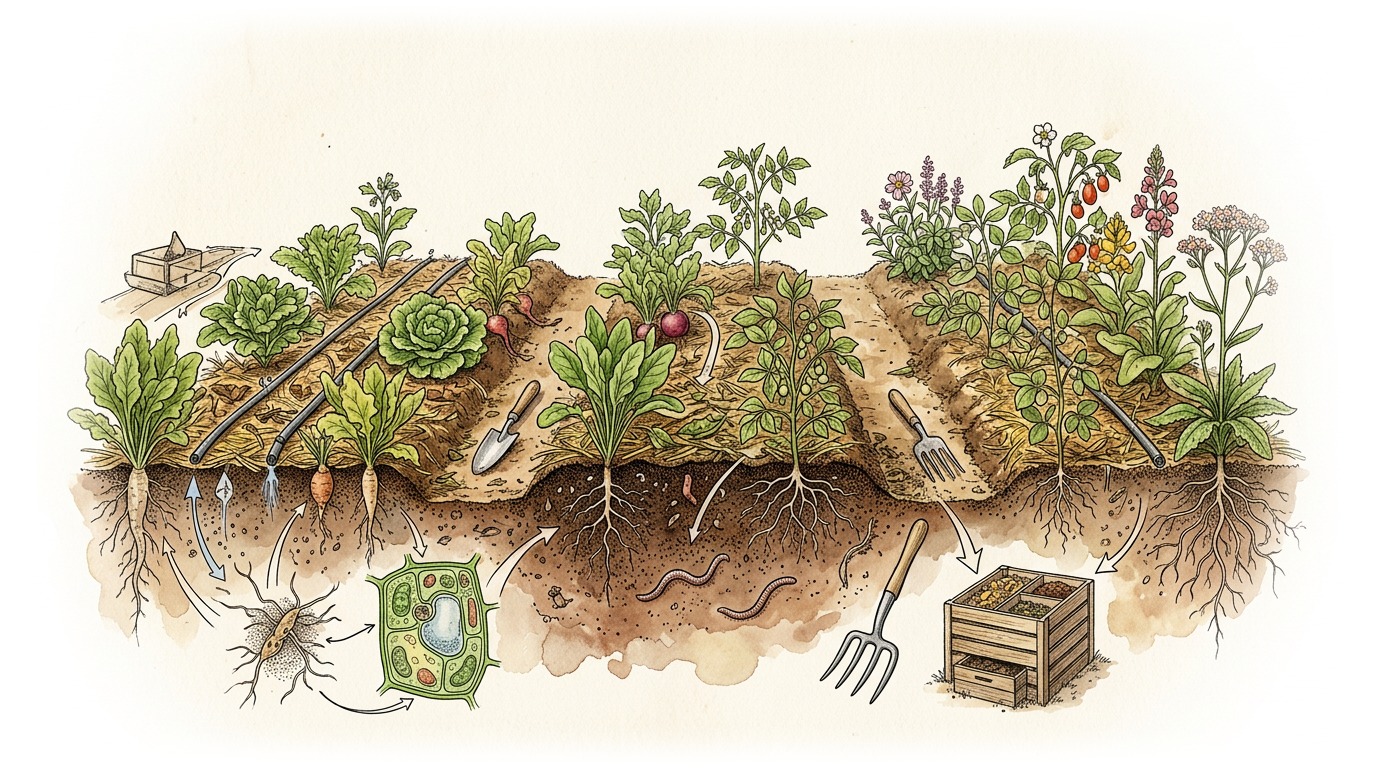
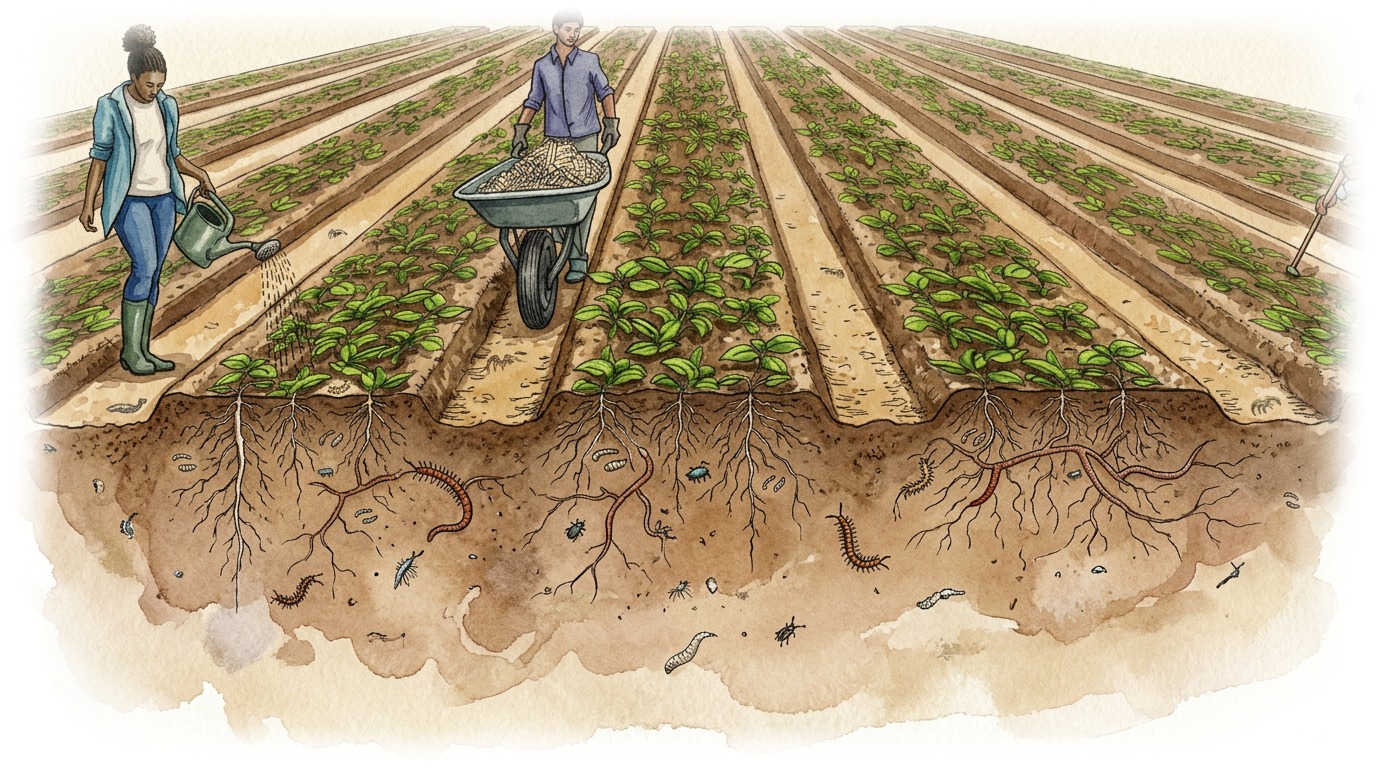
We build living soil through simple but effective practices:

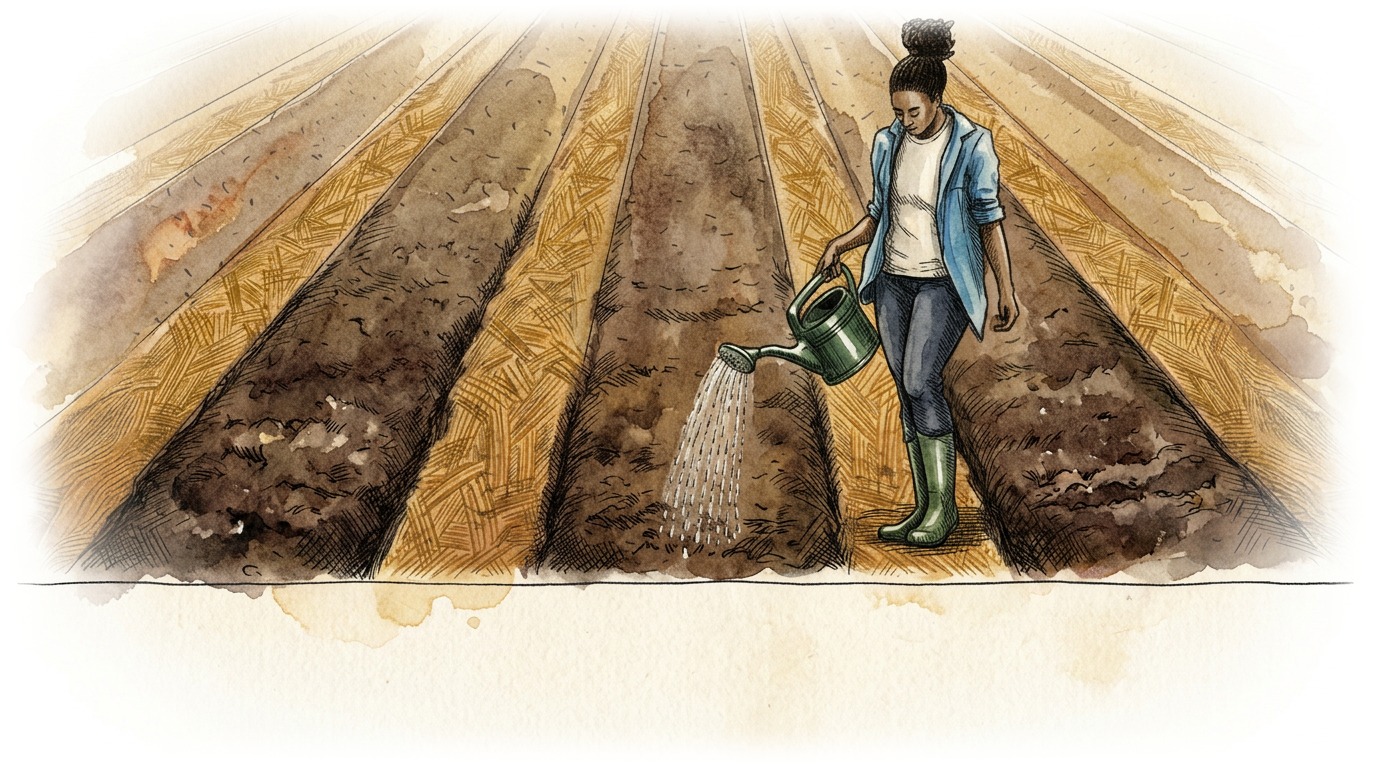
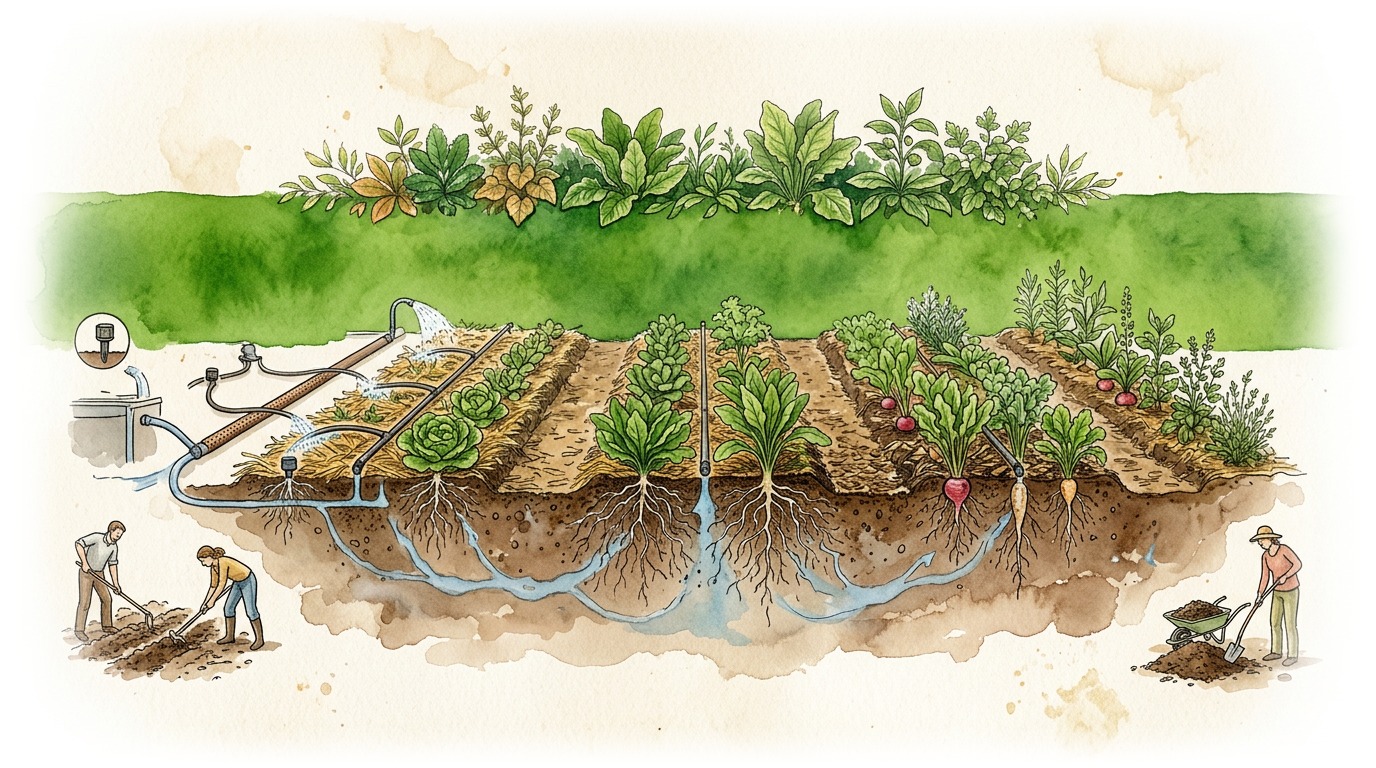
  1. Establishing permanent, no-till raised beds,
  2. Gentle irrigation across the entire plot,
  3. Active compost in the pathways.
9
PARTIE 9 SUR 30 Biointensive
Biointensive

Biointensive

Biointensive farming allows for the production of more fruits and vegetables (intensive), by using environmentally friendly techniques (bio).

10
PARTIE 10 SUR 30 Planning
Planning

Planning

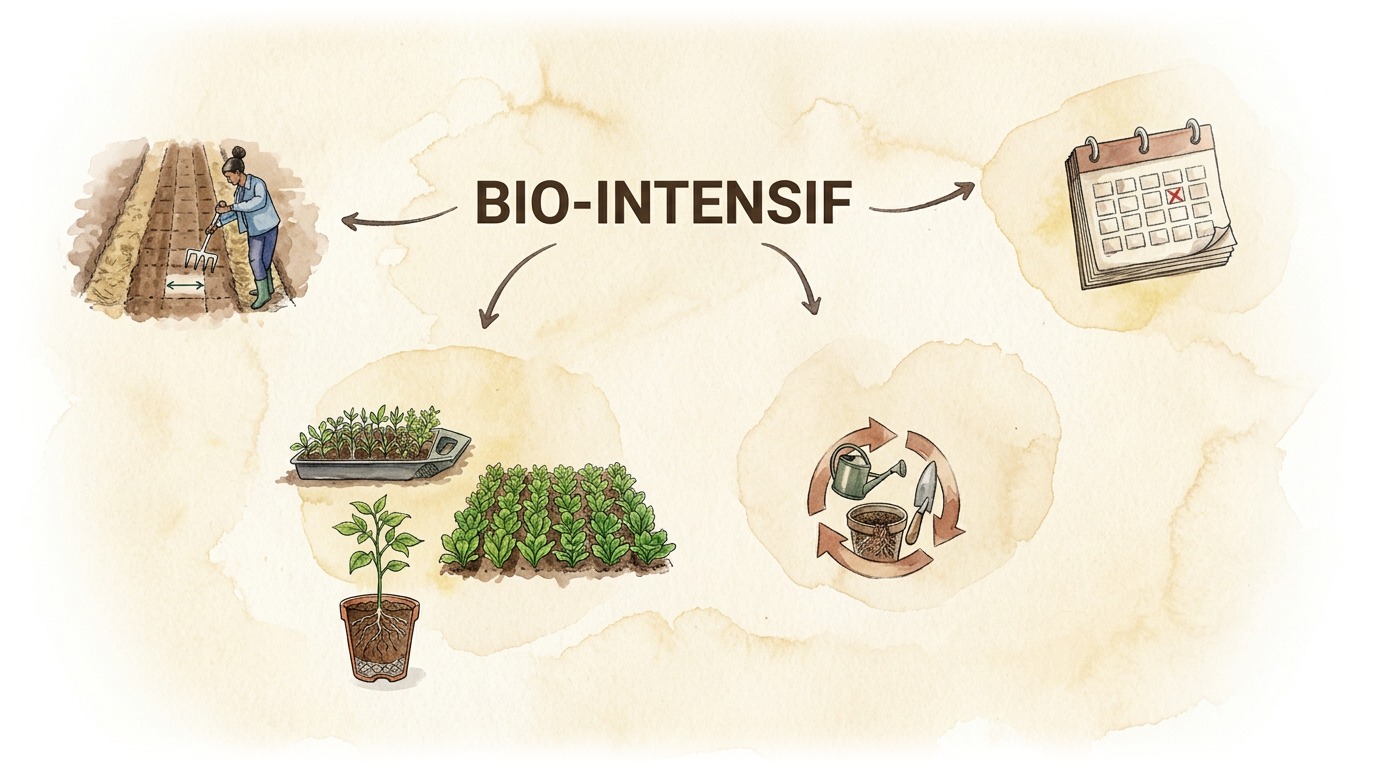
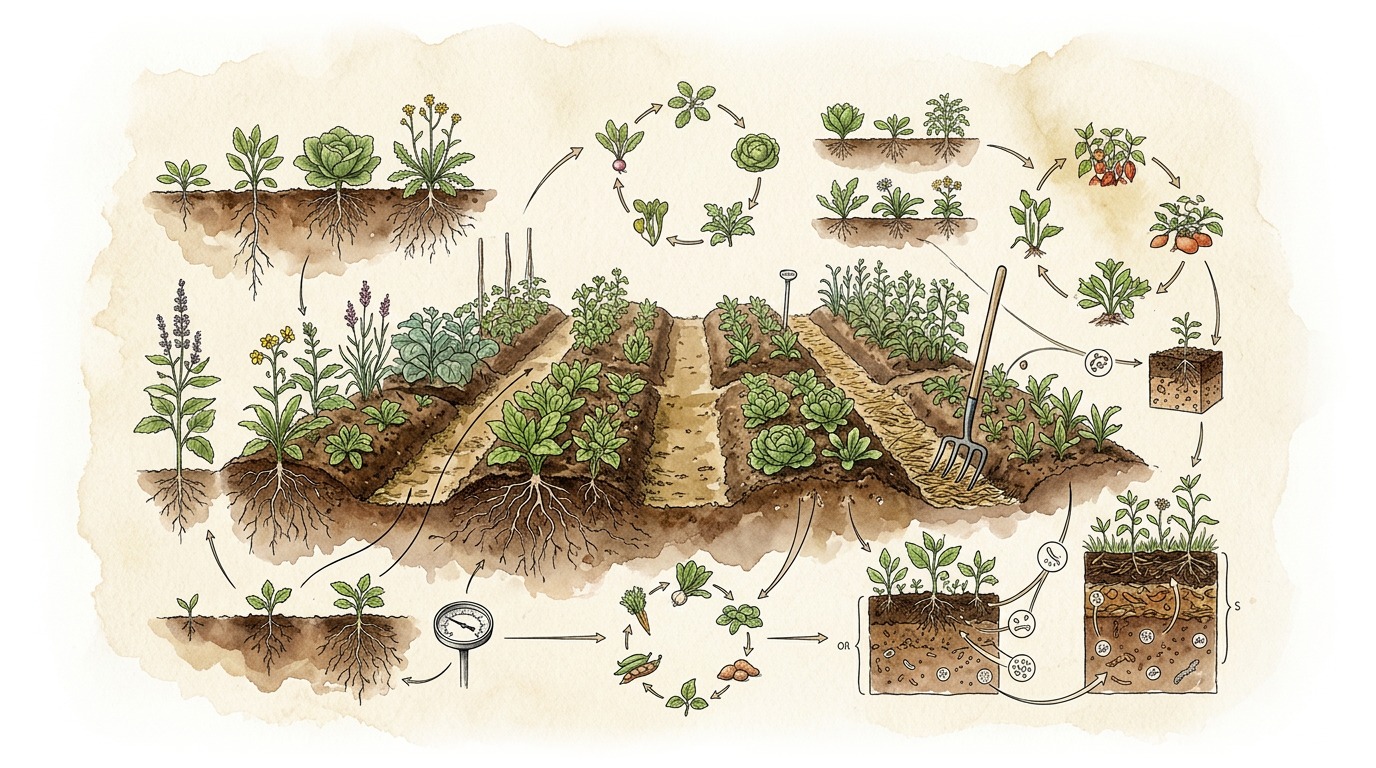
Well-calculated planting distances BIO-INTENSIVE Nurseries and transplanting Bio-intensive

This approach is based on optimization:

  • Well-calculated planting distances
  • Economy and reuse of materials
  • Nurseries and transplanting to get a head start
  • Rigorous planning
  • Economy and reuse of available materials
11
PARTIE 11 SUR 30 LIVING SOIL
LIVING SOIL

LIVING SOIL

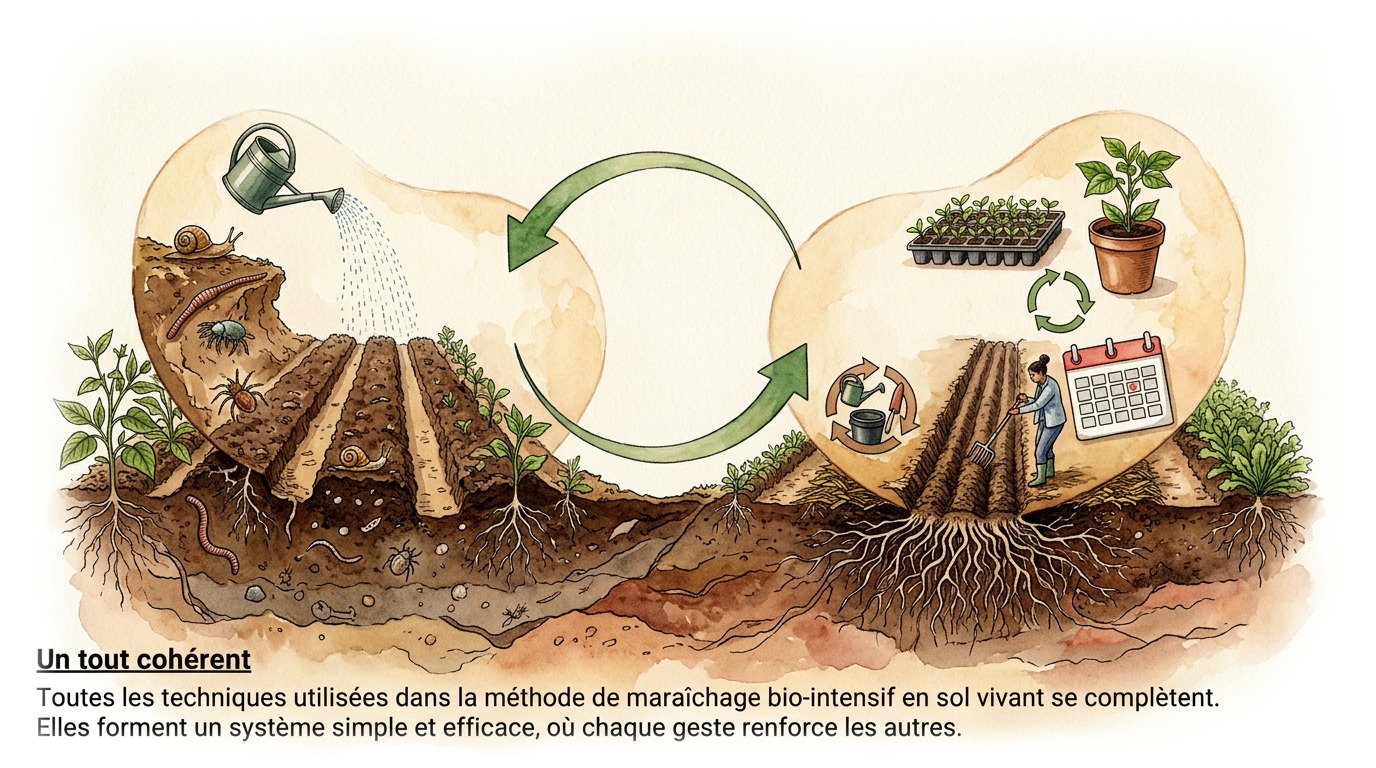
BIO-INTENSIVE A Coherent Whole All techniques used in the bio-intensive market gardening method on living soil are complementary.

They form a simple and effective system, where each action reinforces the others.

12
PARTIE 12 SUR 30 Methodological Fundamentals
Methodological Fundamentals

Methodological Fundamentals

The methodological fundamentals

13
PARTIE 13 SUR 30 1. Growing Beds
1. Growing Beds

1. Growing Beds

  1. Pathways
  2. Compost

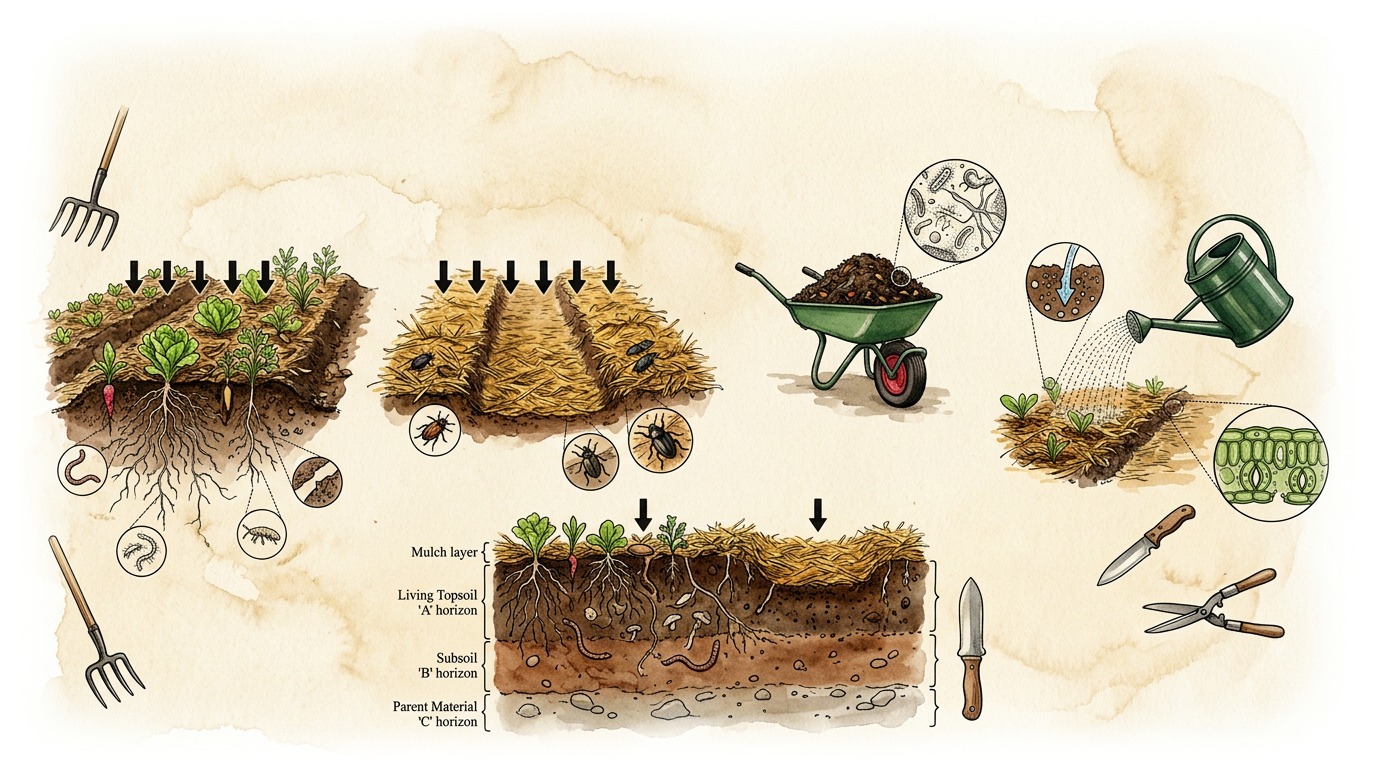
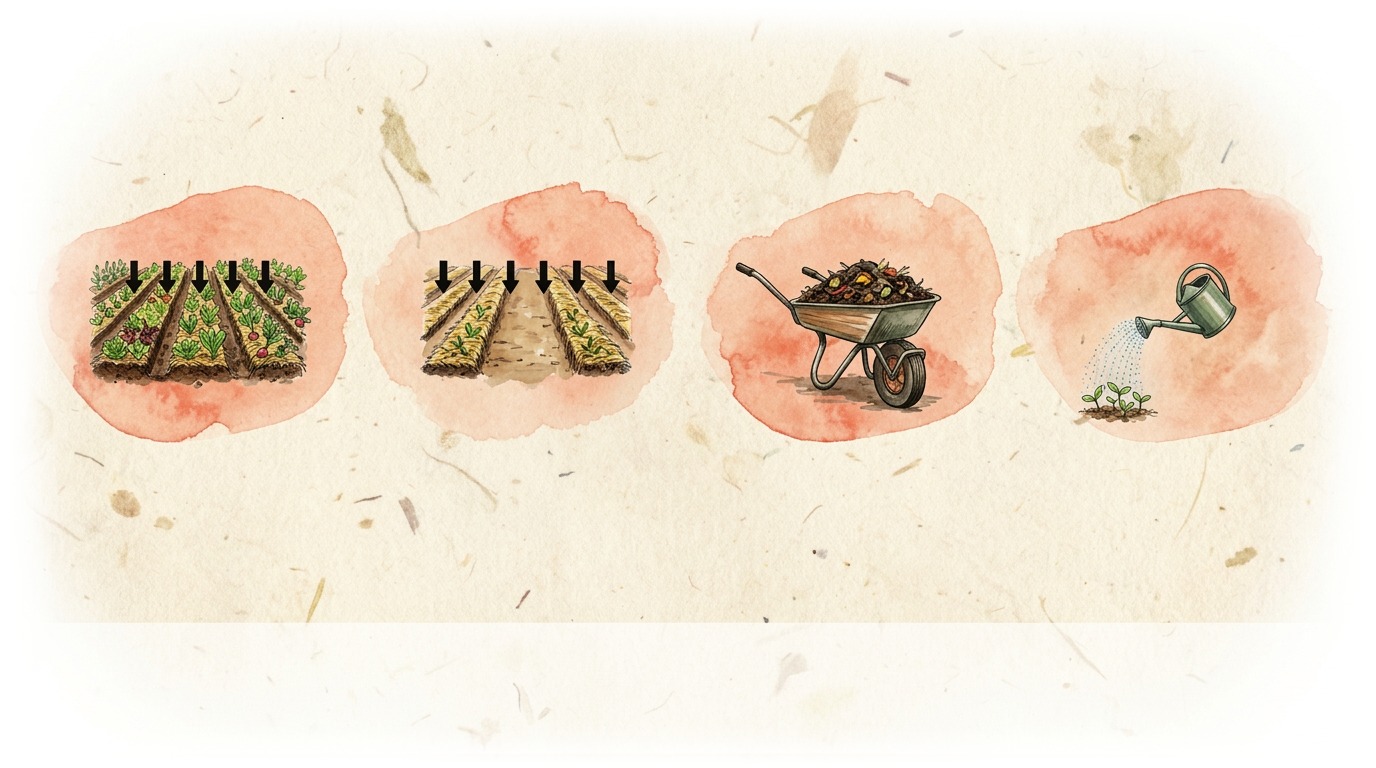
For the method to work long-term, certain practices are essential:

  1. Permanent growing beds,
  2. Well-defined and mulched pathways,
  3. Always available compost,
  4. Watering of the beds and also the pathways.
  5. Irrigation
14
PARTIE 14 SUR 30 1. Permanent Growing Beds
1. Permanent Growing Beds

1. Permanent Growing Beds

  1. Permanent Growing Beds
15
PARTIE 15 SUR 30 WALKWAYS
WALKWAYS

WALKWAYS

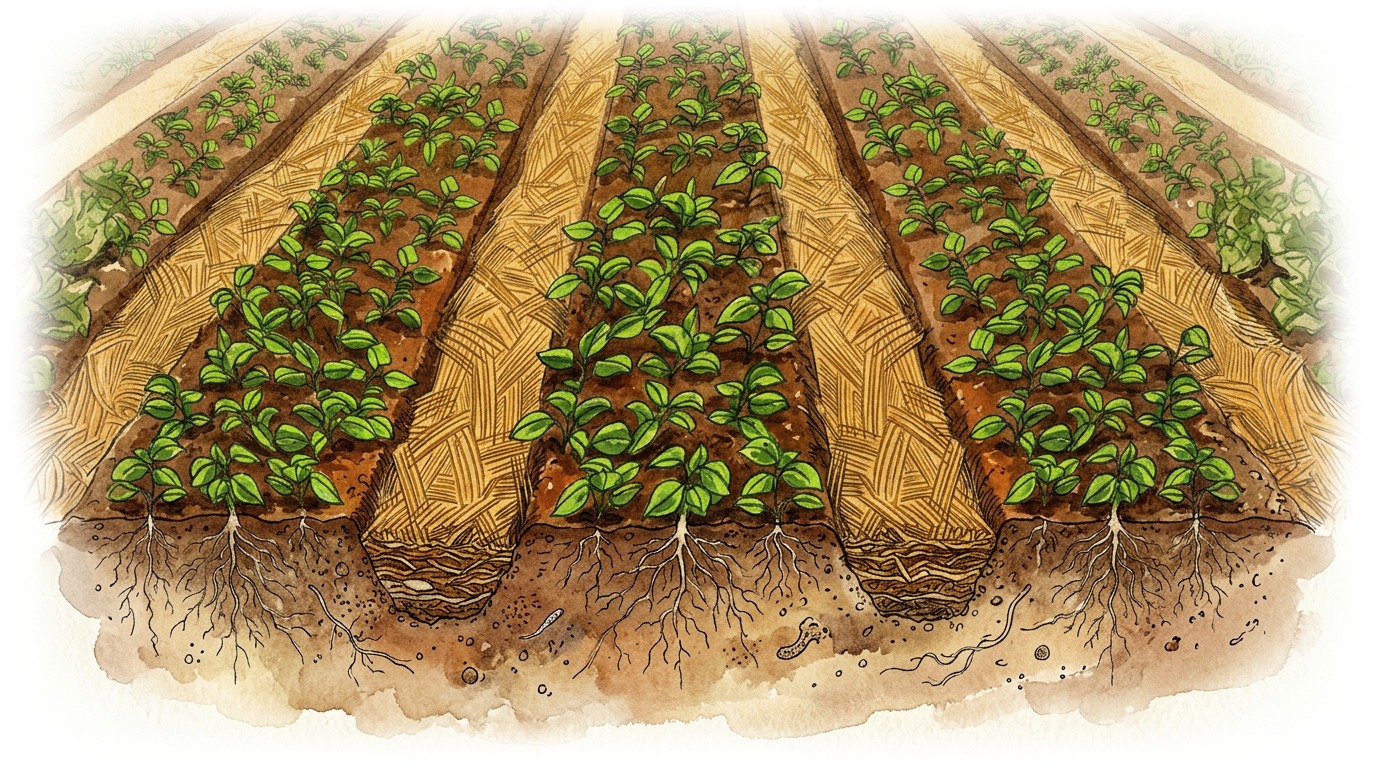
BEDS The method consists of working on permanent cultivation beds that are fixed and well-defined.

Between the beds, there are walkways for circulation.

16
PARTIE 16 SUR 30 Time and Energy Savings
Time and Energy Savings

Time and Energy Savings

Less erosion and leaching

Concentrated fertile soil

Less compacted soil

Suitable for small spaces

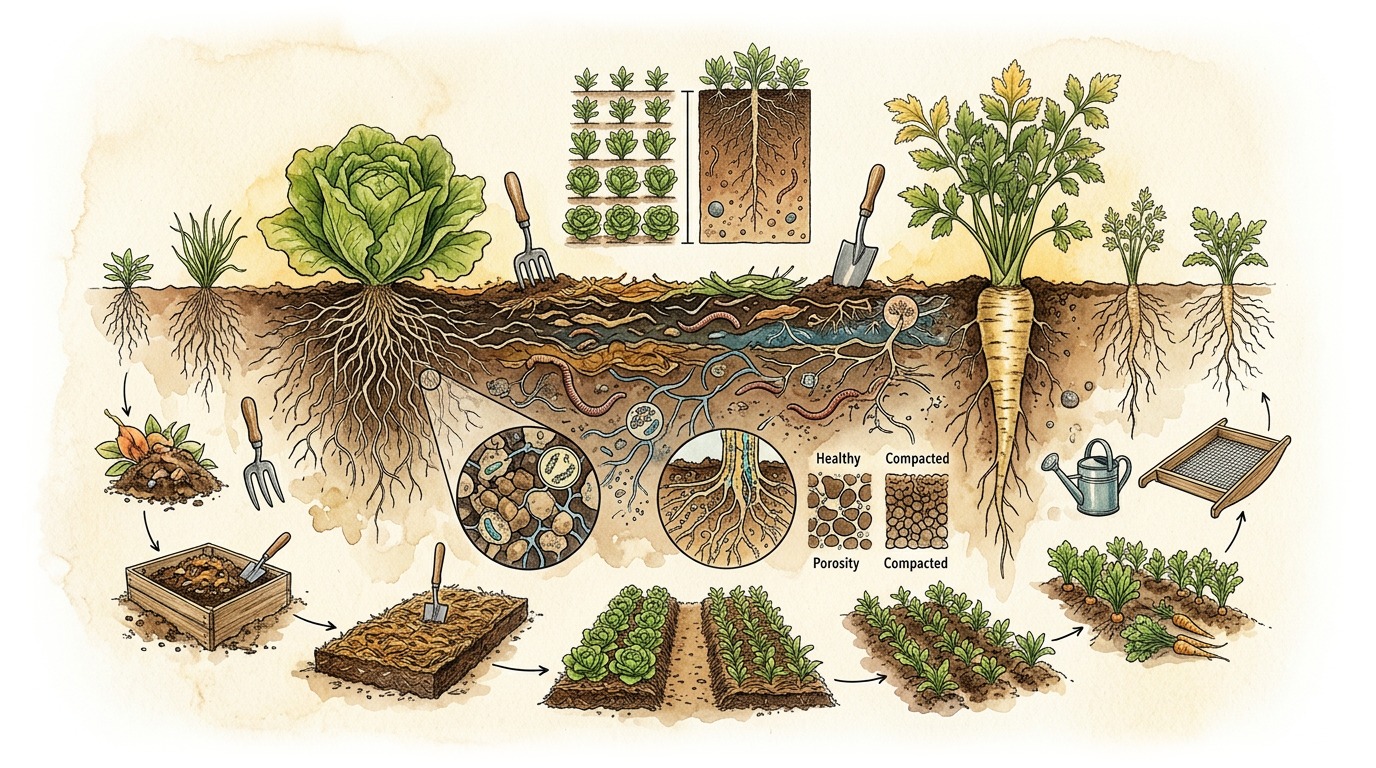
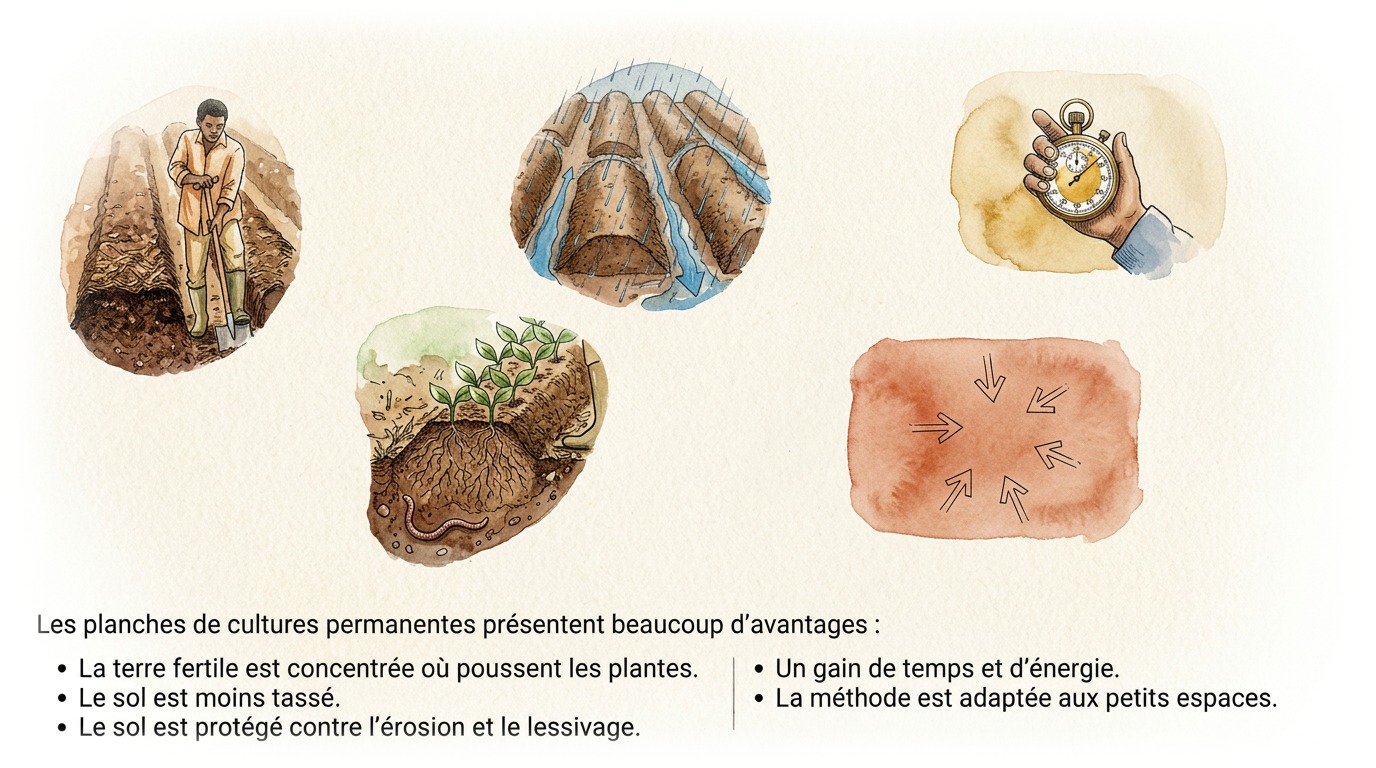
Permanent raised beds offer many advantages:

  • Fertile soil is concentrated where plants grow.
  • The soil is less compacted.
  • The soil is protected against erosion and leaching.
  • Time and energy savings.
  • The method is suitable for small spaces.
17
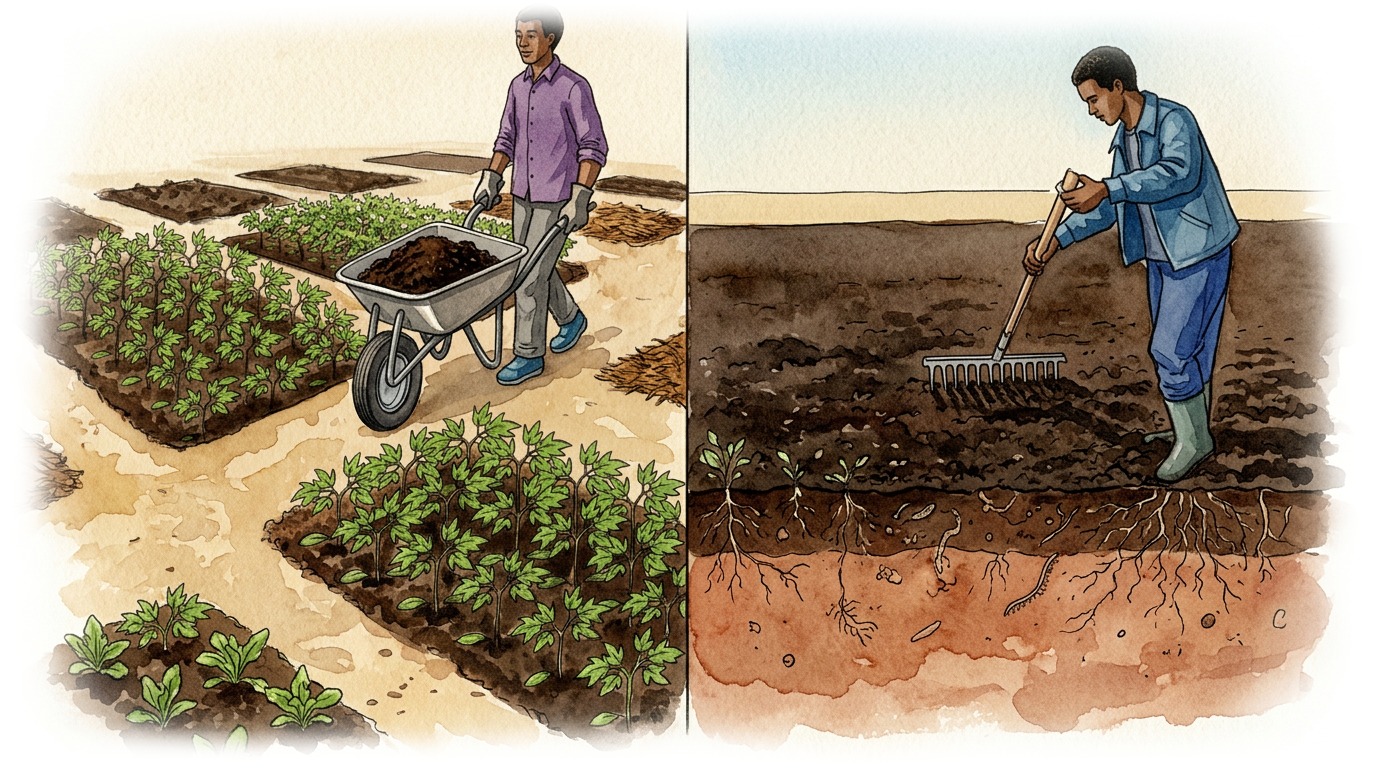
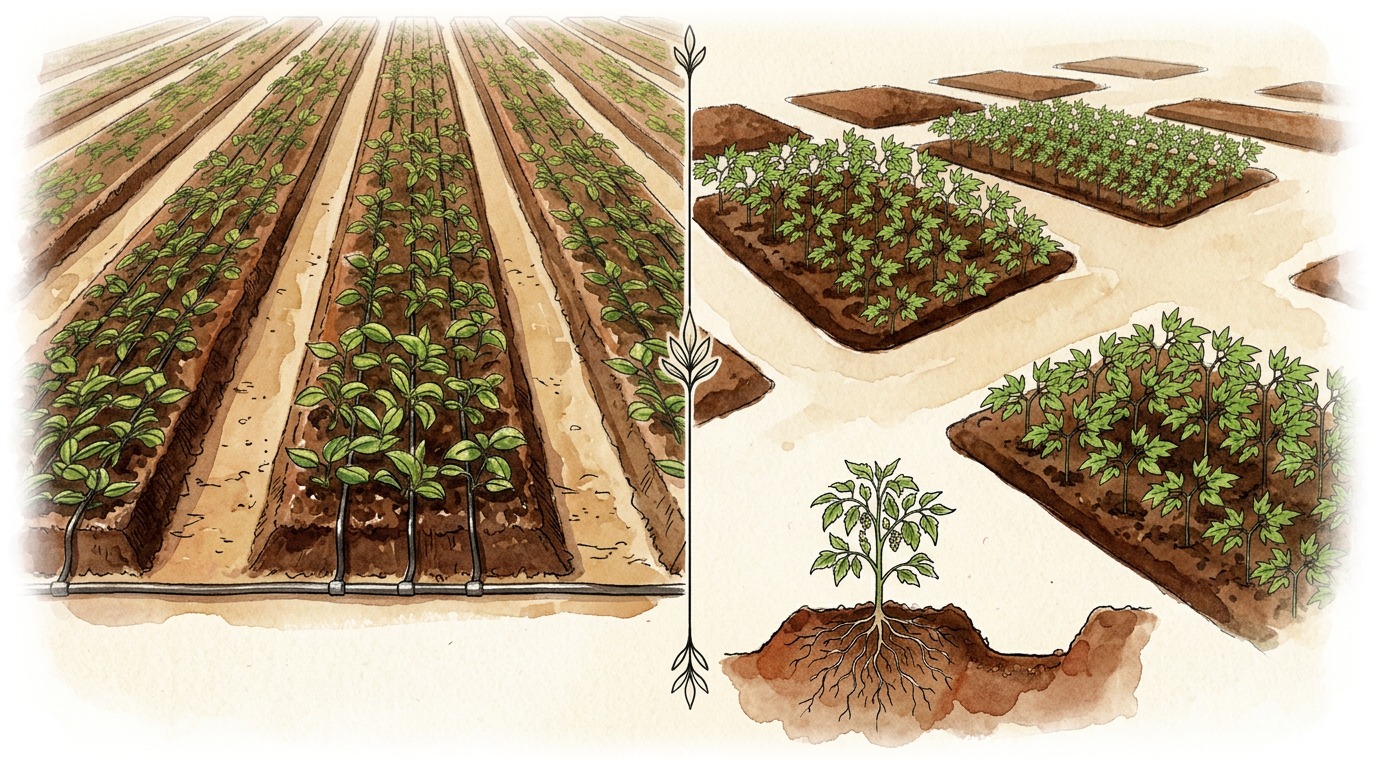
PARTIE 17 SUR 30 We chose the permanent bed method, but other approaches exist:
We chose the permanent bed method, but other approaches exist:

We chose the permanent bed method, but other approaches exist:

Sunken beds

Flat cultivation

18
PARTIE 18 SUR 30 2. The Benefit of Walkways
2. The Benefit of Walkways

2. The Benefit of Walkways

  1. The Benefit of Walkways
19
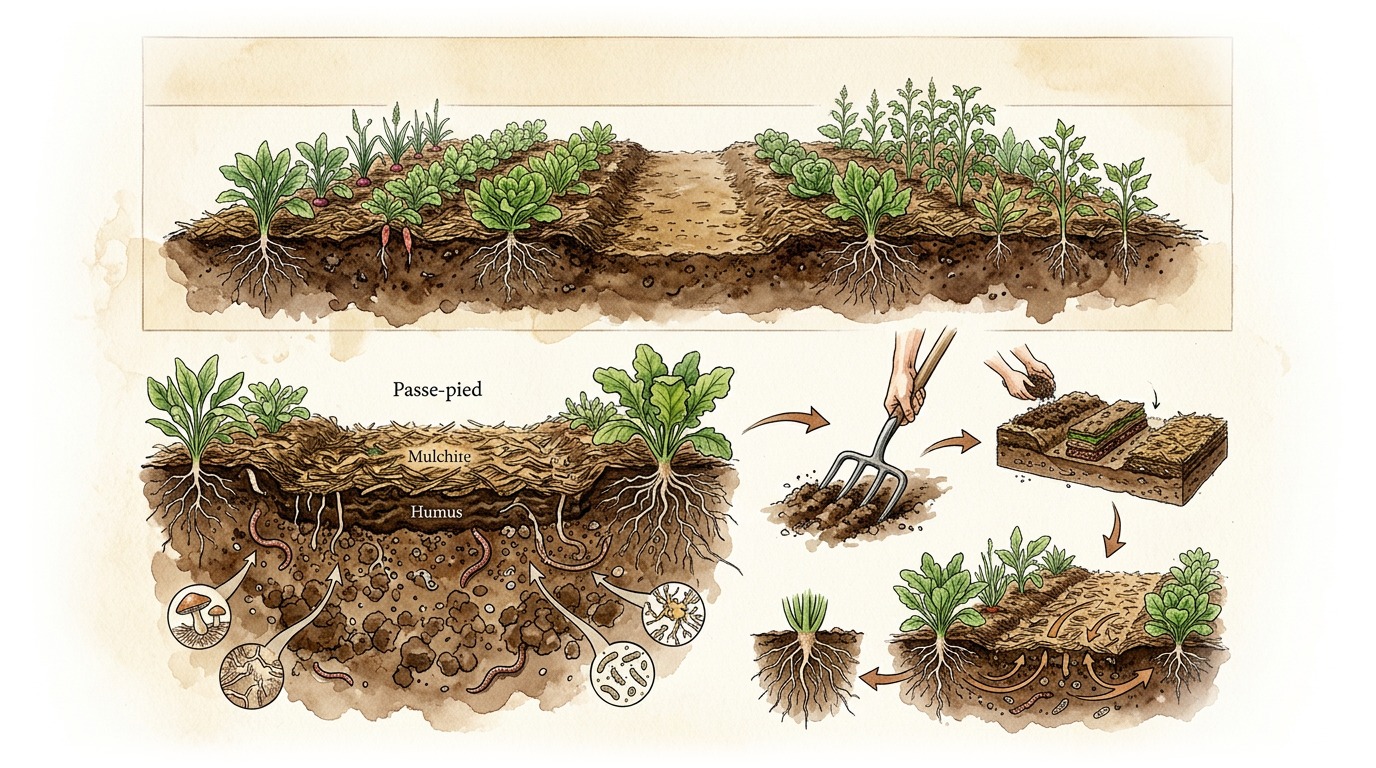
PARTIE 19 SUR 30 In this market gardening method, pathways are not just for circulation.
In this market gardening method, pathways are not just for circulation.

In this market gardening method, pathways are not just for circulation.

They are active areas:

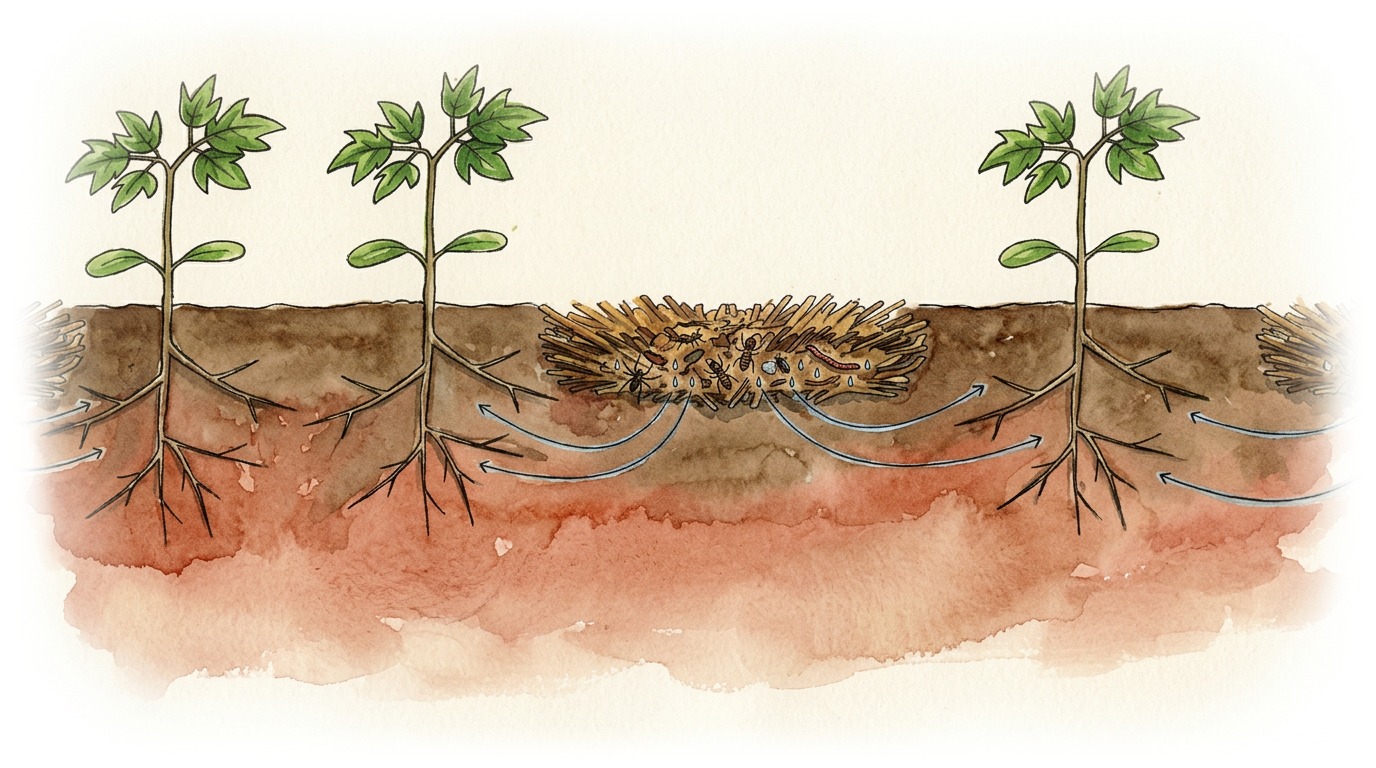
  • Compost is passively made there through the decomposition of mulch.
  • They also help maintain humidity.
20
PARTIE 20 SUR 30 3. Ensuring Compost Availability
3. Ensuring Compost Availability

3. Ensuring Compost Availability

  1. Ensuring Compost Availability
21
PARTIE 21 SUR 30 COMPOST
COMPOST

COMPOST

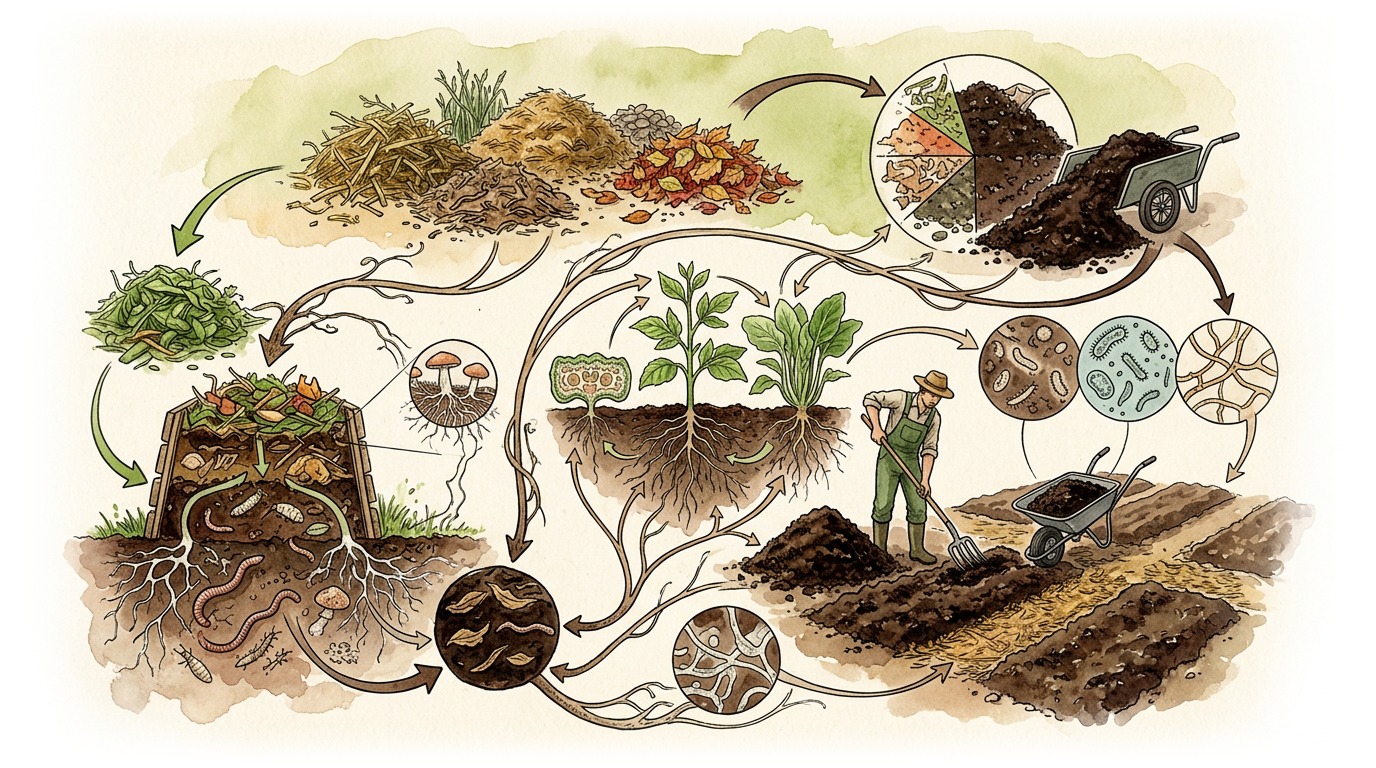
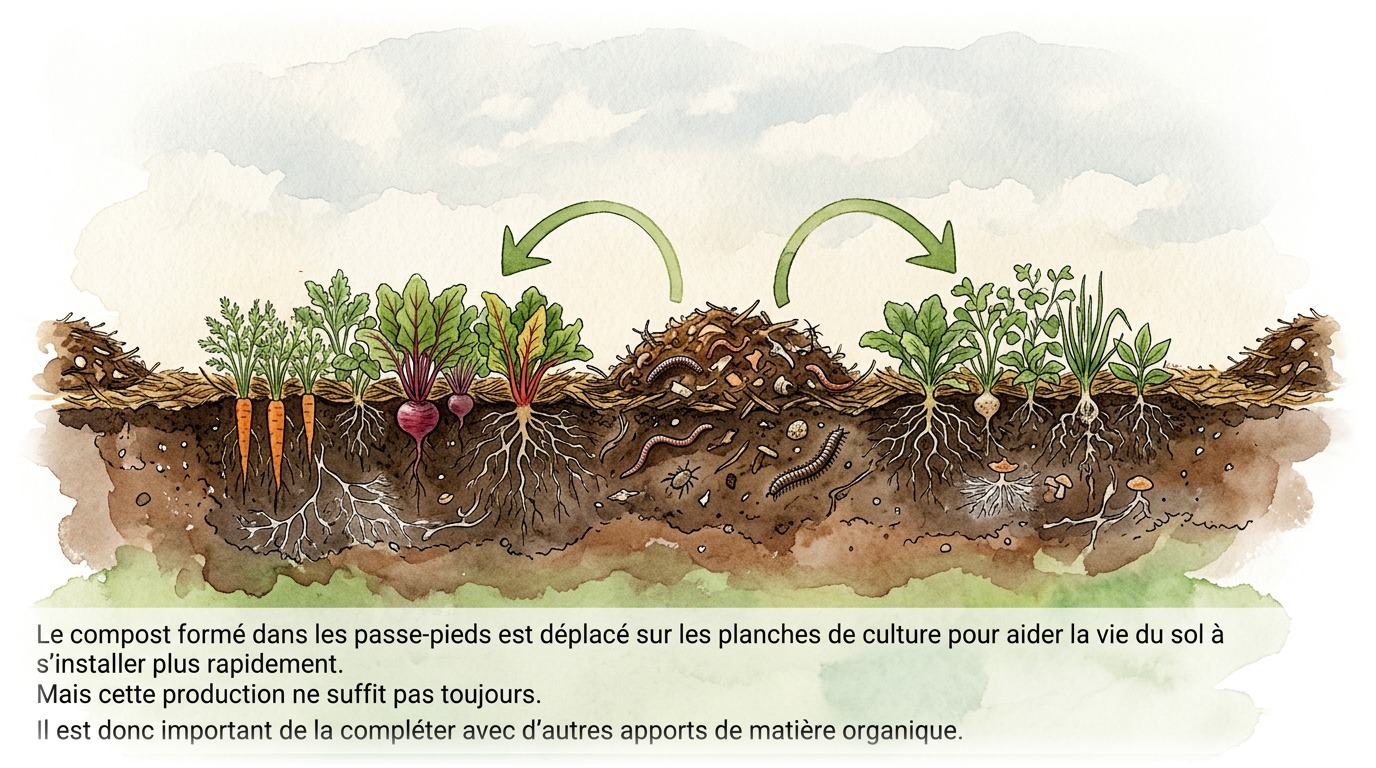
Compost formed in the walkways is moved to the cultivation beds to help soil life establish itself more quickly.

But this production is not always sufficient.

It is therefore important to supplement it with other organic matter inputs.

22
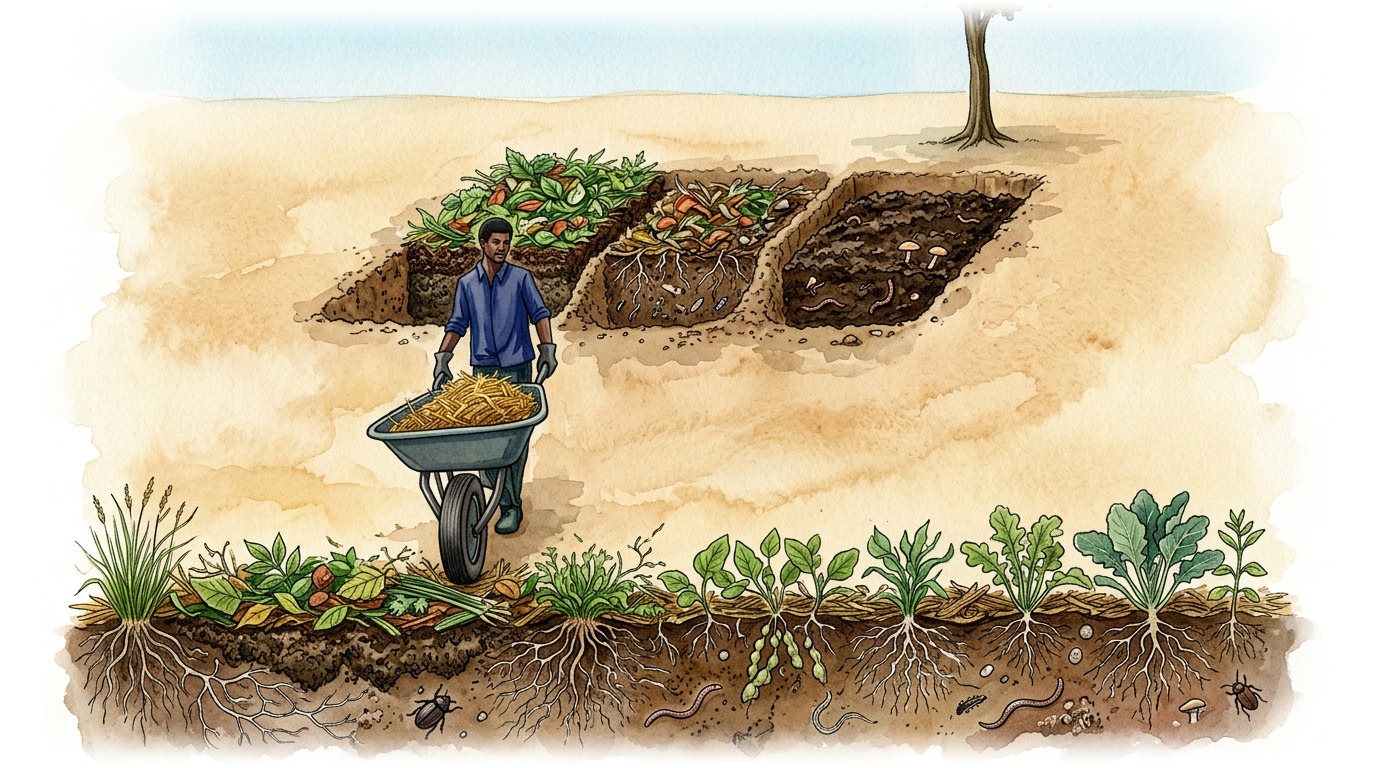
PARTIE 22 SUR 30 To remain self-sufficient, one solution is to make your own compost.
To remain self-sufficient, one solution is to make your own compost.

To remain self-sufficient, one solution is to make your own compost.

The winter composting system allows for the valorization of materials available during the rainy season to produce quality compost at a lower cost.

23
PARTIE 23 SUR 30 Winter composting in a compost bin is an effective method. Other techniques include:
Winter composting in a compost bin is an effective method. Other techniques include:

Winter composting in a compost bin is an effective method. Other techniques include:

  • Compost pit: a simple option when construction materials are scarce
  • Compost pile: directly on the ground, covered to retain moisture
  • Bokashi method: rapid fermentation of kitchen waste, even in small quantities
  • Surface compost: directly depositing materials on beds to slowly nourish the soil
24
PARTIE 24 SUR 30 4. Principle of Gentle and Holistic Irrigation
4. Principle of Gentle and Holistic Irrigation

4. Principle of Gentle and Holistic Irrigation

  1. Principle of Gentle and Holistic Irrigation
25
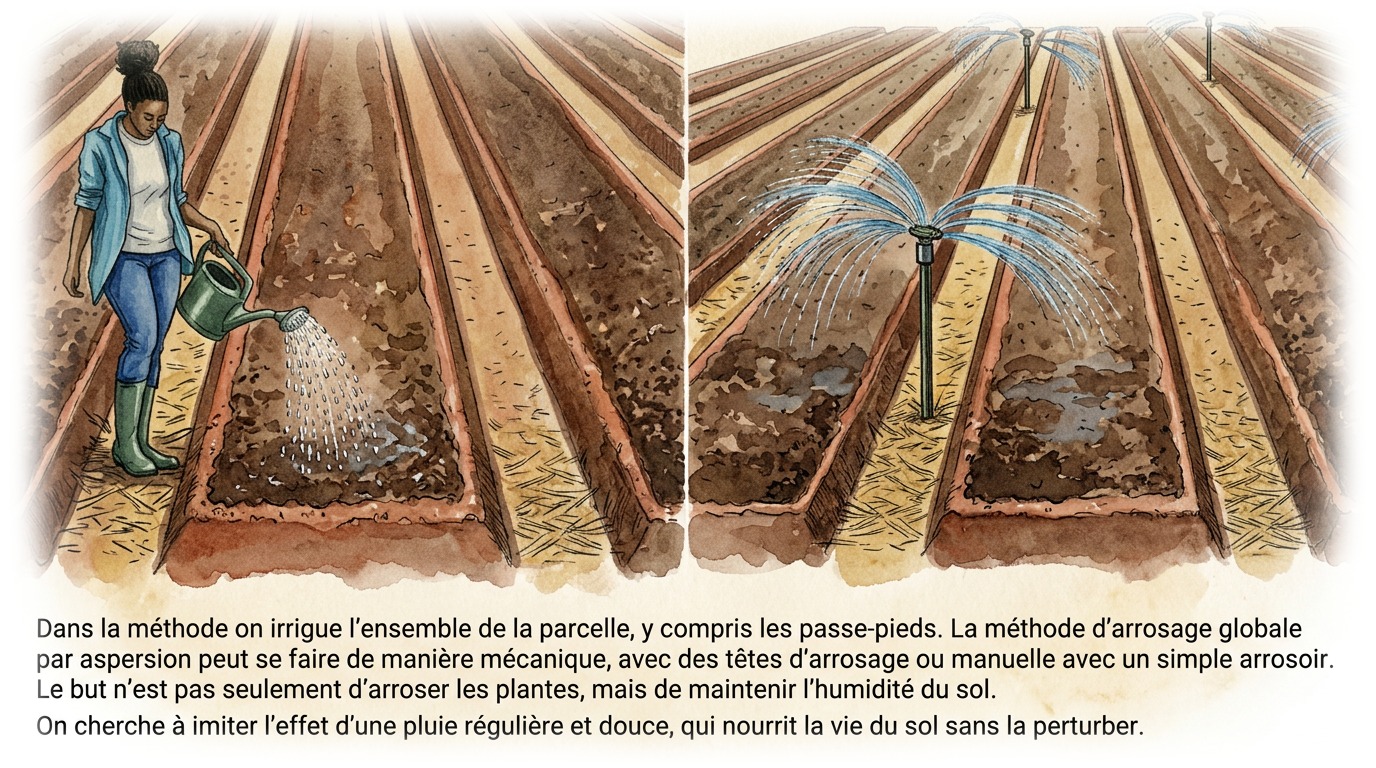
PARTIE 25 SUR 30 In this method, the entire plot is irrigated, including the pathways. The global watering method
In this method, the entire plot is irrigated, including the pathways. The global watering method

In this method, the entire plot is irrigated, including the pathways. The global watering method

by sprinkling can be done mechanically, with sprinkler heads, or manually with a simple watering can.

The goal is not only to water the plants but to maintain soil moisture.

We aim to mimic the effect of regular, gentle rain, which nourishes soil life without disturbing it.

26
PARTIE 26 SUR 30 Other irrigation techniques exist:
Other irrigation techniques exist:

Other irrigation techniques exist:

  • Drip irrigation
  • Flood irrigation
27
PARTIE 27 SUR 30 Beyond the Fundamentals
Beyond the Fundamentals

Beyond the Fundamentals

Beyond the Fundamentals

28
PARTIE 28 SUR 30 Growing Beds
Growing Beds

Growing Beds

Footpaths

We have discussed the foundations of the method:

  • Permanent beds with footpaths.
  • Compost availability.
  • Gentle and global irrigation.

Compost Irrigation

29
PARTIE 29 SUR 30 Direct sowing and transplanting
Direct sowing and transplanting

Direct sowing and transplanting

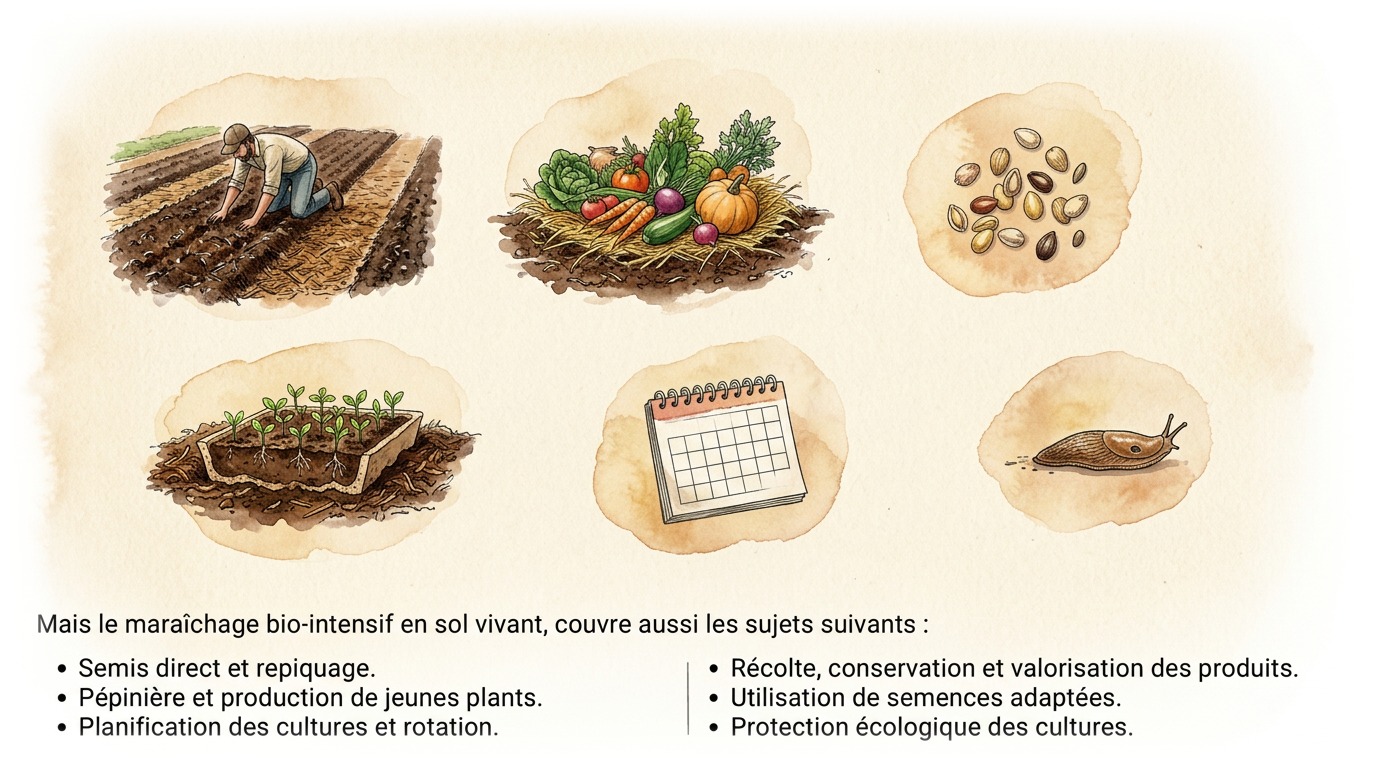
Harvest and storage Nursery Planning and rotation Seeds Protection

But bio-intensive market gardening on living soil also covers the following topics:

  • Direct sowing and transplanting.
  • Nursery and young plant production.
  • Crop planning and rotation.
  • Harvesting, storage, and valorization of produce.
  • Use of adapted seeds.
  • Ecological crop protection.
30
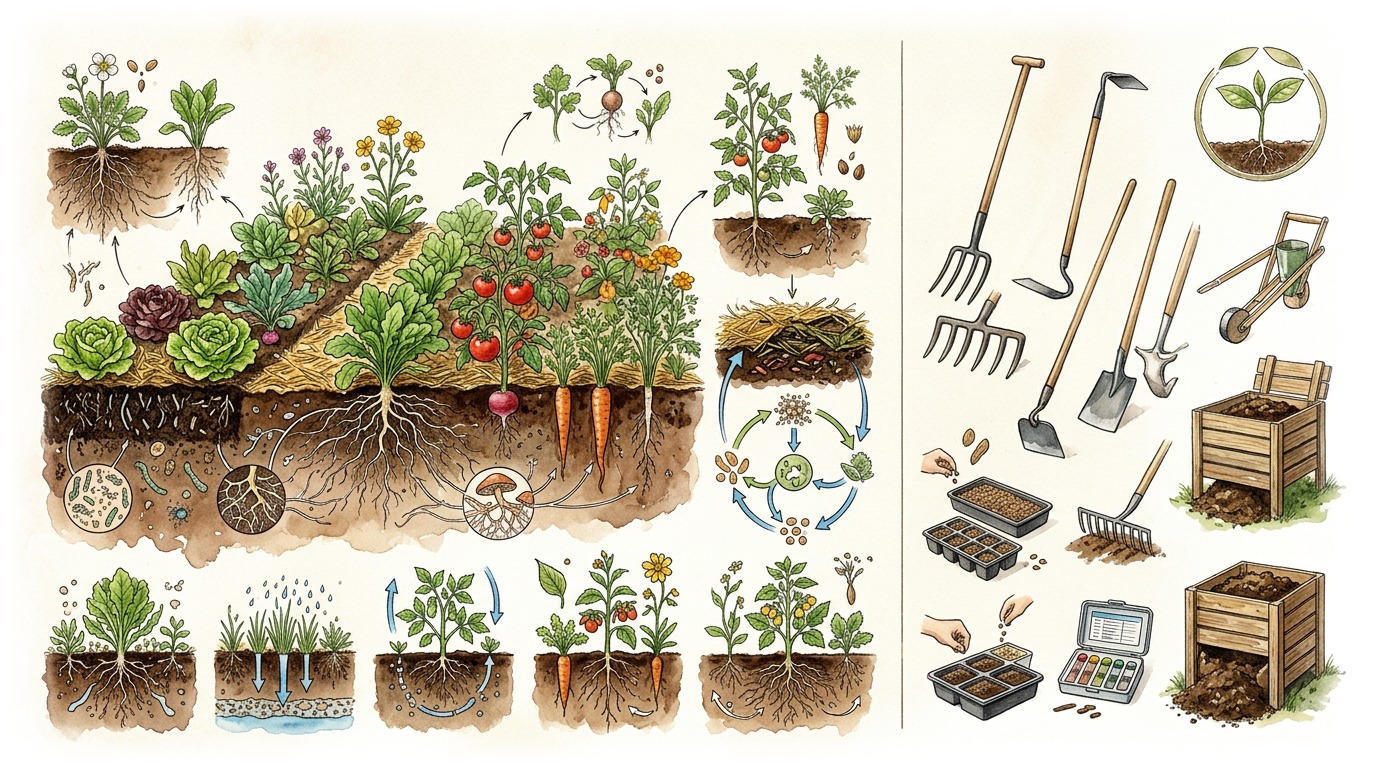
PARTIE 30 SUR 30 Bio-intensive market gardening in living soil is a way of cultivating in connection with the soil: a soil that we nourish, that

Bio-intensive market gardening in living soil is a way of cultivating in connection with the soil: a soil that we nourish, that

Bio-intensive market gardening in living soil is a way of cultivating in connection with the soil: a soil that we nourish, that
improves, and that gives back to us.

This approach allows us to:

  • Produce more by cultivating more efficiently
  • Be autonomous in the production of our inputs
  • Work with simple and accessible tools
  • Reproduce, evolve, and transmit sustainable practices