Campus
M2.2 🌱 Fondements & Sol 📖 19 parties ☀️ Terroir tropical & sahélien 🌐 English

Water and Plants

Comment l'eau circule dans la plante, repérer les signaux de soif ou d'excès d'eau, et optimiser l'arrosage pour conserver l'humidité en climat chaud.

📋 Sommaire des chapitres (19 parties) Afficher / Masquer
1
PARTIE 1 SUR 19 This module helps you understand how water enters, circulates, and exits plants.
This module helps you understand how water enters, circulates, and exits plants.

This module helps you understand how water enters, circulates, and exits plants.

It also teaches you how to optimize watering for your crops, identify whether a plant has too much or too little

water, and maintain soil moisture using simple techniques.

2
PARTIE 2 SUR 19 MARKET GARDENING
MARKET GARDENING

MARKET GARDENING

TRAINING

WATER AND PLANTS

3
PARTIE 3 SUR 19 How does water circulate within the plant?
How does water circulate within the plant?

How does water circulate within the plant?

How does water circulate within the plant?

4
PARTIE 4 SUR 19 P
P

P

Fe

Ca

K

Mg

N

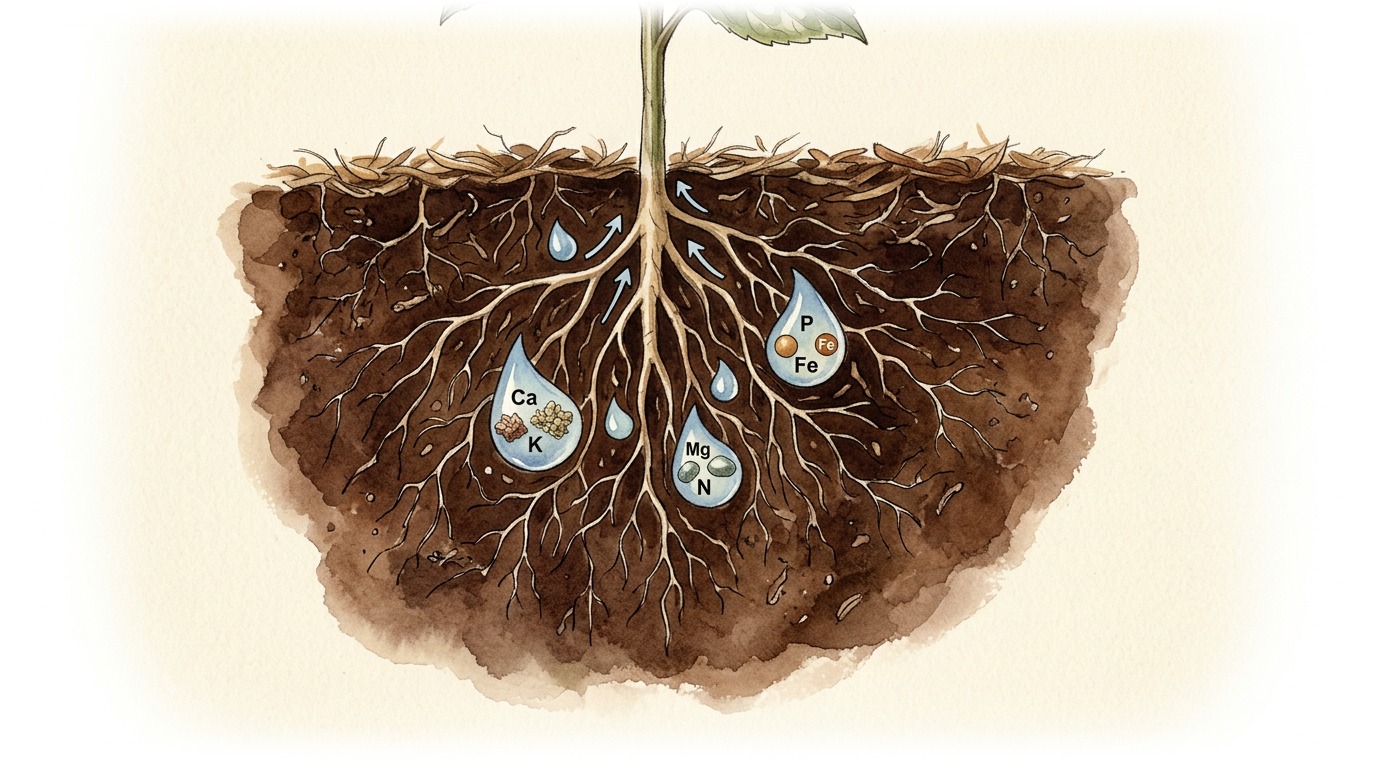
Water helps transport minerals present in the soil, such as nitrogen, phosphorus, potassium, and calcium.

Similarly, water also transports trace elements such as boron, zinc, and others.

These elements play an essential role in photosynthesis and other vital plant functions.

5
PARTIE 5 SUR 19 Transpiration
Transpiration

Transpiration

through stomata

stoma

ta

Distribution in

leaves

Ca

P

Fe

N

K

Mg

Absorption

by the roots

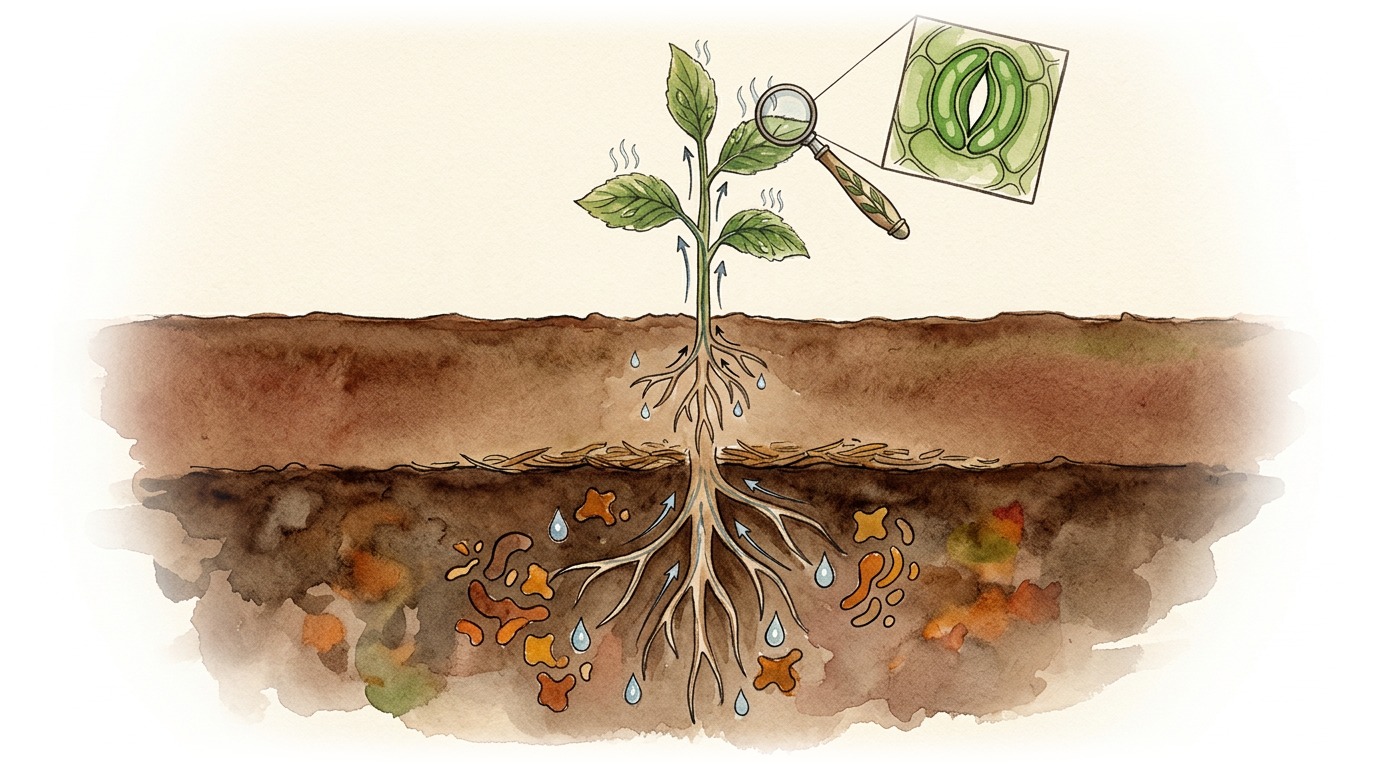
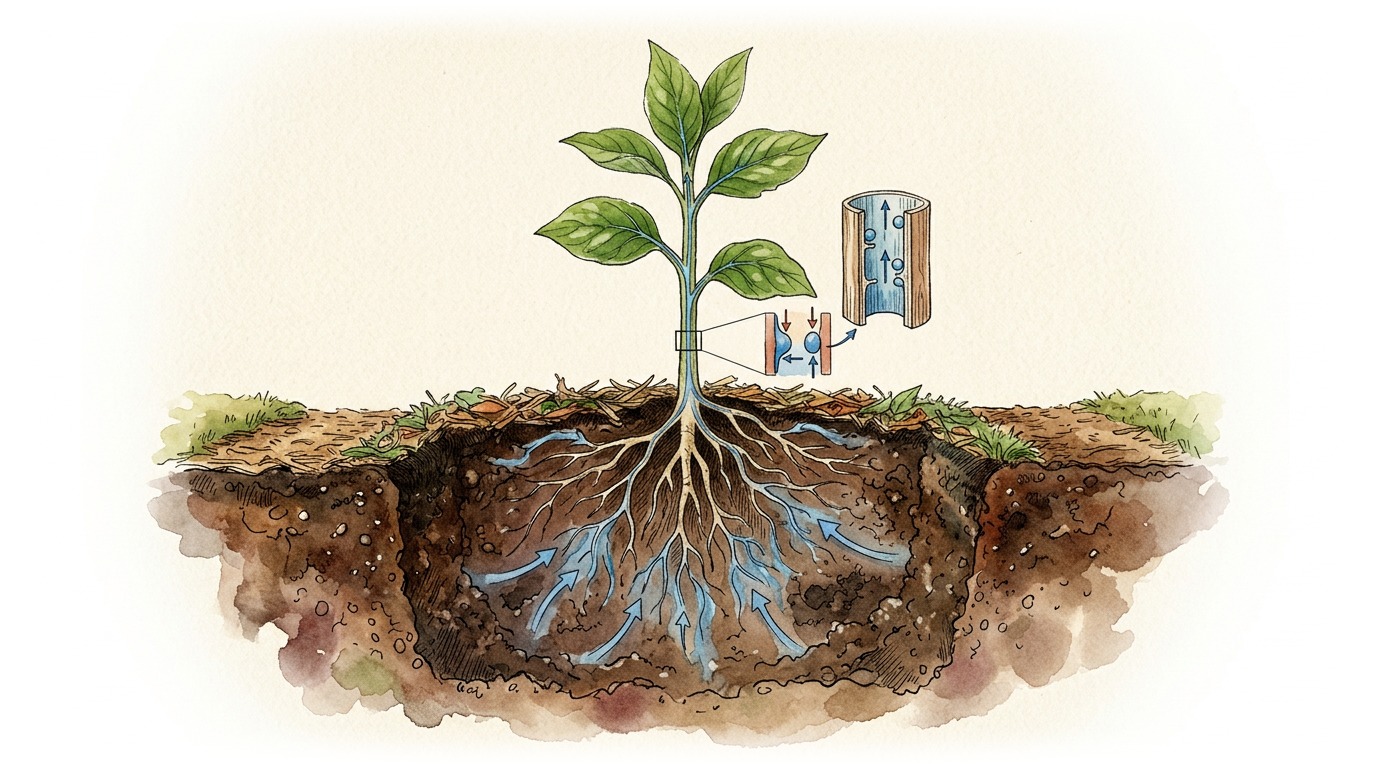
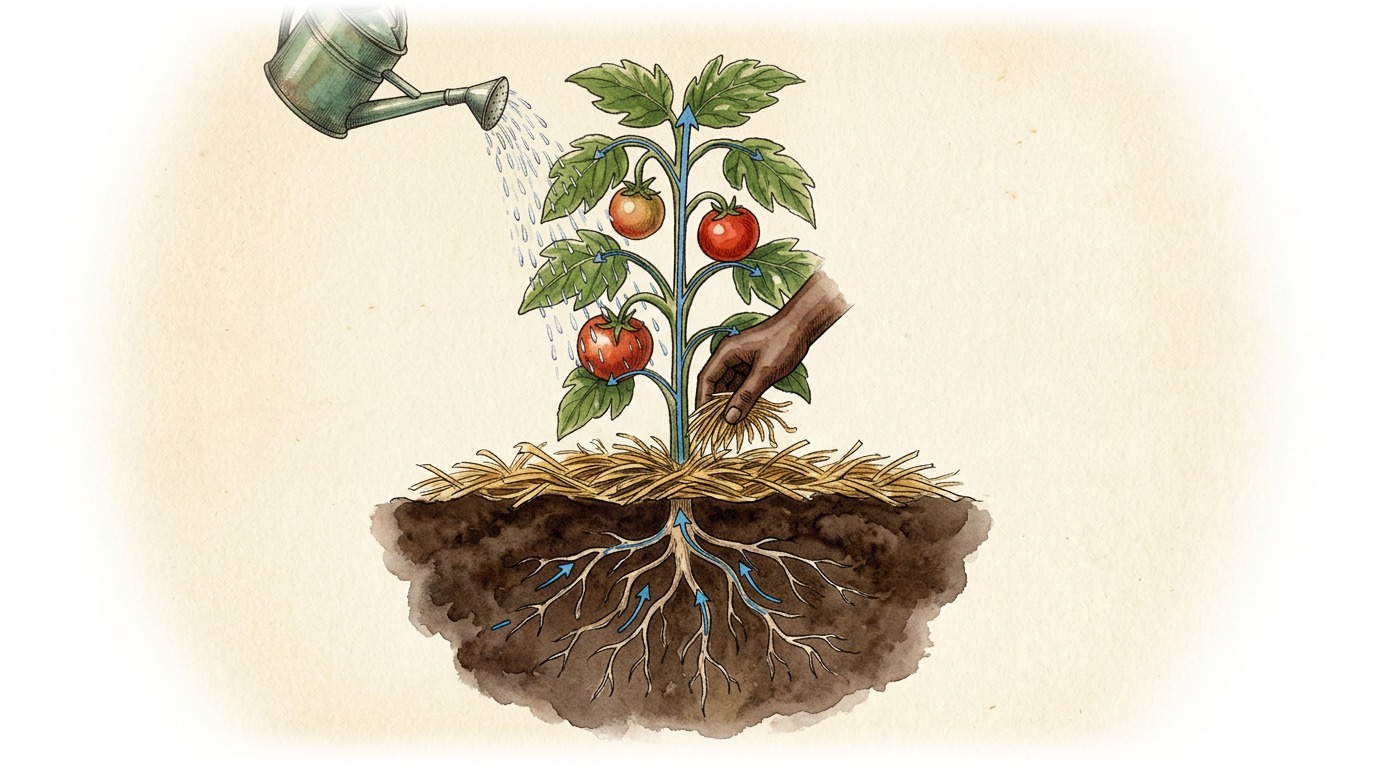
Water enters the plant through the roots. It carries with it the minerals present in the soil.

It travels up to the leaves through very fine tubes called xylem.

This movement is made possible by a key phenomenon: evapotranspiration.

Evapotranspiration is the loss of water:

through the leaves, via small openings called stomata. This is known as transpiration.

and through the soil, in the form of evaporation.

When water escapes through the stomata, it creates a suction effect, like a pump. The plant then draws water

from the roots to compensate for this loss. This is what causes water to circulate throughout the plant.

👉

6
PARTIE 6 SUR 19 Capillarity
Capillarity

Capillarity

Root pressure

Other phenomena contribute to this pumping action:

root pressure: pushes water upward.

capillarity: allows water to rise in the xylem.

This system is essential for the plant to transport the water and nutrients it needs.

7
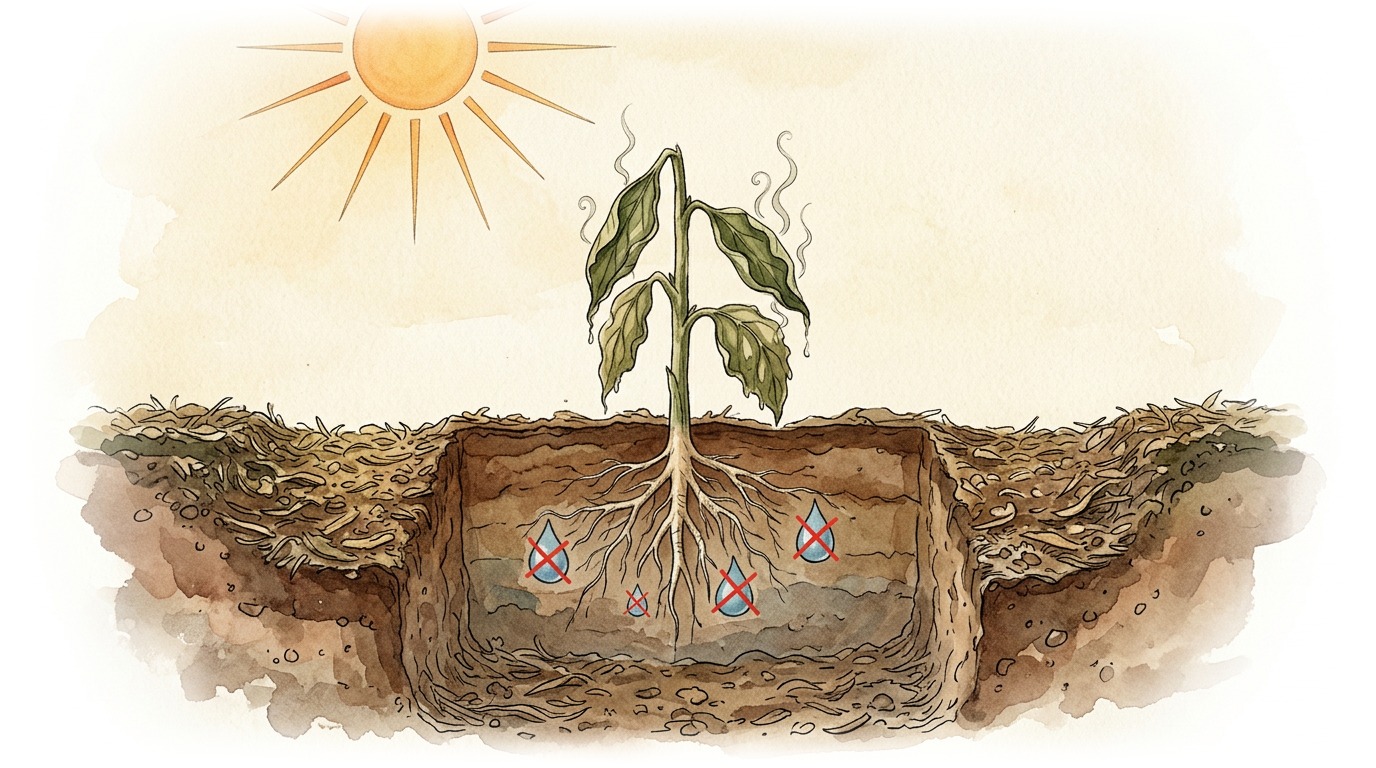
PARTIE 7 SUR 19 But if evapotranspiration becomes too strong (in hot, windy, or dry conditions), the plant can lose too much
But if evapotranspiration becomes too strong (in hot, windy, or dry conditions), the plant can lose too much

But if evapotranspiration becomes too strong (in hot, windy, or dry conditions), the plant can lose too much

water... and become dehydrated.

8
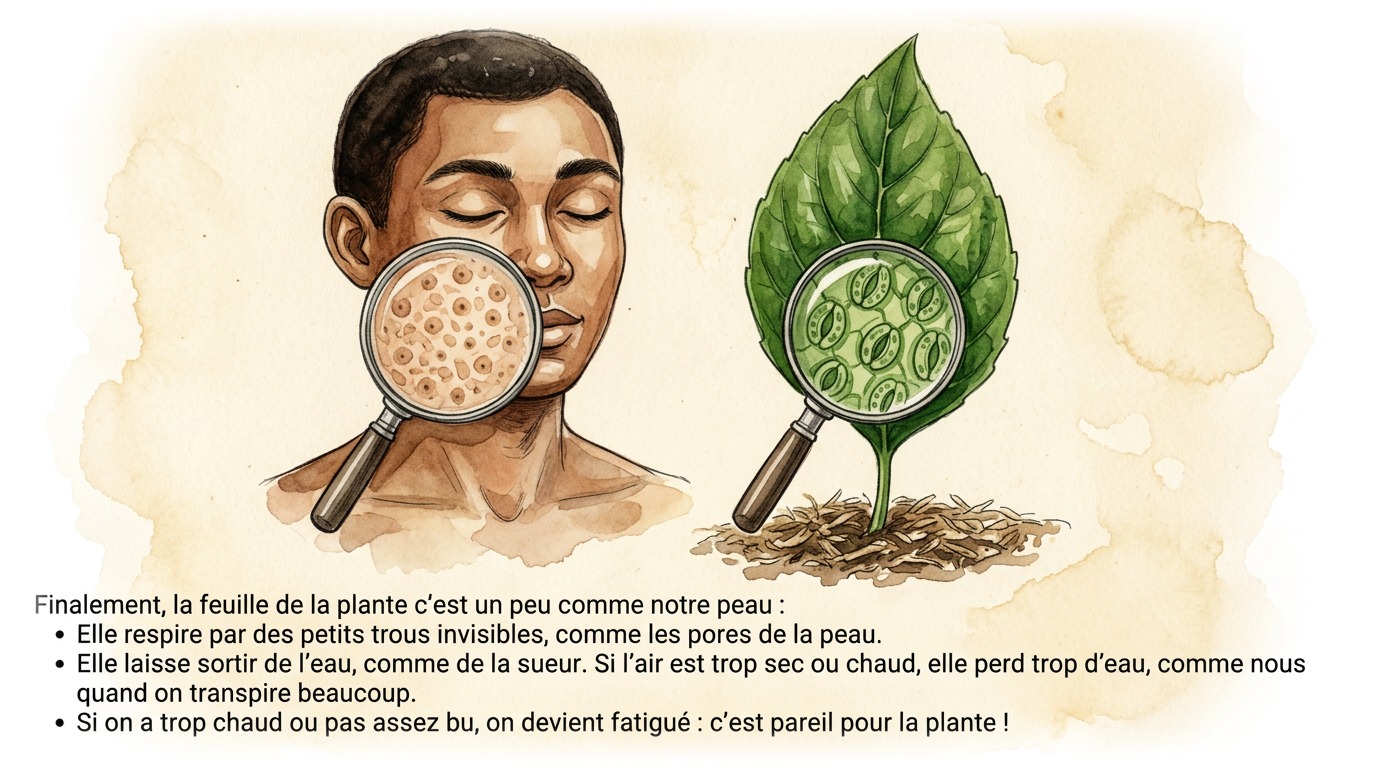
PARTIE 8 SUR 19 Ultimately, the leaves of plants are a bit like our skin:
Ultimately, the leaves of plants are a bit like our skin:

Ultimately, the leaves of plants are a bit like our skin:

They breathe through tiny invisible holes, like the pores in our skin.

They release water, like sweat. If the air is too dry or hot, they lose too much water, just like us when we sweat

a lot.

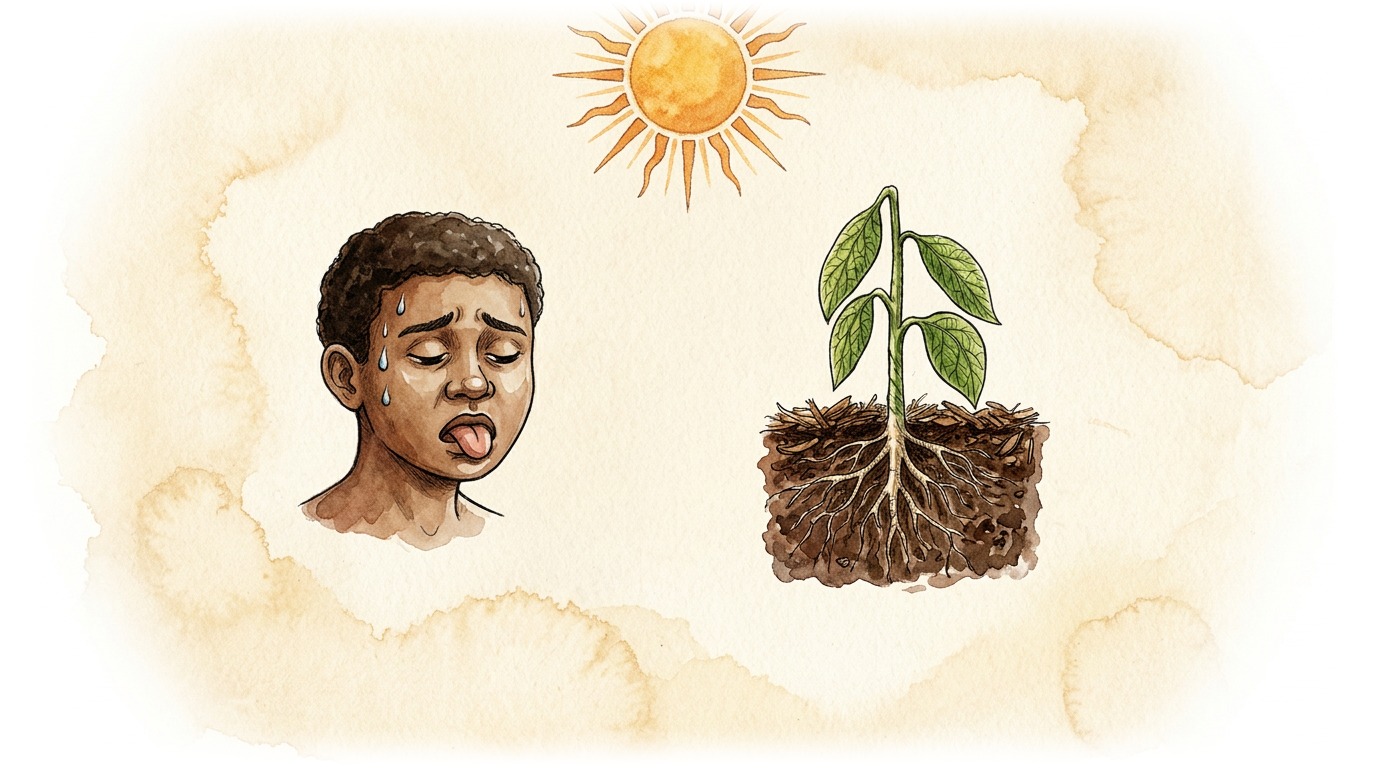
If we are too hot or haven't drunk enough, we become tired: it's the same for plants!

9
PARTIE 9 SUR 19 And just like our skin, leaves need protection:
And just like our skin, leaves need protection:

And just like our skin, leaves need protection:

from the scorching sun,

from the wind,

from lack of water.

10
PARTIE 10 SUR 19 What influences water requirements?
What influences water requirements?

What influences water requirements?

What influences water requirements?

11
PARTIE 11 SUR 19 The presence of
The presence of

The presence of

mulch

Culture

WATER NEEDS

DEPEND ON

Stage of

growth

Soil

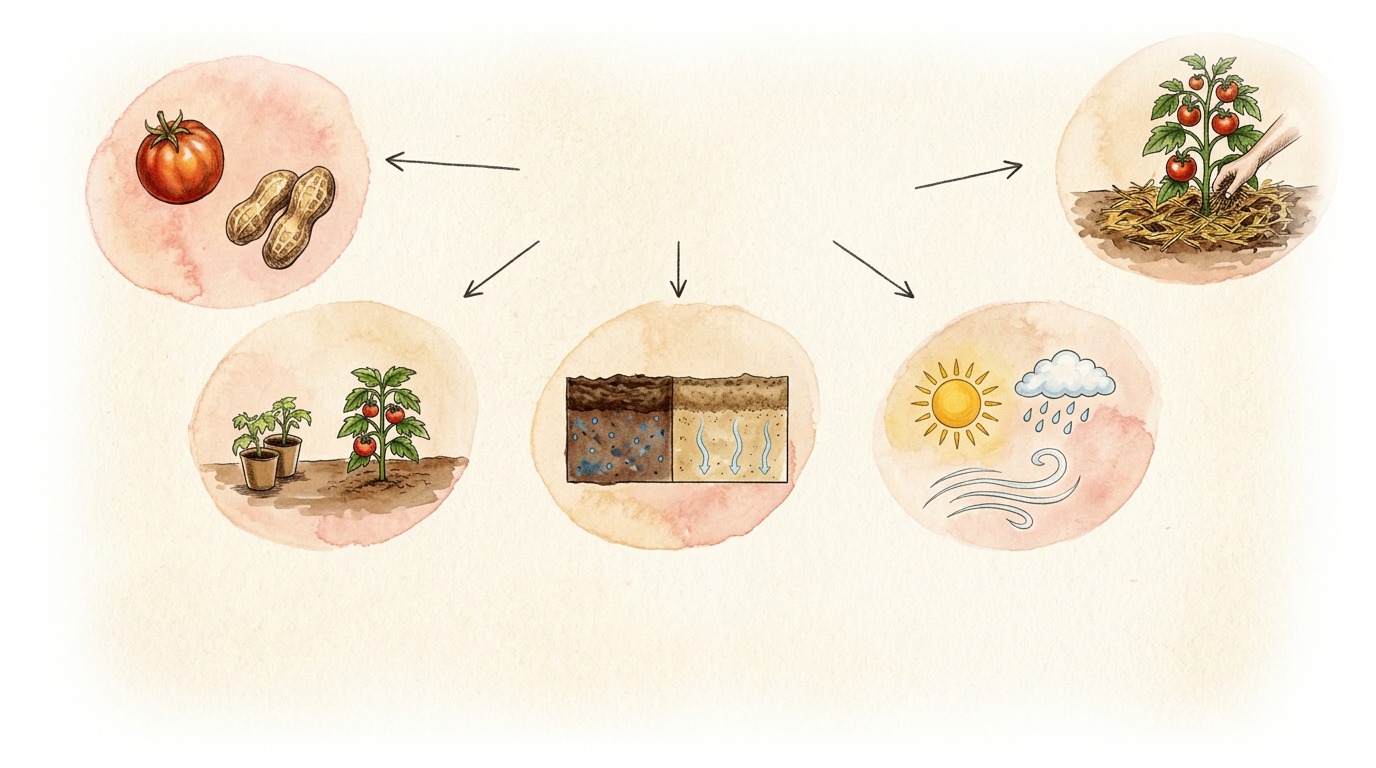
Culture: some plants need more water than others.

Stage of growth: a small plant needs more water.

Clay soil retains water, while sandy soil allows it to drain away.

Temperature, wind, and air humidity.

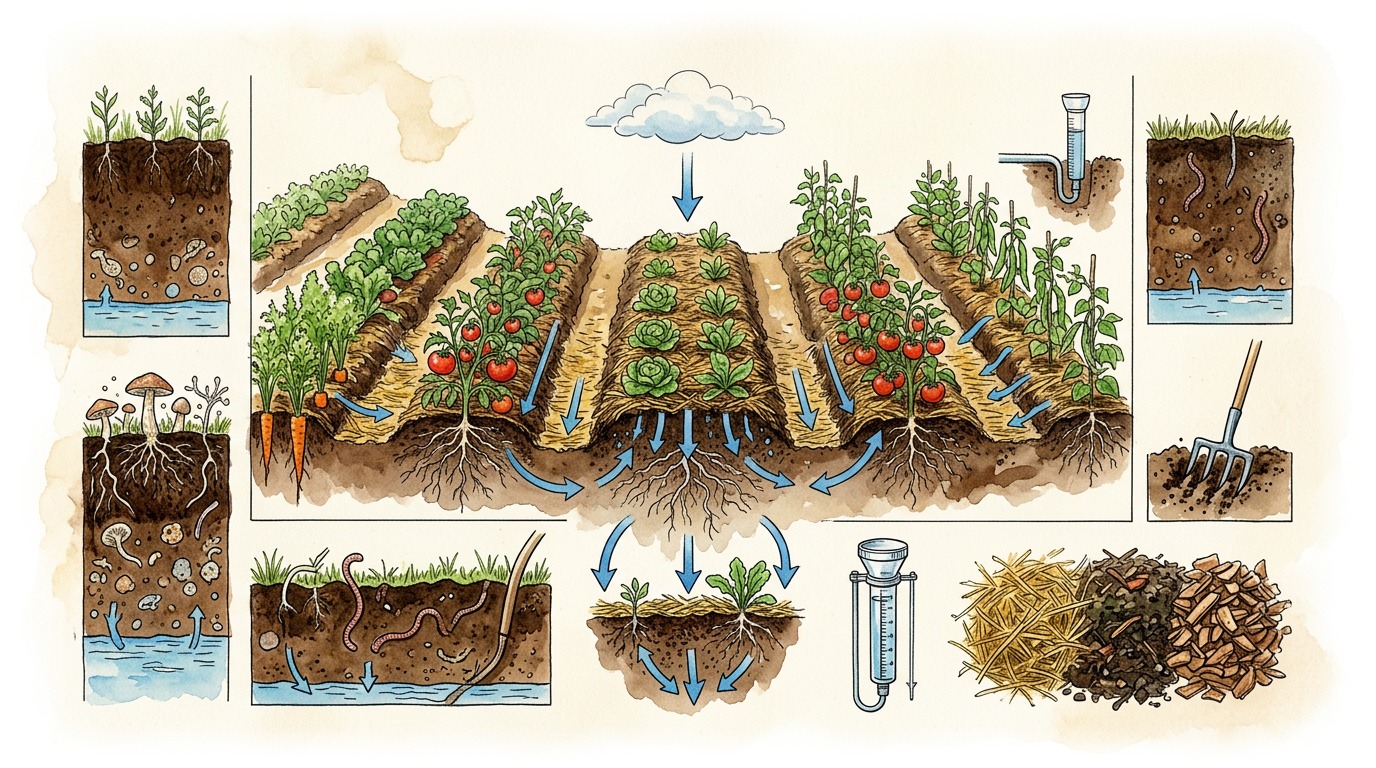
The presence of mulch, compost, and charcoal in the soil.

The weather

12
PARTIE 12 SUR 19 How can you spot the signs of water stress?
How can you spot the signs of water stress?

How can you spot the signs of water stress?

How can you spot the signs of water stress?

13
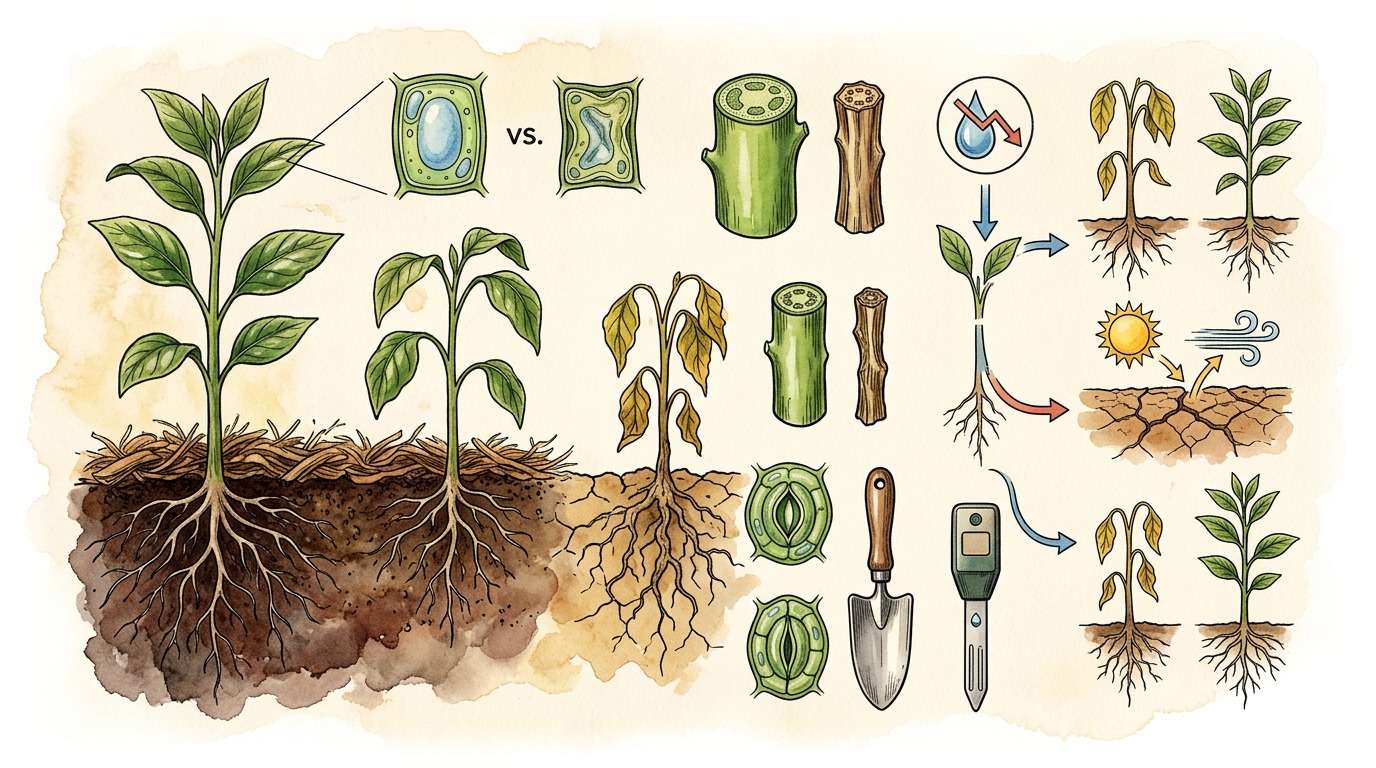
PARTIE 13 SUR 19 If the plant lacks water:
If the plant lacks water:

If the plant lacks water:

Soil is dry deep down.

Leaves are limp, drooping, falling off, or turning

yellow.

Growth is slow.

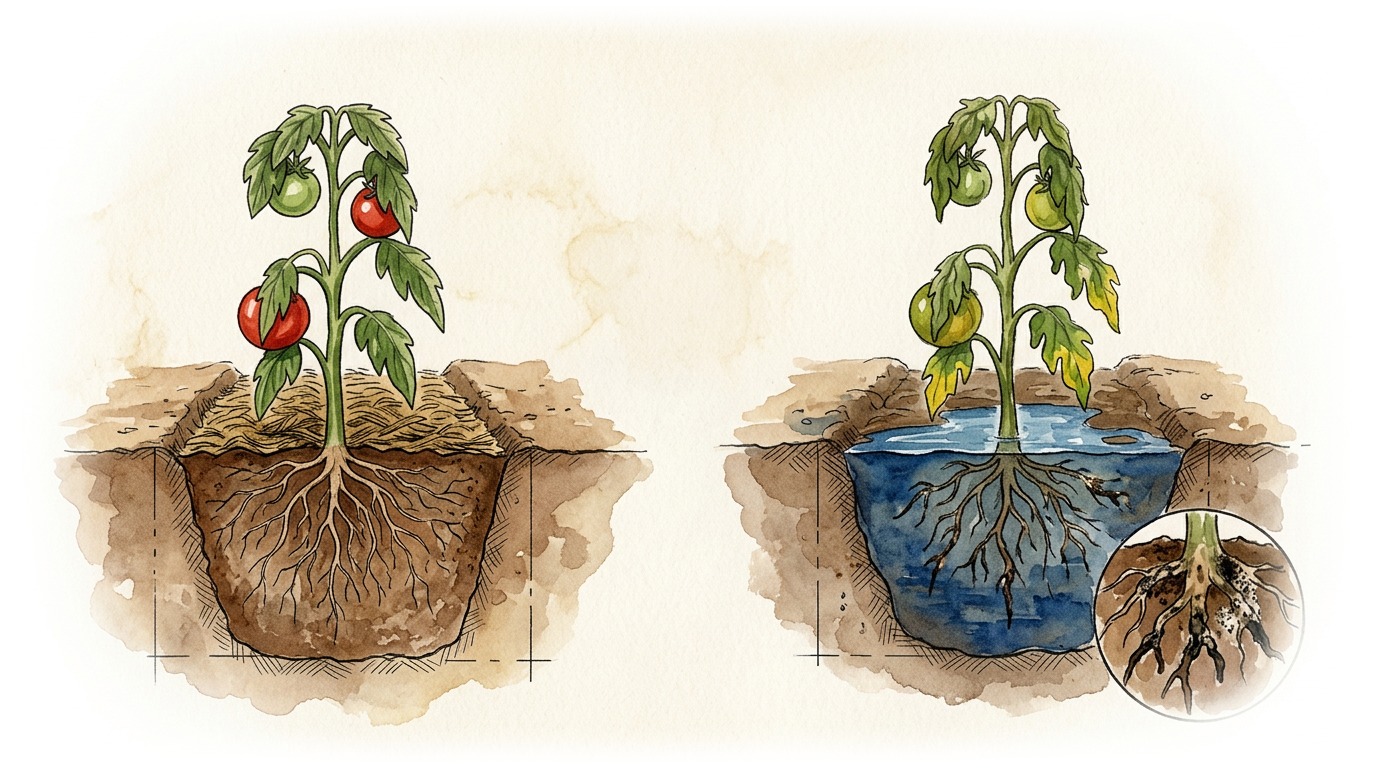
If the plant has too much water:

Leaves wilting even though the soil is wet.

Unpleasant odor: rotten roots and suffocated

roots.

Fungi or suspicious spots.

14
PARTIE 14 SUR 19 How to water properly and retain water in the soil?
How to water properly and retain water in the soil?

How to water properly and retain water in the soil?

How to water properly and retain water in the soil?

15
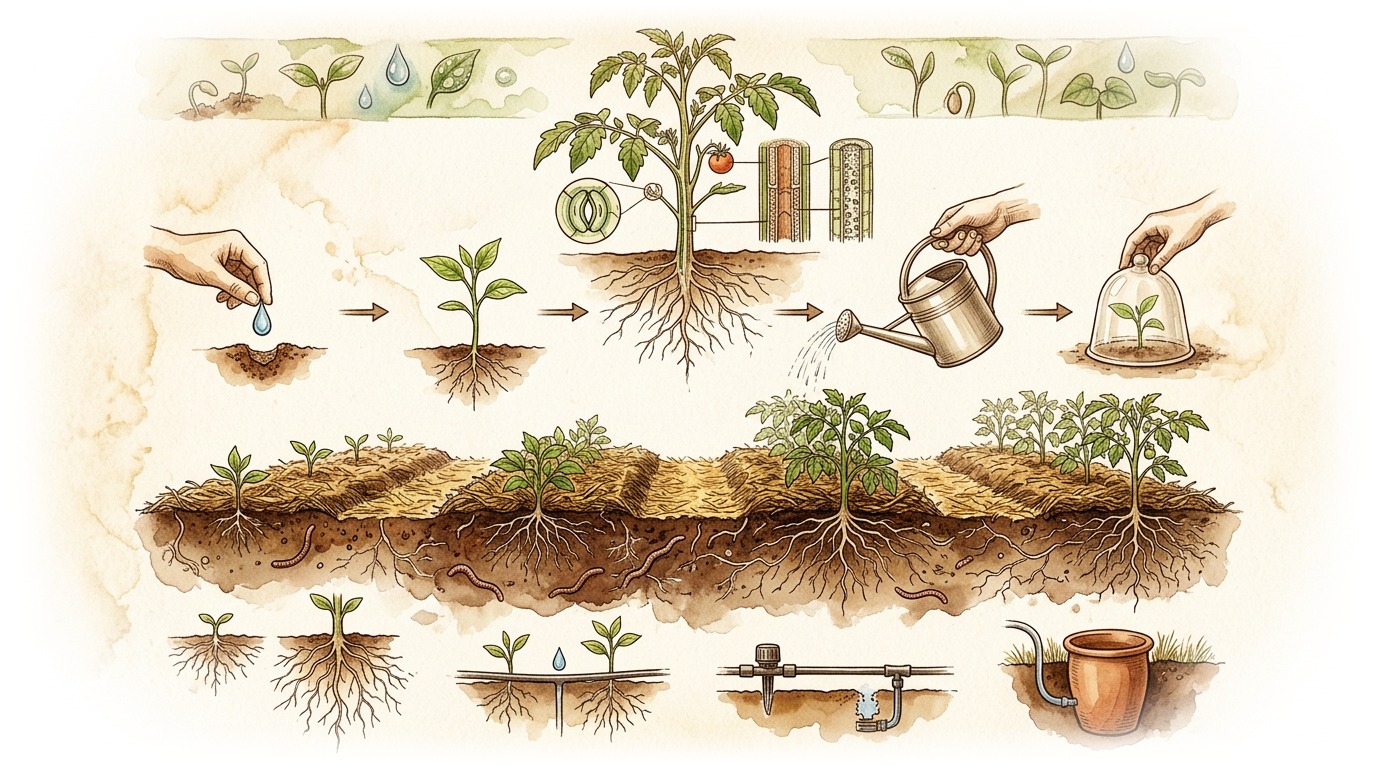
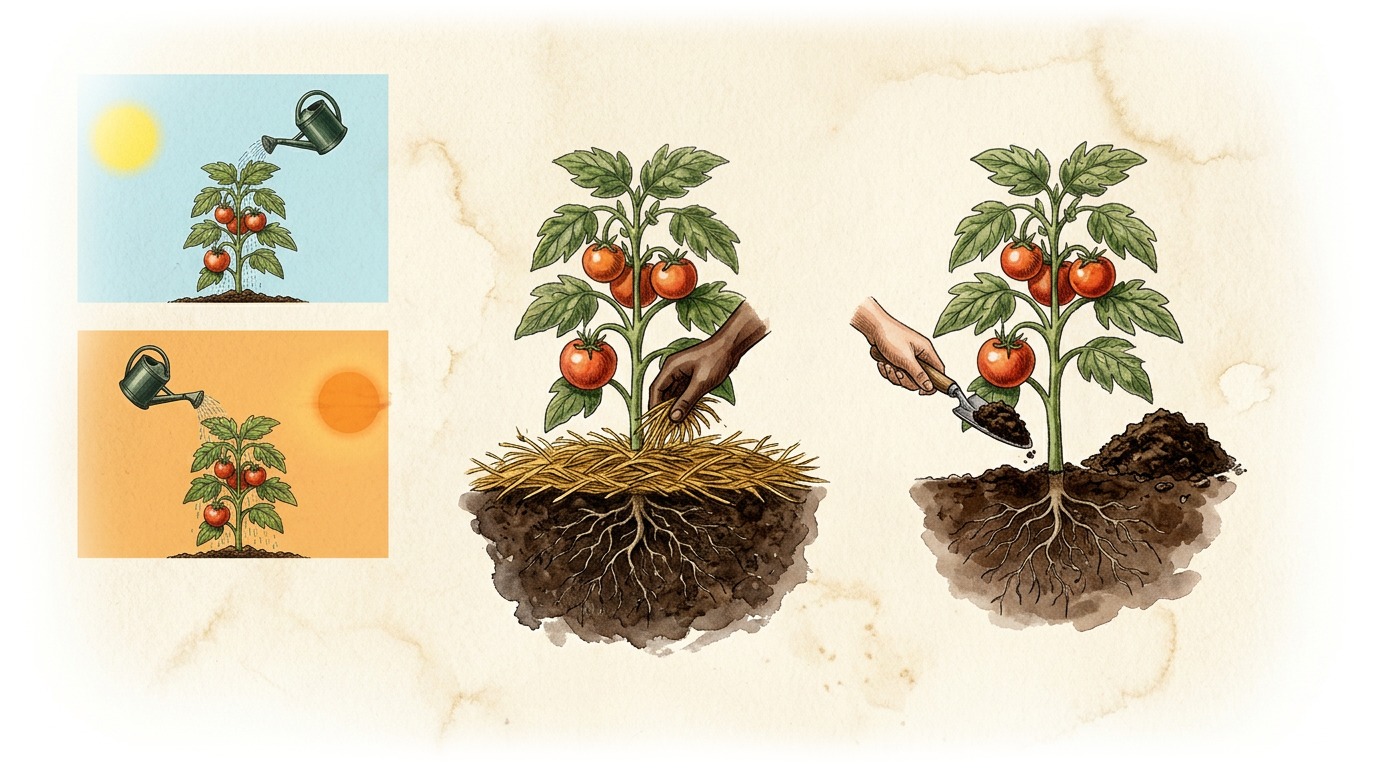
PARTIE 15 SUR 19 Water in the morning or evening, never in direct sunlight.
Water in the morning or evening, never in direct sunlight.

Water in the morning or evening, never in direct sunlight.

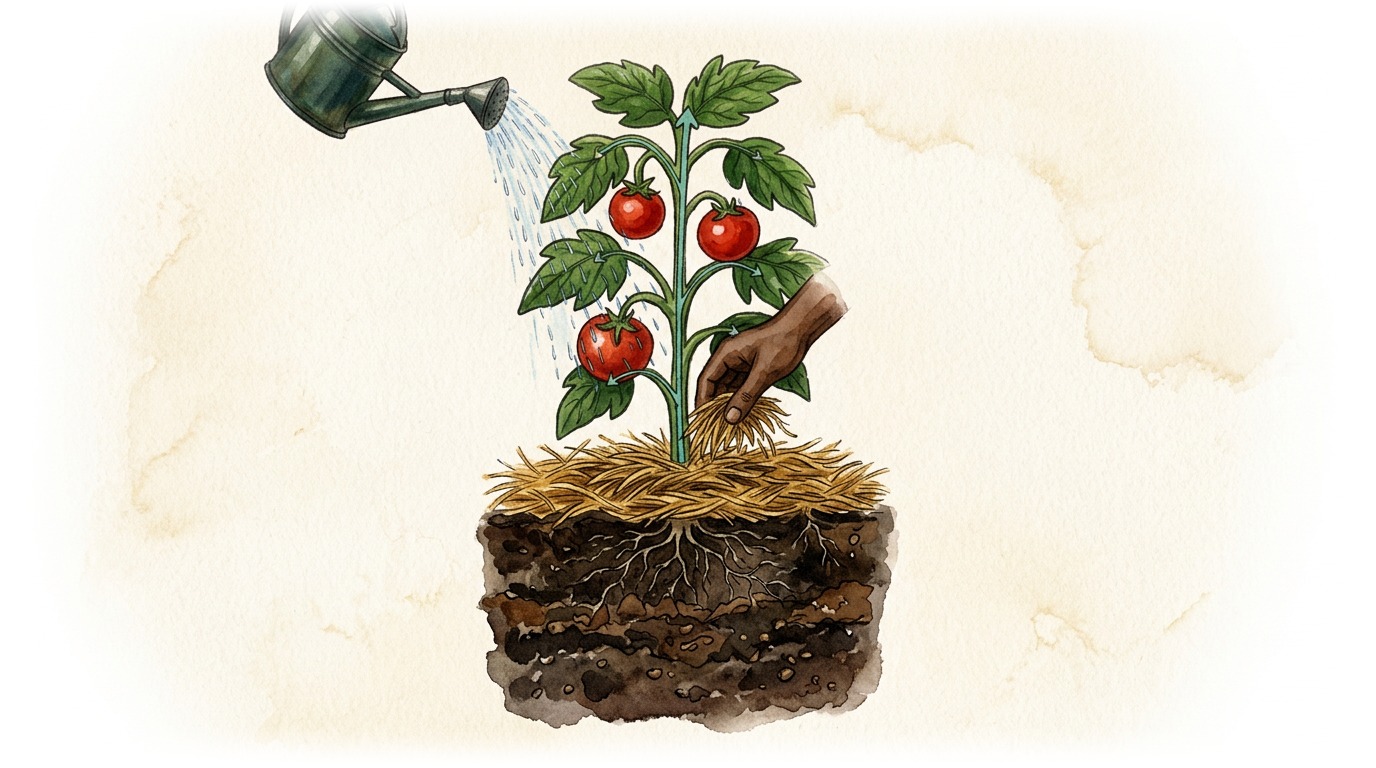
Add mulch to retain water: straw, dry leaves, shells.

Use compost to retain moisture.

Water sufficiently so that the soil is moist deep down, not just on the surface.

16
PARTIE 16 SUR 19 Why add charcoal to the soil?
Why add charcoal to the soil?

Why add charcoal to the soil?

Why add charcoal to the soil?

17
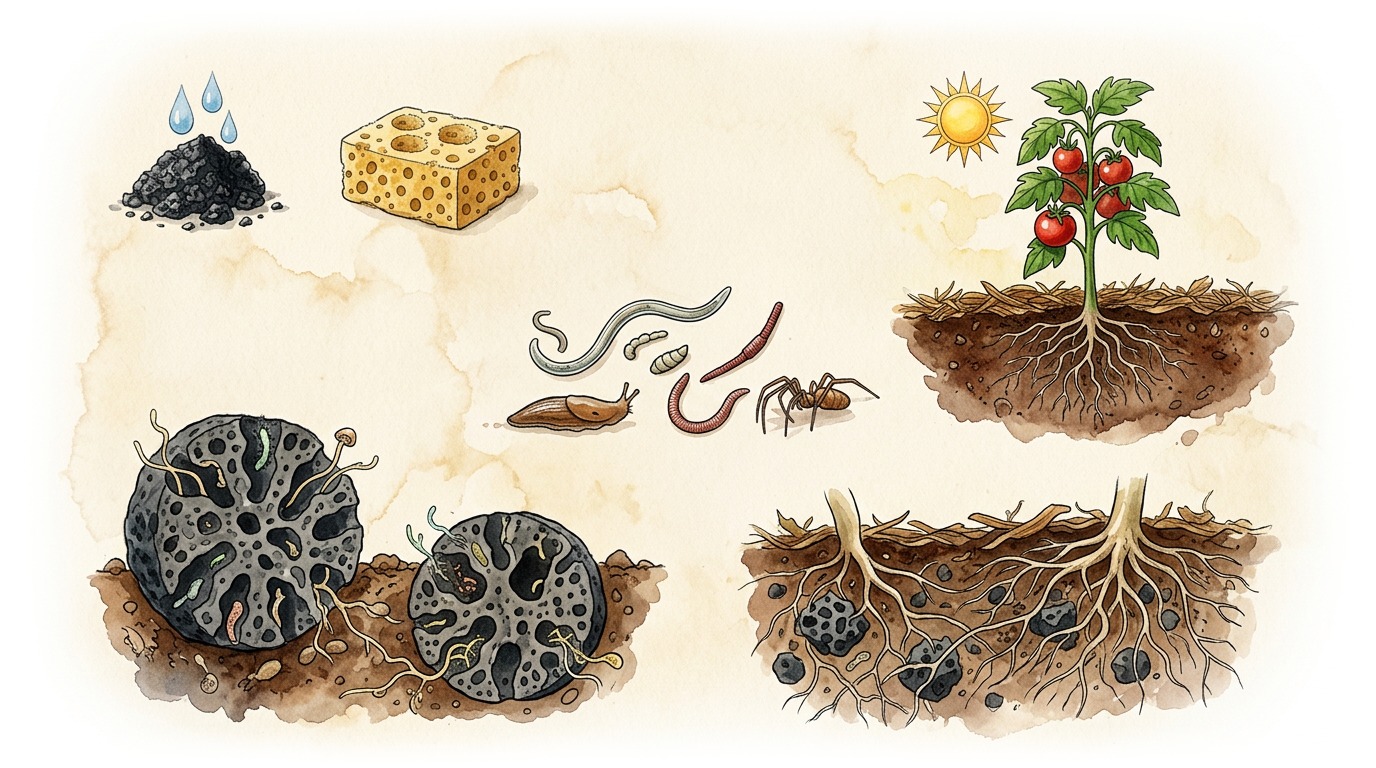
PARTIE 17 SUR 19 Retains water like a sponge
Retains water like a sponge

Retains water like a sponge

Strengthens crops

Promotes soil life

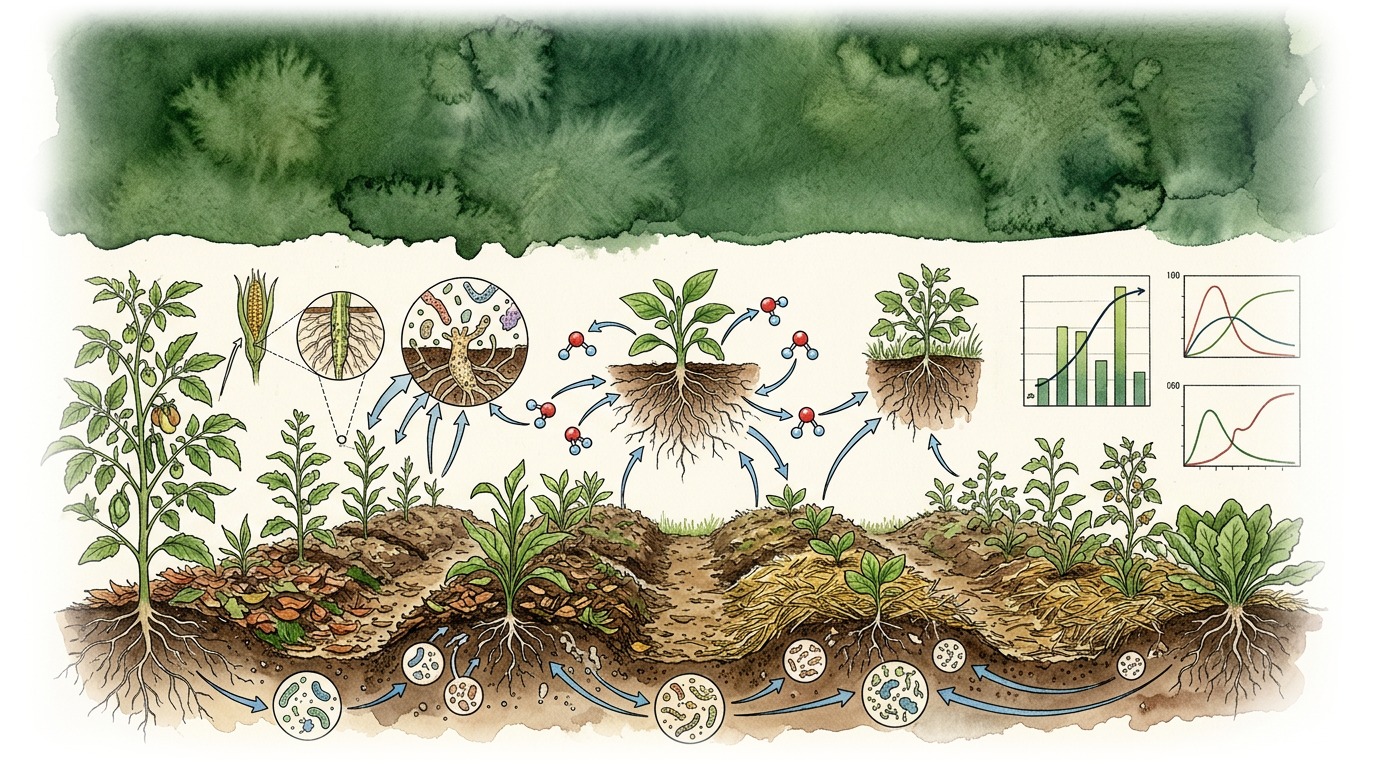
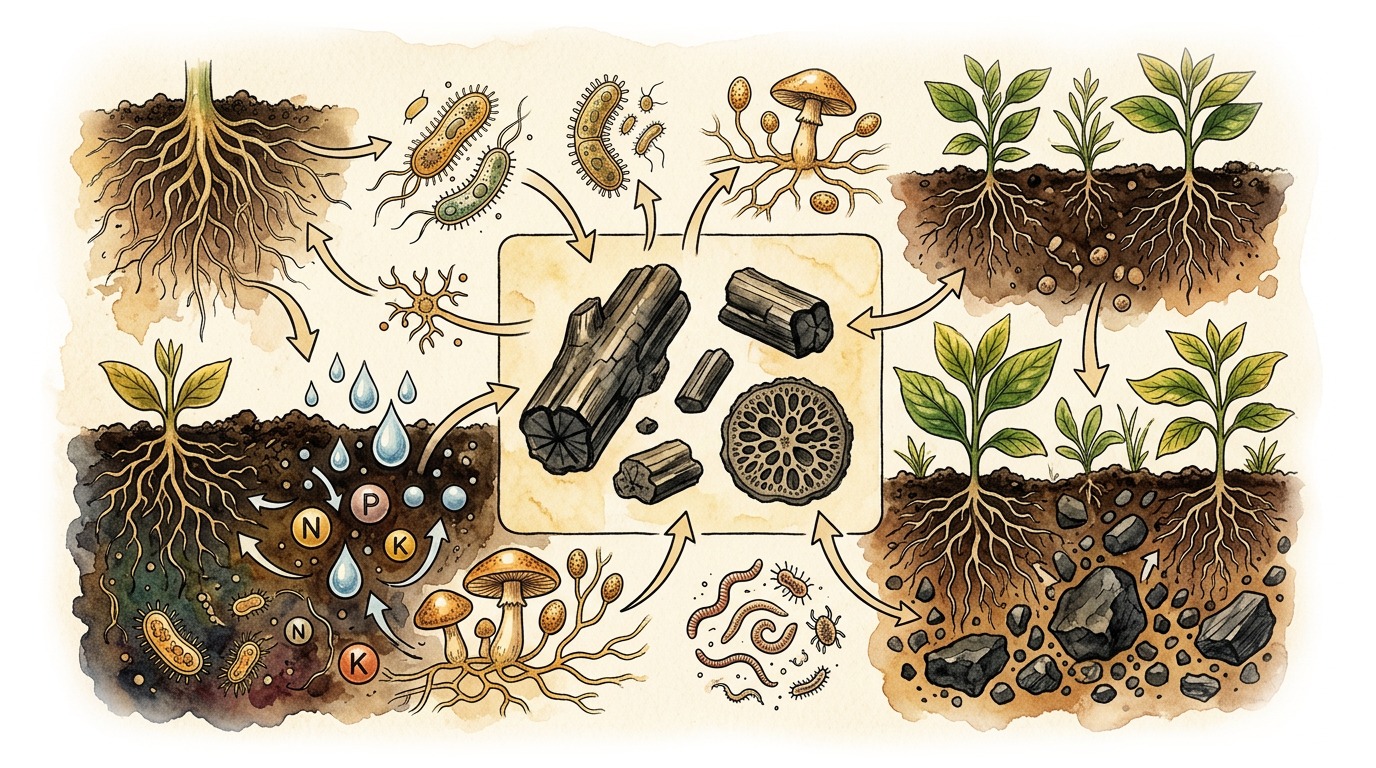
Ground charcoal, known as biochar, is an excellent ally for:

Water retention: Charcoal acts like a sponge, retaining water and nutrients in its cavities. It stores moisture

and then slowly releases it when the soil is dry. It can retain up to five times its weight in water.

Nourishing the soil: Charcoal provides a refuge for beneficial microorganisms, such as bacteria and fungi,

which help plants to feed and enhance soil life.

Strengthening crop resistance: Charcoal improves water retention and soil stability, which helps plants to

better withstand drought.

18
PARTIE 18 SUR 19 OR
OR

OR

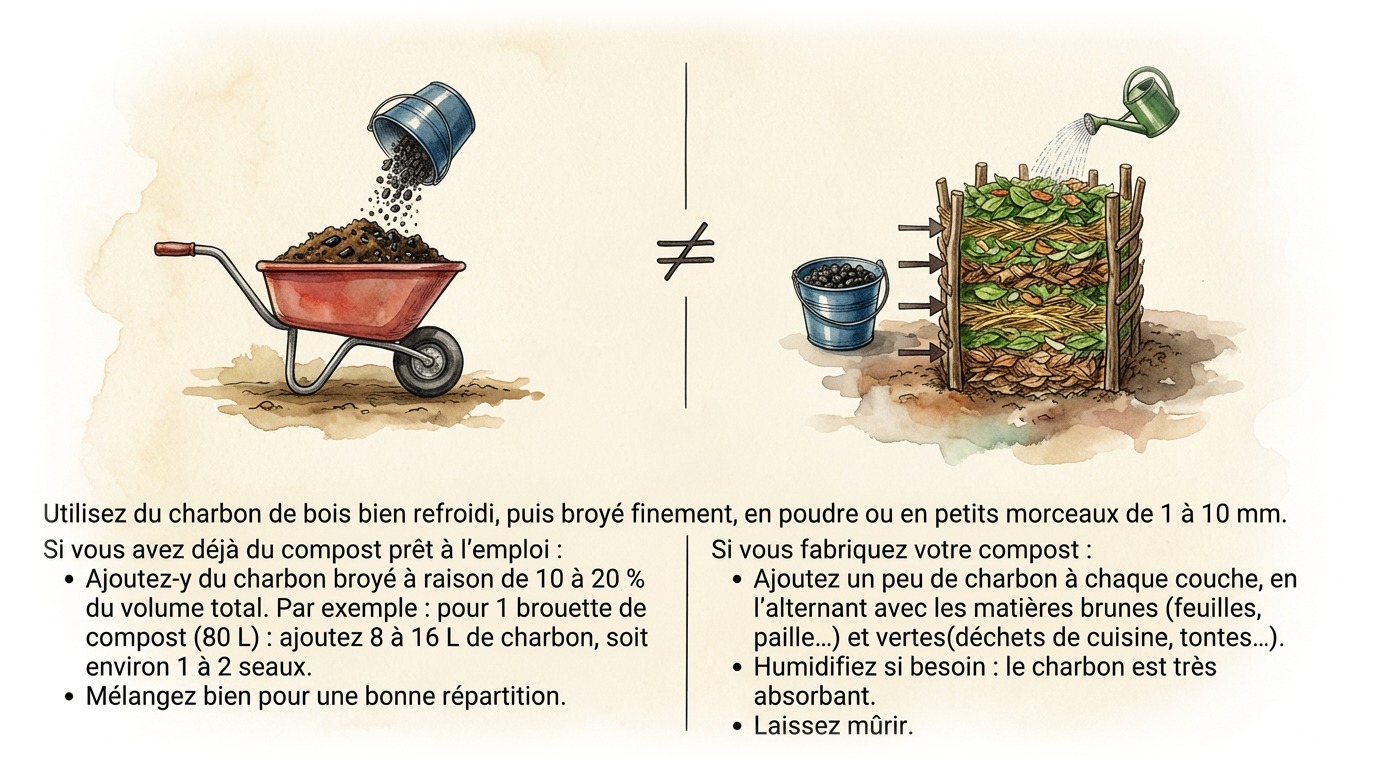
Use charcoal that has cooled completely, then grind it finely into powder or small pieces measuring 1 to 10 mm.

If you already have compost ready to use:

Add crushed charcoal at a rate of 10 to 20% of the

total volume. For example: for 1 wheelbarrow of

compost (80 L): add 8 to 16 L of charcoal, or about

1 to 2 buckets.

Mix well for even distribution.

If you make your own compost:

Add a little charcoal to each layer, alternating it

with brown materials (leaves, straw, etc.) and green

materials (kitchen waste, grass clippings, etc.).

Moisten if necessary: charcoal is very absorbent.

Leave to mature.

19
PARTIE 19 SUR 19 Water is essential to plant life: it enters through the roots, circulates to the leaves, and exits through the stomata.
Water is essential to plant life: it enters through the roots, circulates to the leaves, and exits through the stomata.

Water is essential to plant life: it enters through the roots, circulates to the leaves, and exits through the stomata.

Understanding this process allows you to water more effectively, at the right time and in the right amount.

With a few simple steps—observing the plant, adjusting watering, mulching the soil, enriching the compost—you

can help your crops grow better, even during dry periods.