Campus
M3.1 🌱 Techniques & Pratiques 📖 36 parties ☀️ Terroir tropical & sahélien 🌐 English

Making Crop Beds

Toutes les étapes pour mesurer, tracer, creuser les passe-pieds, amender, aérer et pailler vos planches de culture permanentes de 75 cm.

📋 Sommaire des chapitres (36 parties) Afficher / Masquer
1 We are going to show you how to set up cultivation beds for an intensive organic market gardening 2 What are cultivation beds? 3 CULTIVATION BEEDS 4 FOOTPATHS 5 For the training, you will need a plot of about 12 x 12 m. 6 10 cultivation beds 7 You will need the following tools: a meter, 40 stakes of 45-50 cm, 30 meters of string/small rope, a shovel or a 8 If you have compost or manure, plan for 4 wheelbarrows per bed. 9 The setup of the beds is done in 7 steps. 10 STEP 1 : CHOOSING AND PREPARING YOUR PLOT 11 12 m 12 If necessary, level the surface of the soil. 13 STEP 2 : MEASURING THE BEDS 14 First, you must take the necessary measurements to make the beds. 15 Start at one end of the field. Plant a stake. Use a meter to measure 40 cm in width. 16 Then measure the width of the first bed, plant a 3rd stake at 75 cm. 17 10 BEDS 18 Cross the field in length, over 10 meters. 19 STEP 3 : DIGGING THE FOOTPATHS AND PUTTING 20 To clearly delineate the beds and footpaths, and to make straight lines, you will use a taut rope in the length 21 Dig the footpath with a shovel following the ropes. 22 The footpaths should have a depth of 10 to 20 cm. 23 11 FOOTPATHS 24 STEP 4 : AMENDING THE CULTIVATION BEDS 25 It is essential to enrich the soil and improve its texture. For this, you can use compost or manure. 26 STEP 5 : AERATING THE SOIL OF THE BEDS AND 27 This step allows both to aerate the soil and to mix the earth with the compost or manure deposited in the previous 28 Insert the tool as deeply as possible into the soil. 29 Gently lift the soil, taking care not to turn it over. Be careful not to disturb the soil layers, the amendment should 30 Use a rake to level the soil of the beds. 31 STEP 6 : MULCHING THE FOOTPATHS 32 Fill the footpaths with dry organic matter. This can be straw, leaves, or dry crop residues. 33 This straw will be compacted over time and as you walk on it. Its role is to prevent weeds in the footpaths and to 34 STEP 7 : WATERING 35 Once you have finished preparing the beds, water the entire plot generously. 36 Congratulations, your plot now has 10 beds ready for intensive organic market gardening in living soil.

1
PARTIE 1 SUR 36 We are going to show you how to set up cultivation beds for an intensive organic market gardening
We are going to show you how to set up cultivation beds for an intensive organic market gardening

We are going to show you how to set up cultivation beds for an intensive organic market gardening

enterprise in living soil.

2
PARTIE 2 SUR 36 What are cultivation beds?
What are cultivation beds?

What are cultivation beds?

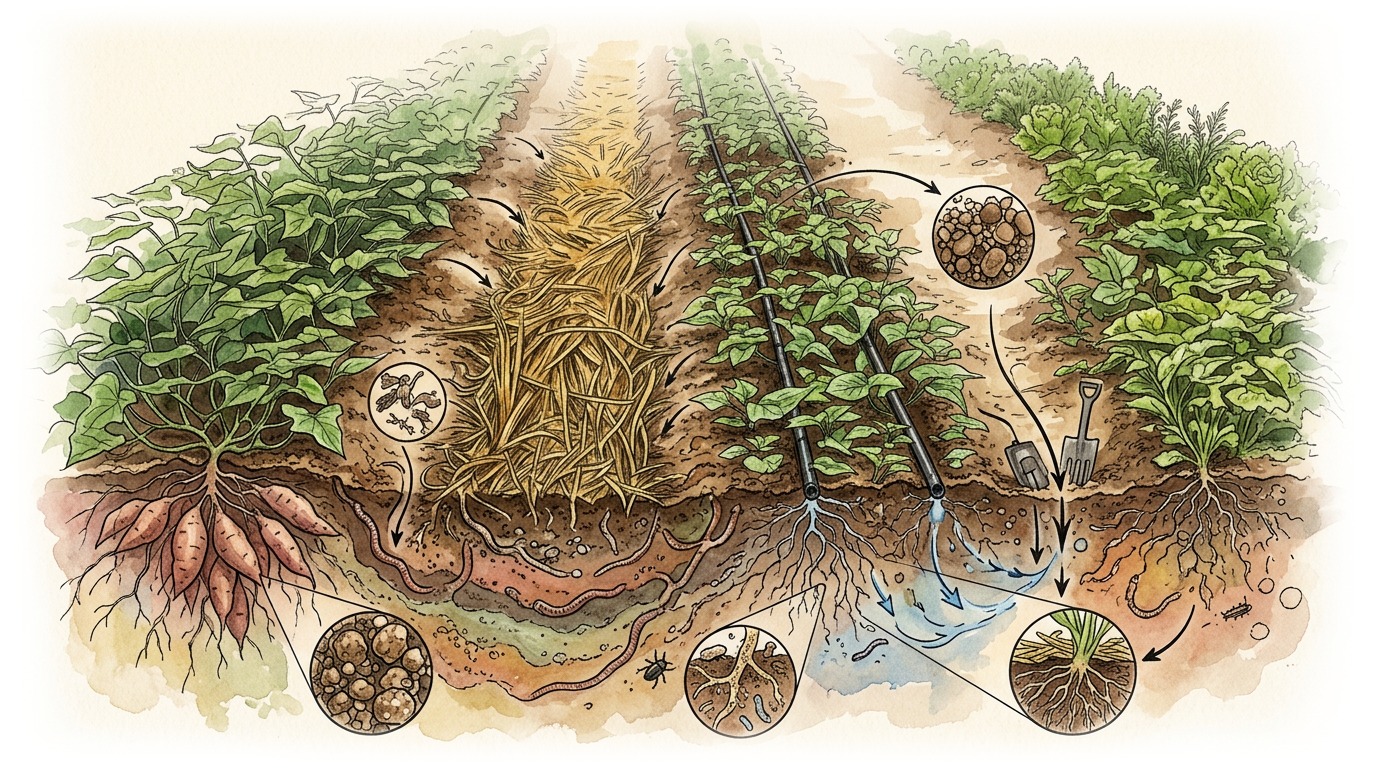
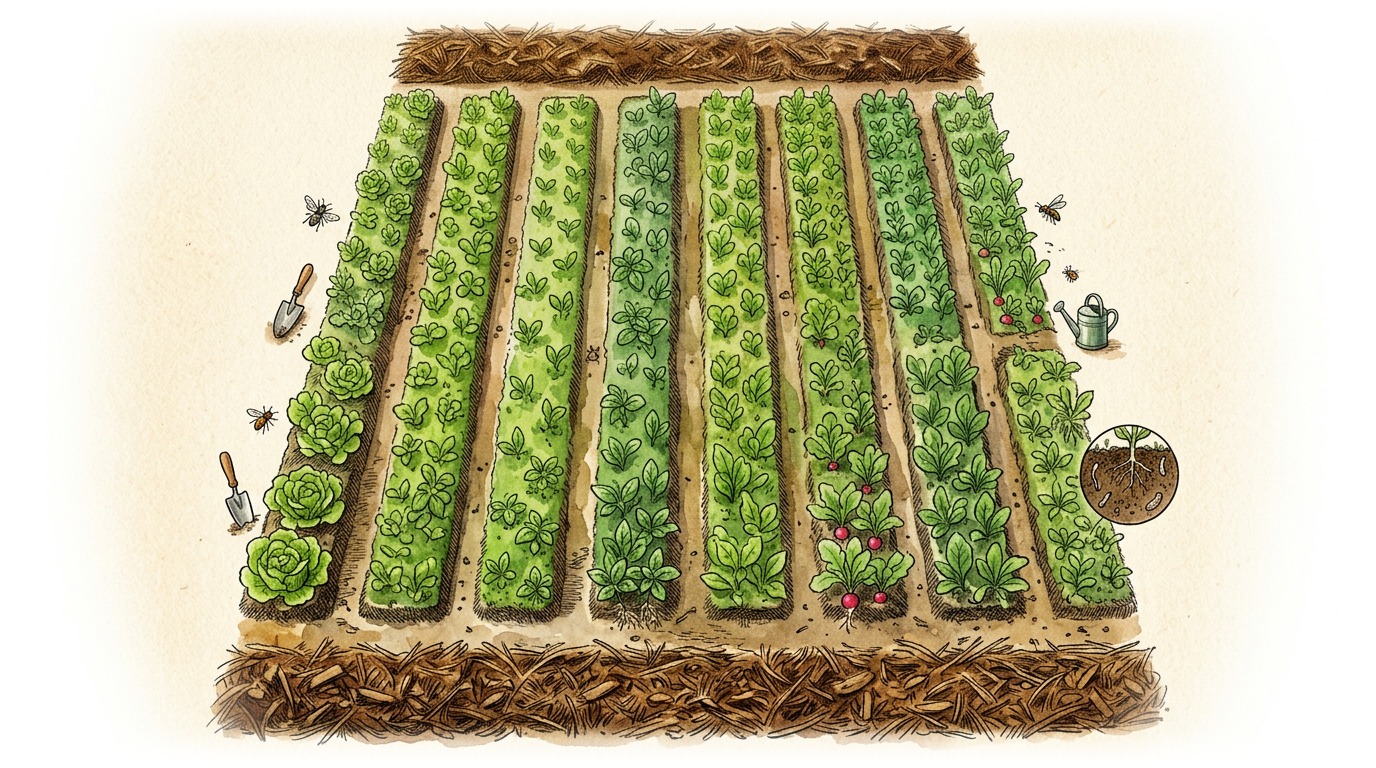
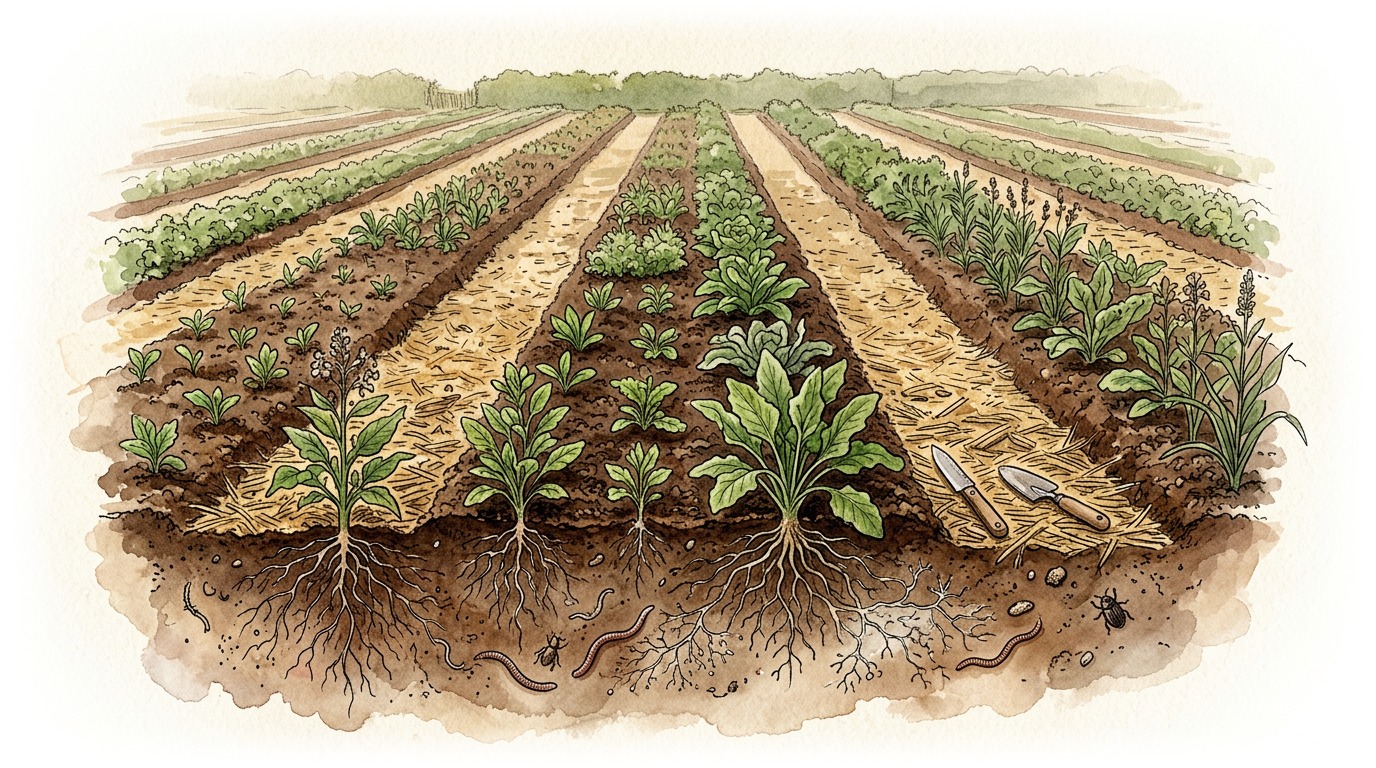
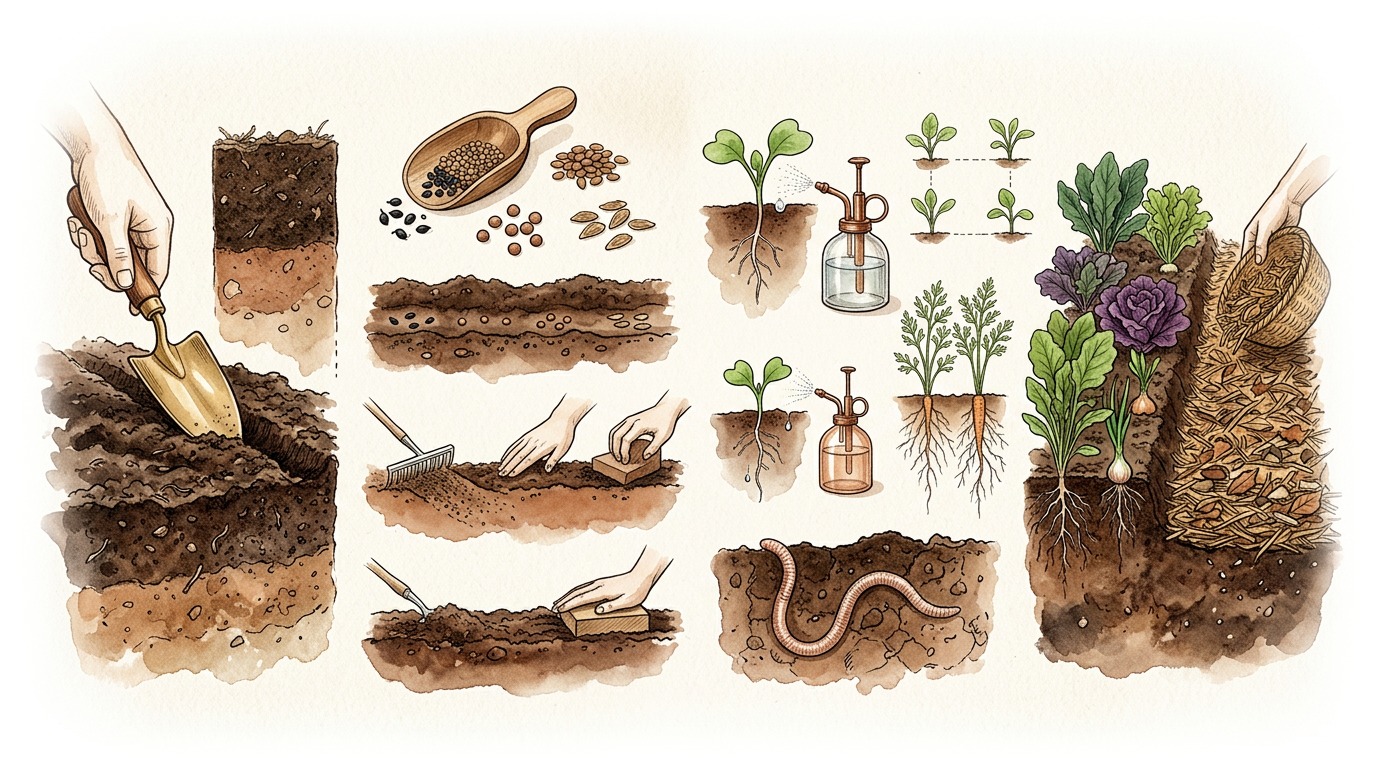
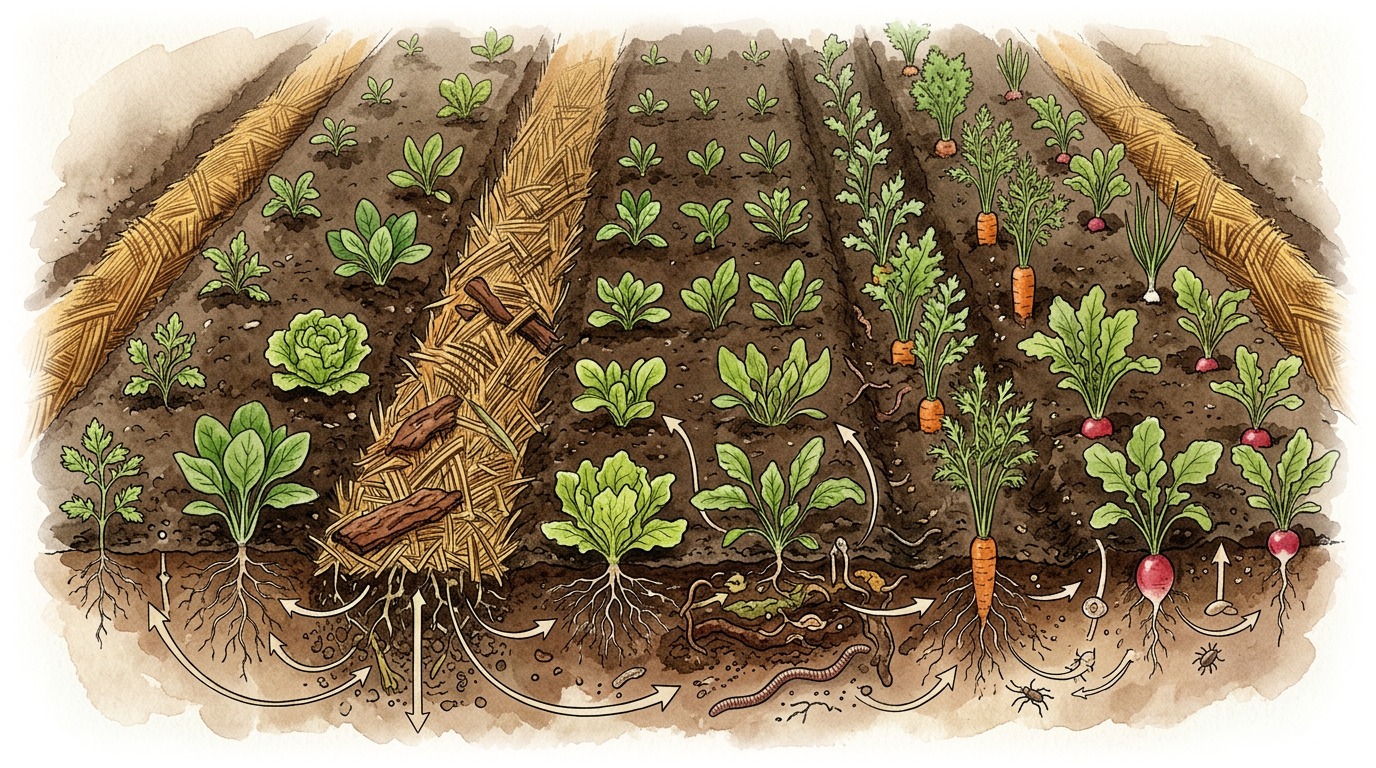
It is a way of farming that optimizes yield and preserves the life of the soil.

3
PARTIE 3 SUR 36 CULTIVATION BEEDS
CULTIVATION BEEDS

CULTIVATION BEEDS

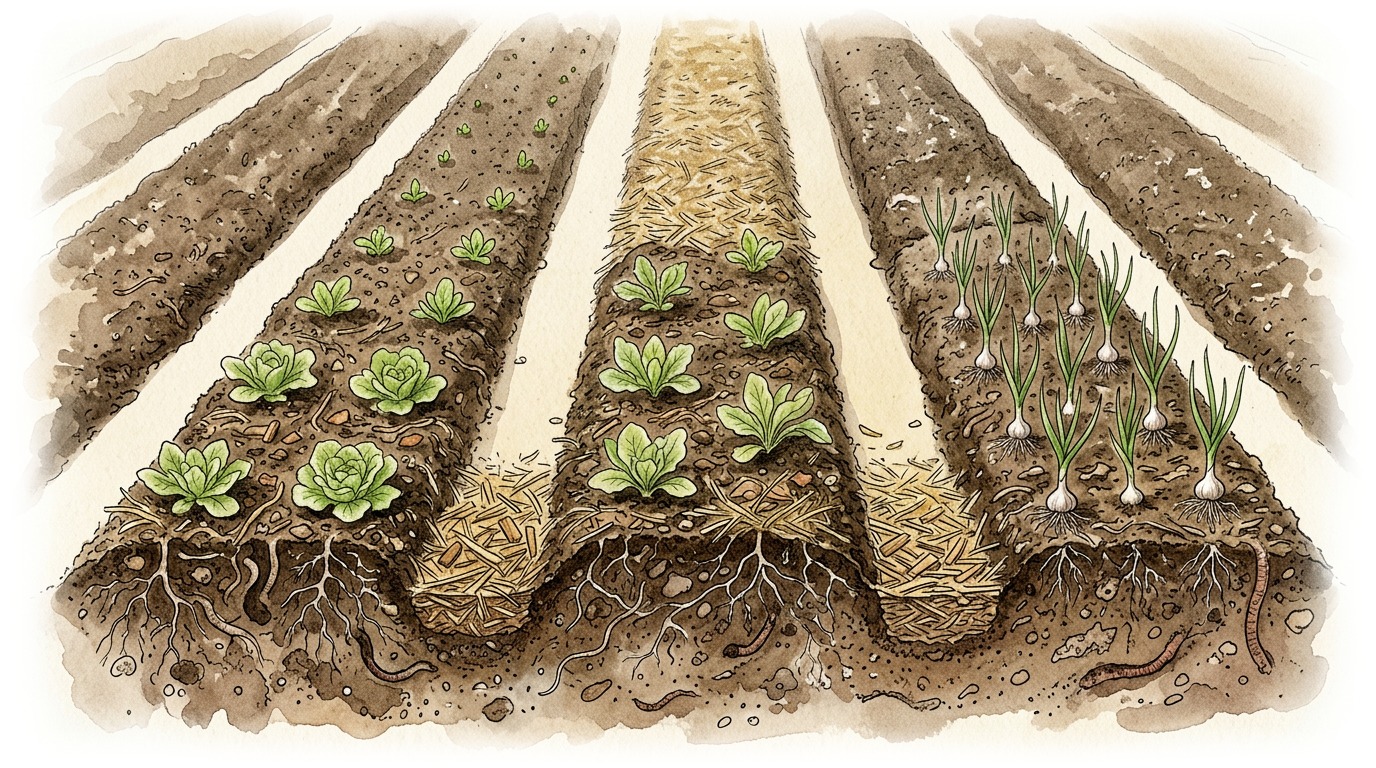
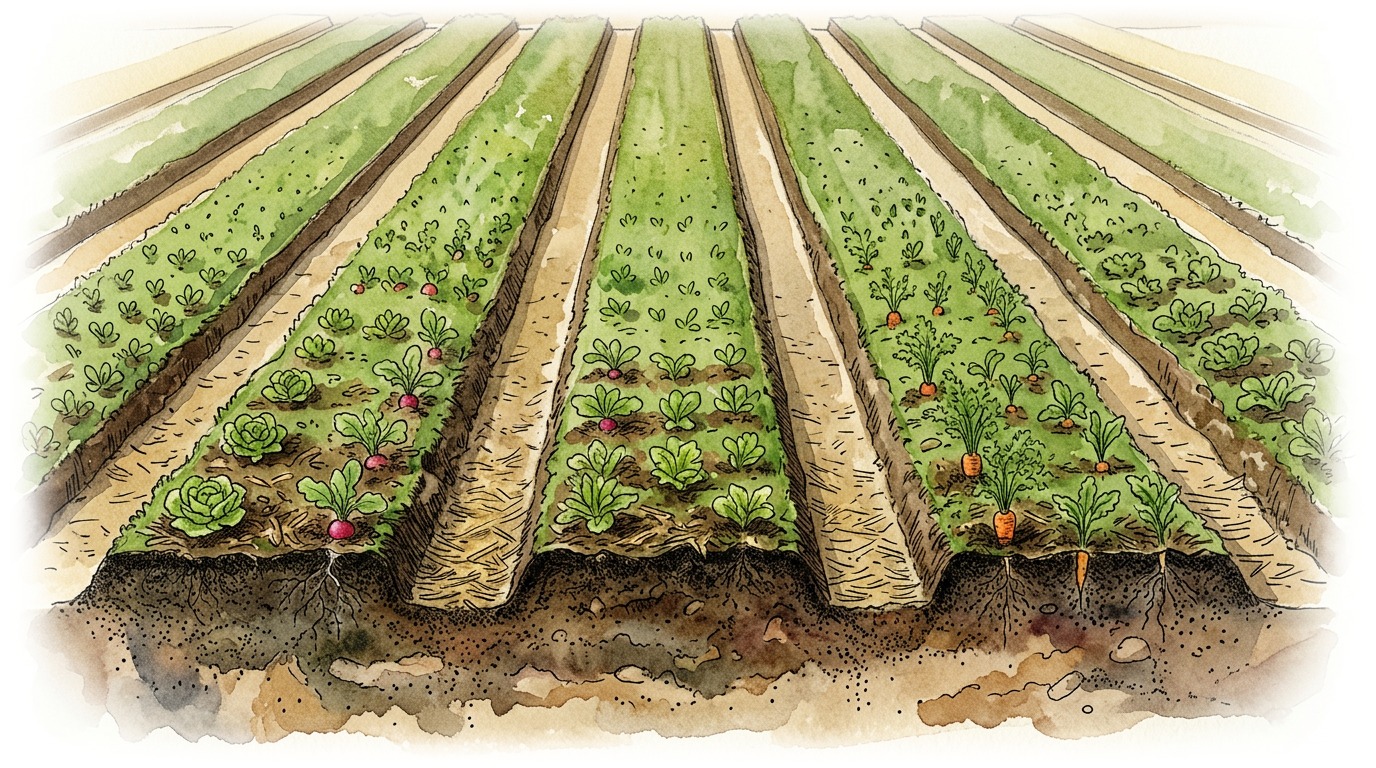
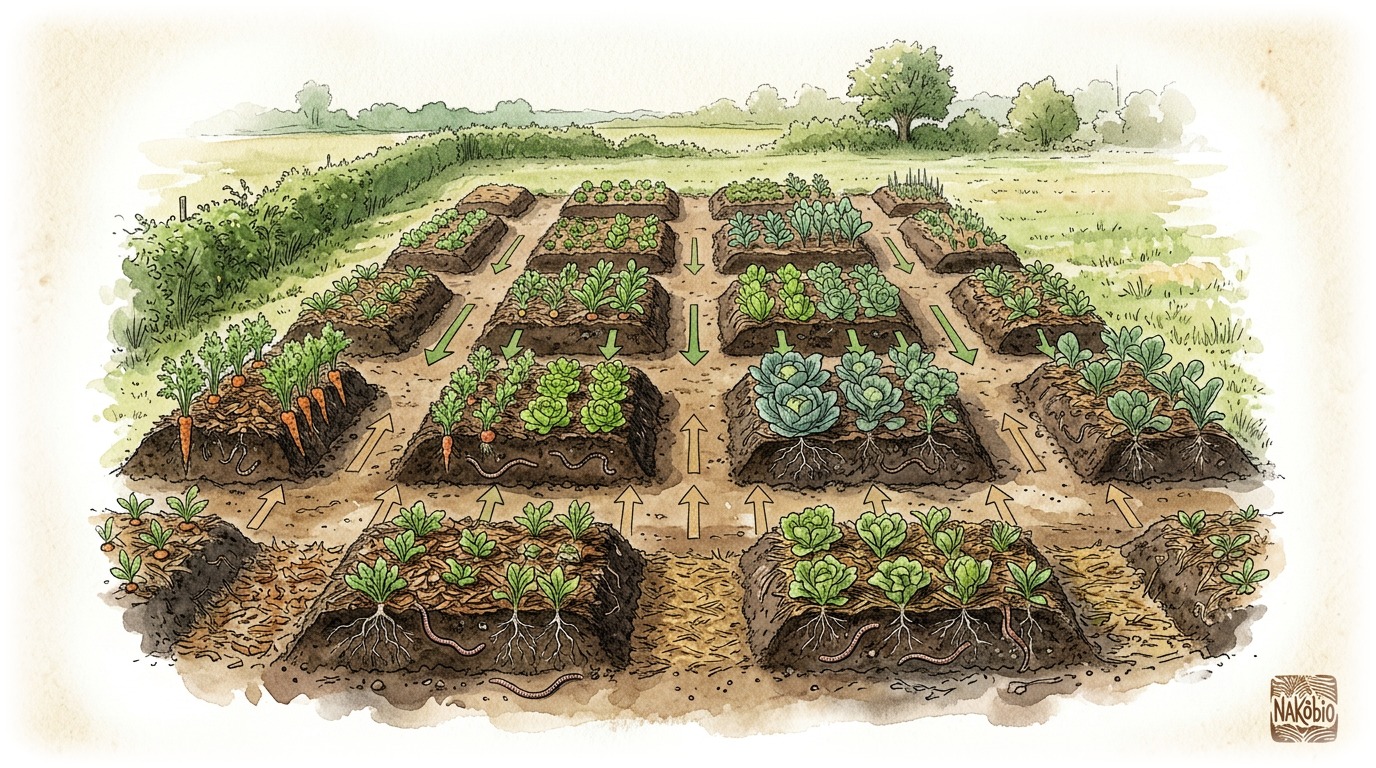
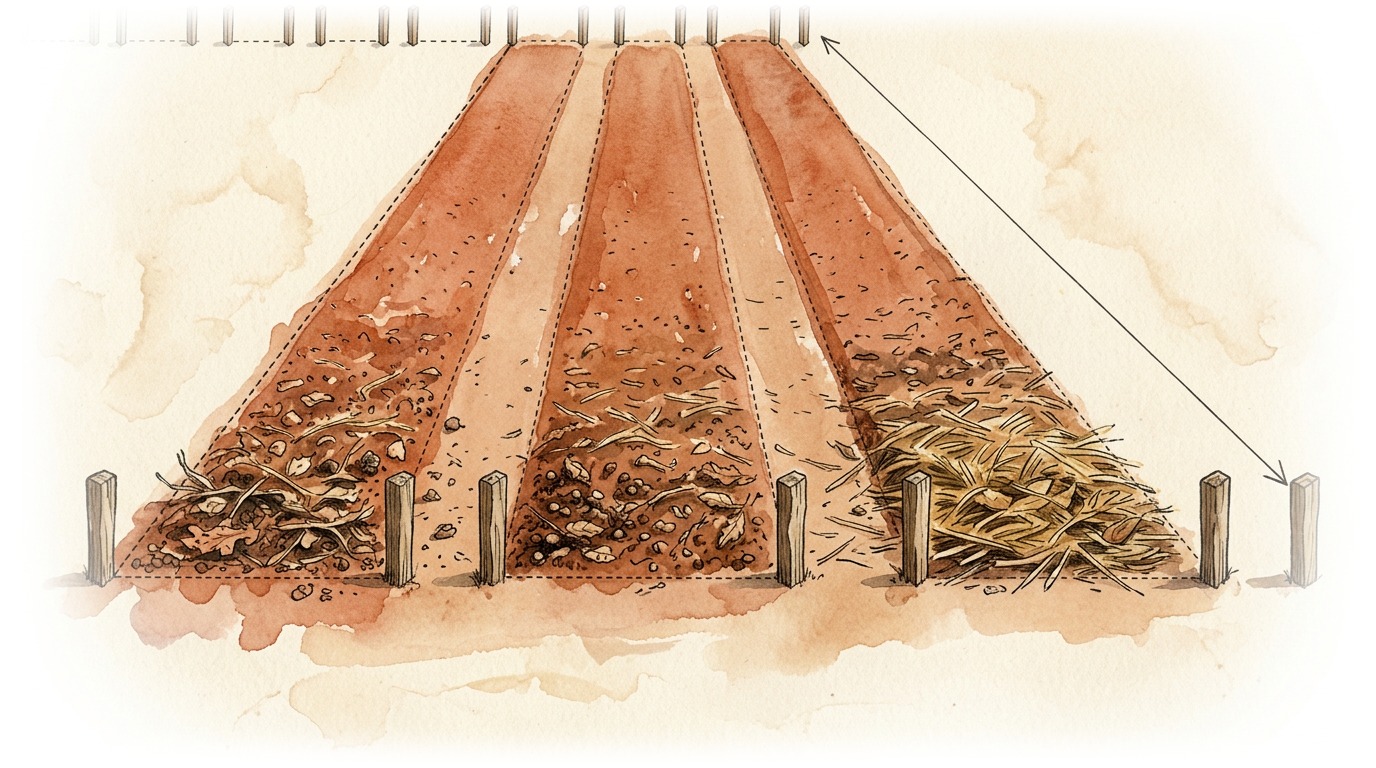
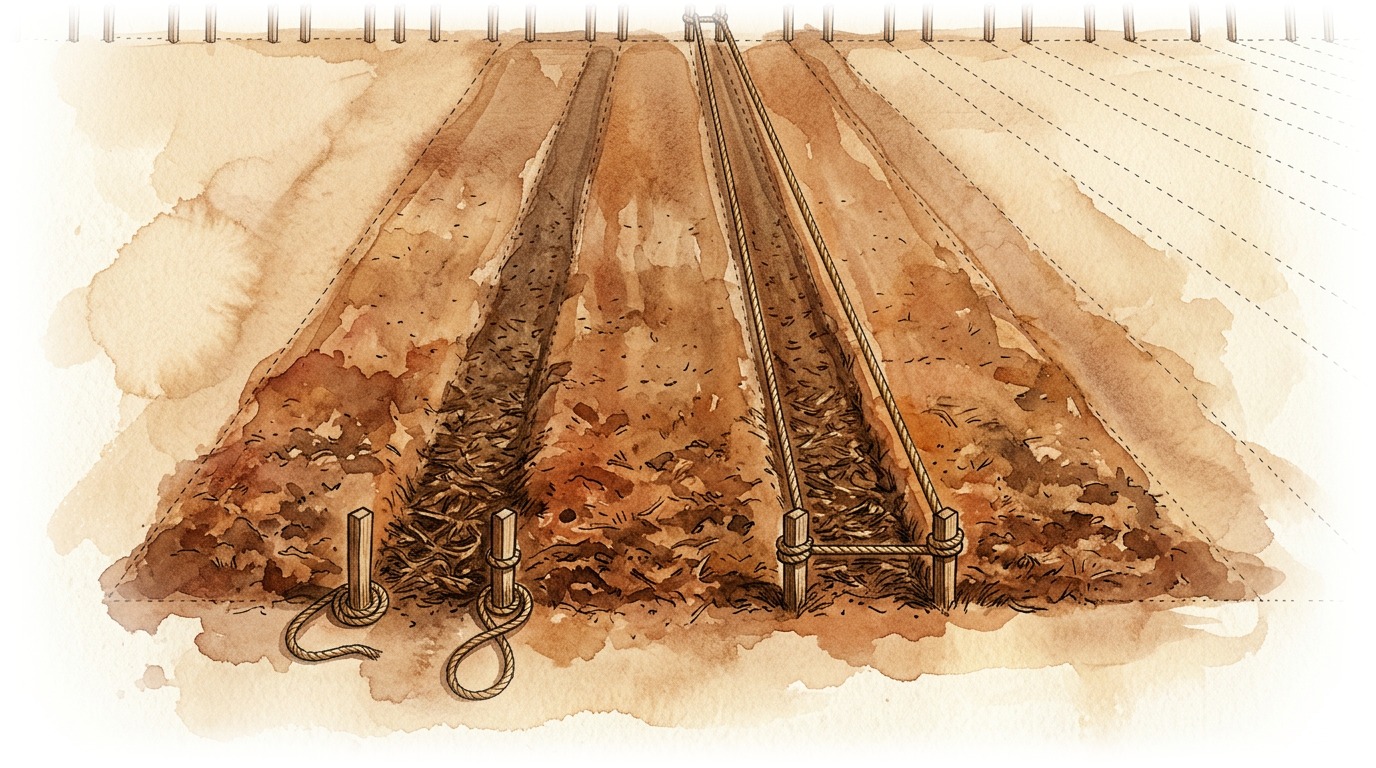
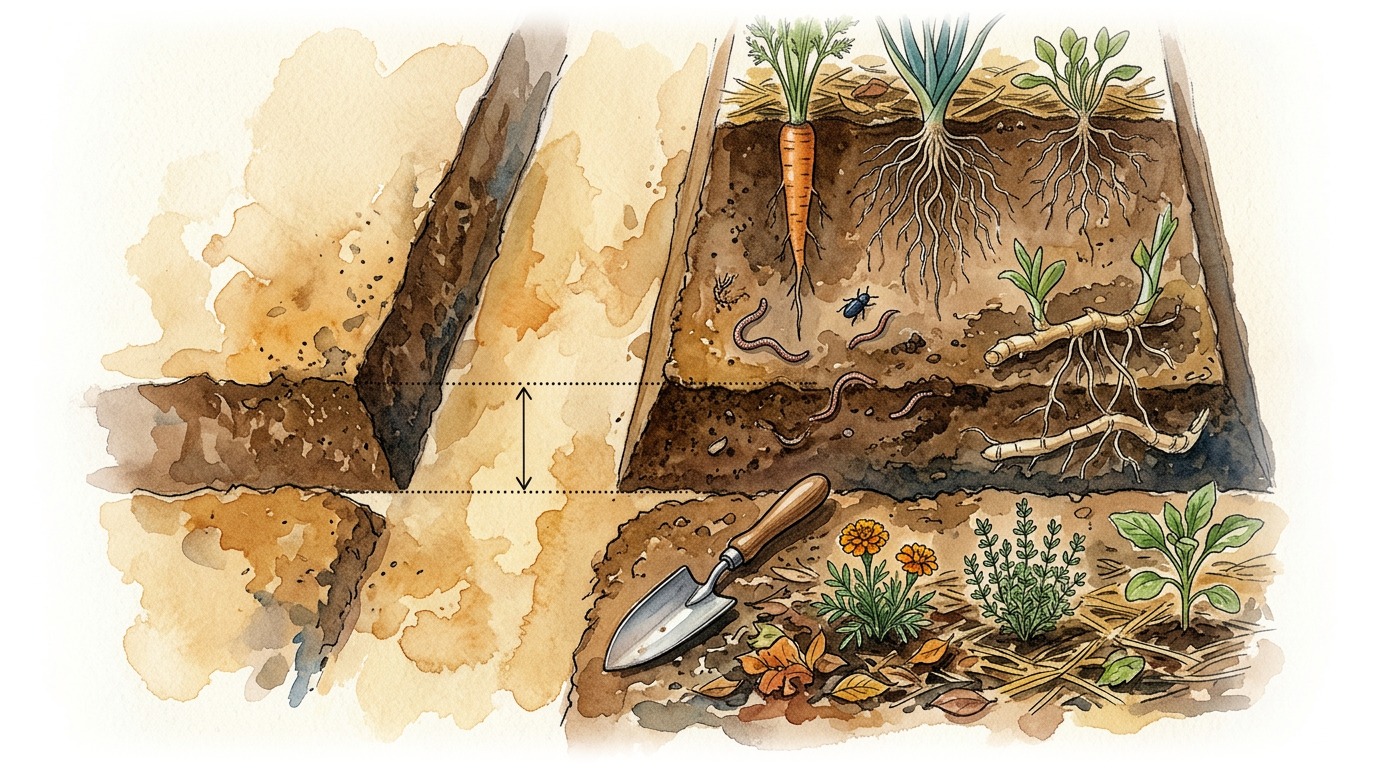
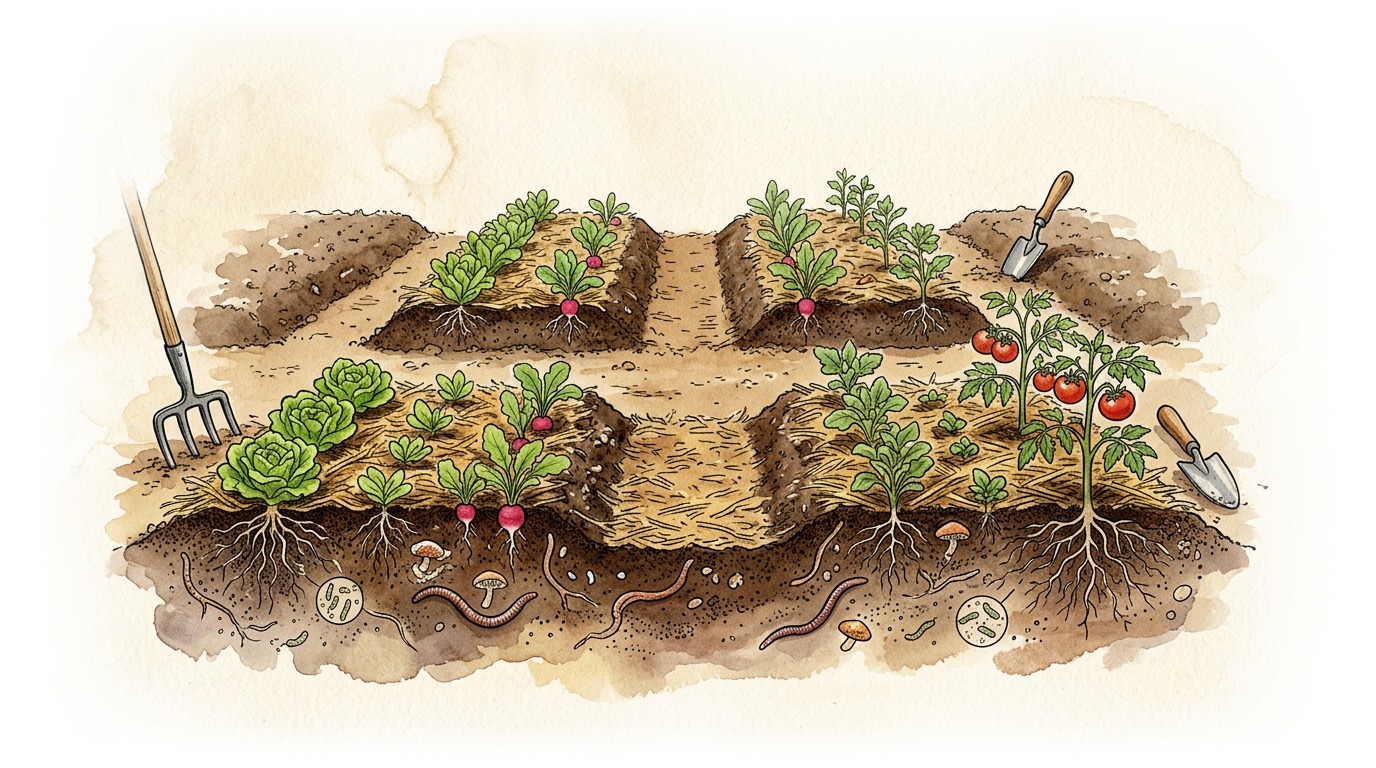
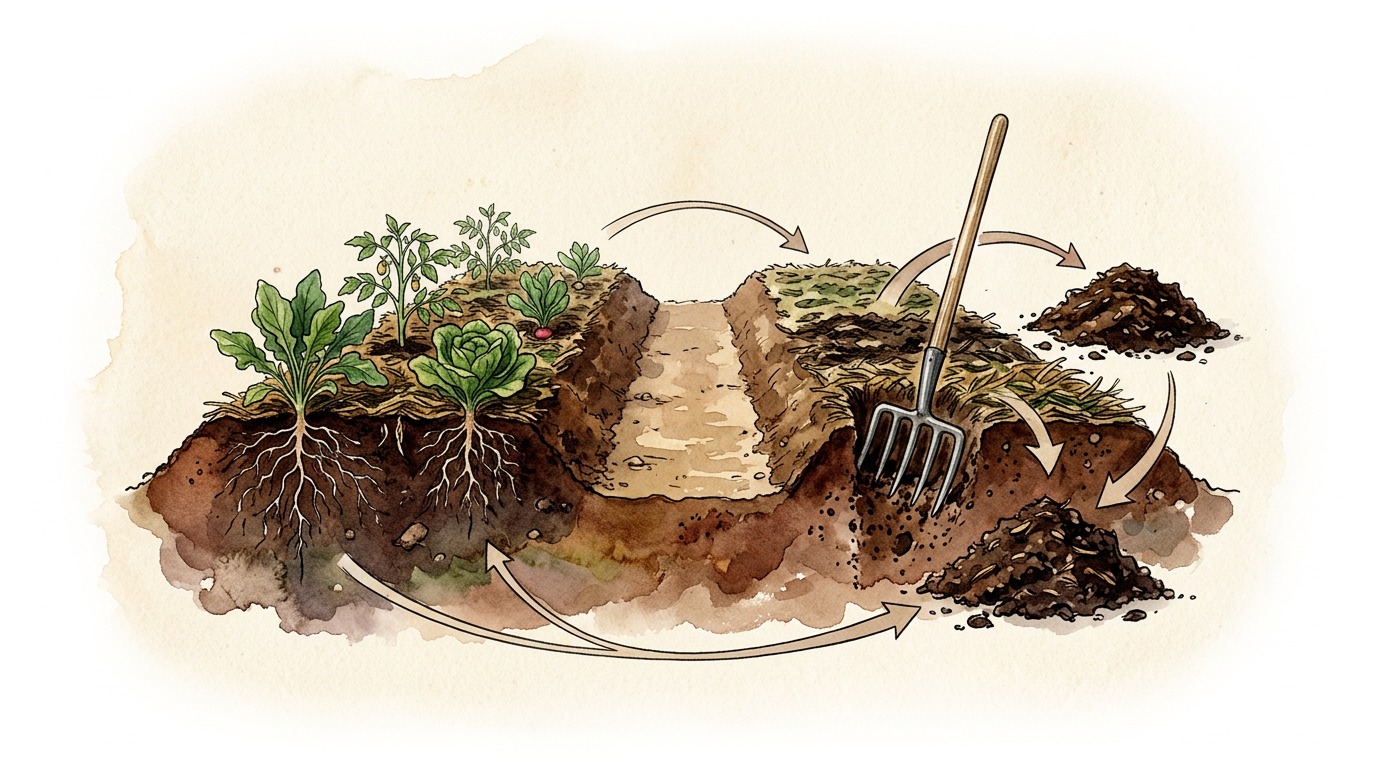
Cultivation beds are strips of earth on which you will grow crops, they are elevated.

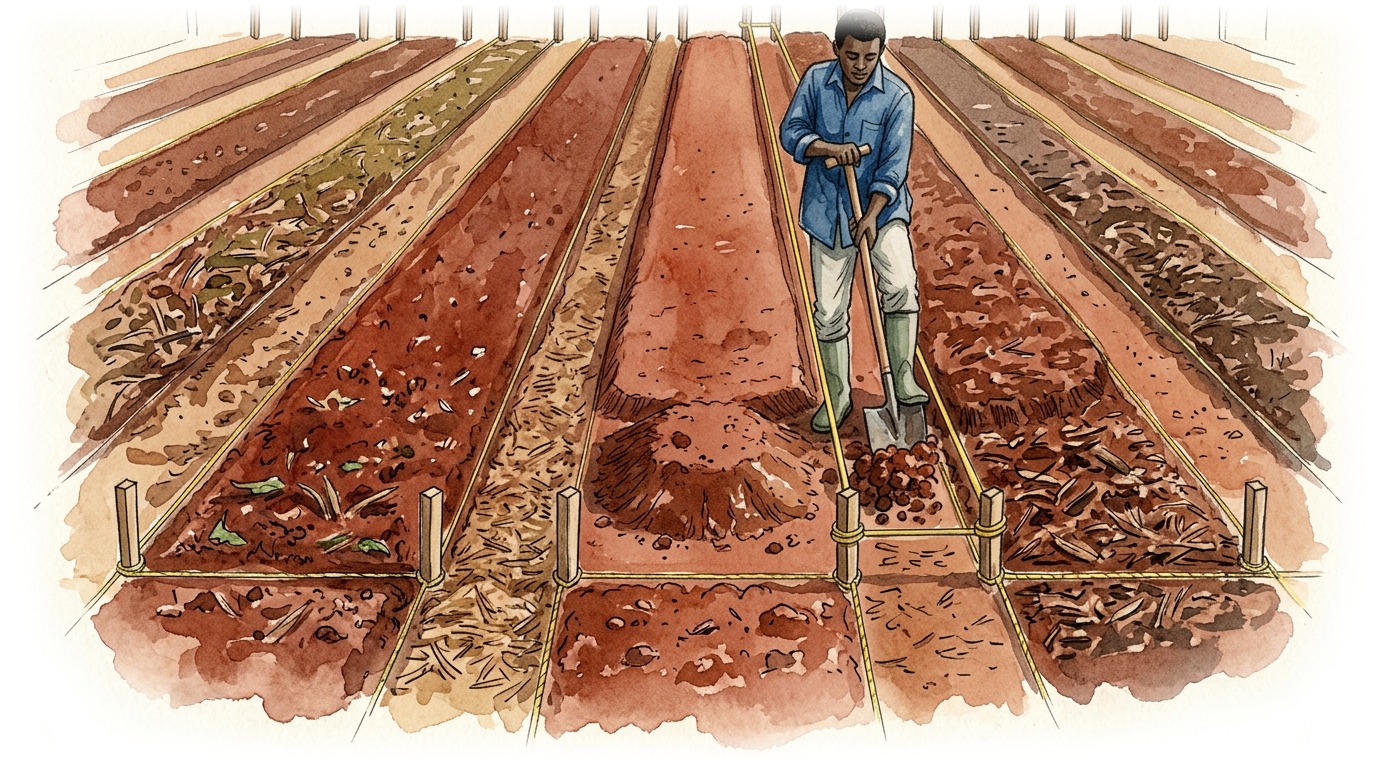
4
PARTIE 4 SUR 36 FOOTPATHS
FOOTPATHS

FOOTPATHS

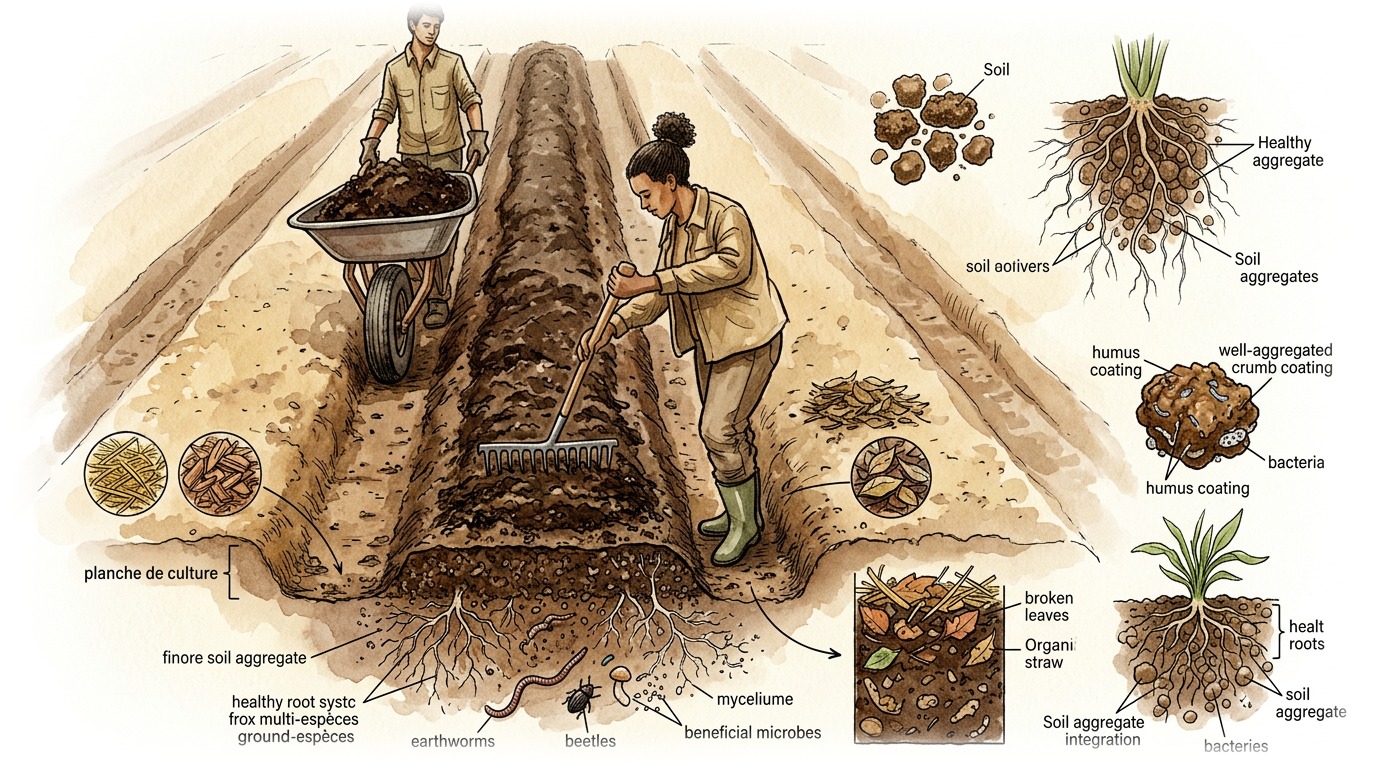
They are separated by footpaths, which are lower than the cultivation beds.

5
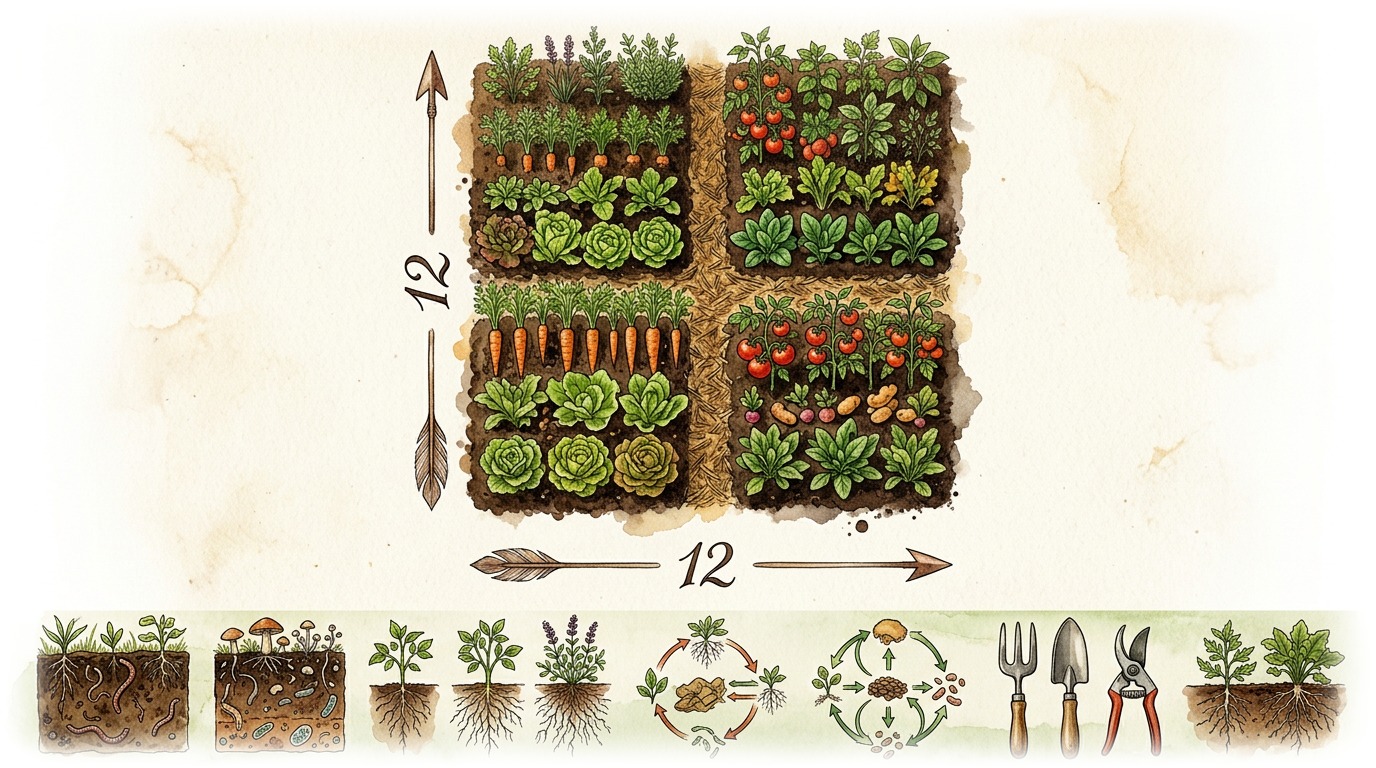
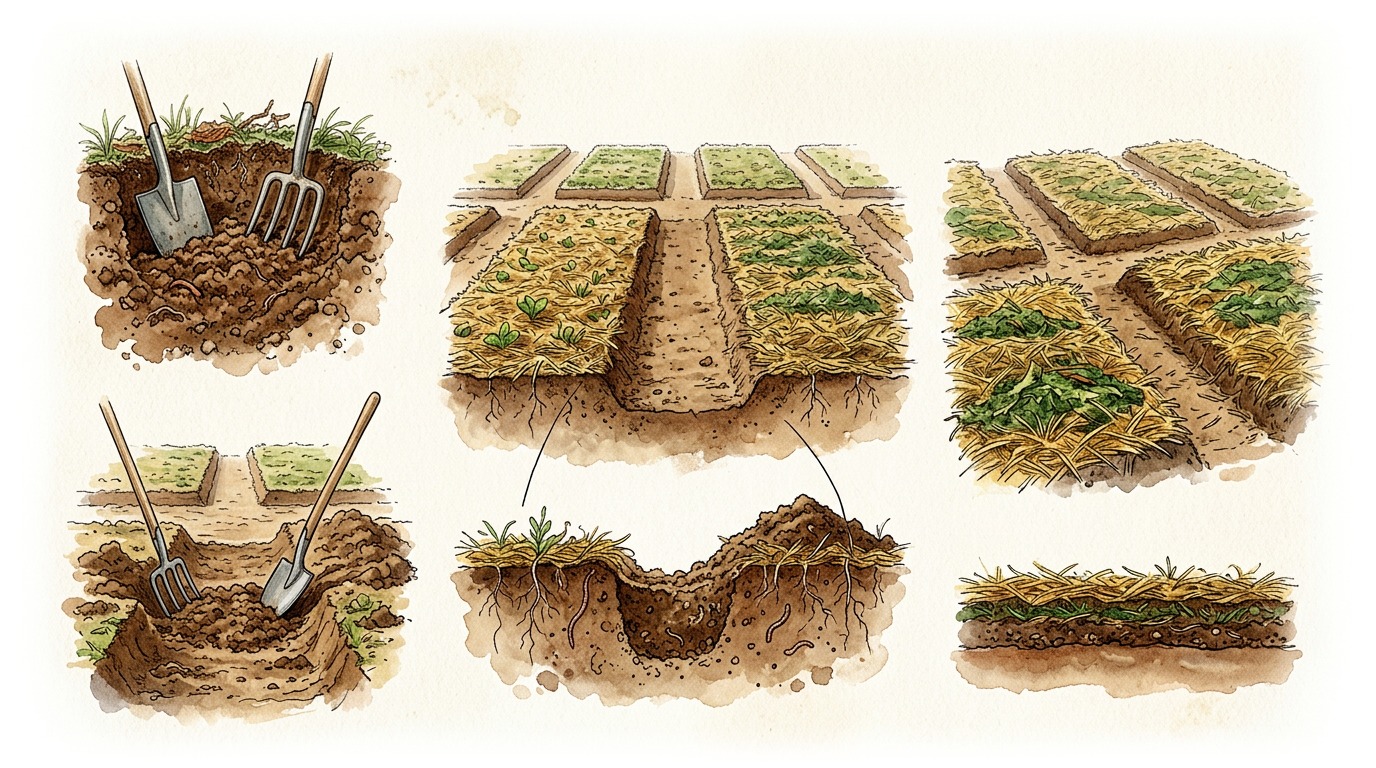
PARTIE 5 SUR 36 For the training, you will need a plot of about 12 x 12 m.
For the training, you will need a plot of about 12 x 12 m.

For the training, you will need a plot of about 12 x 12 m.

For the training, you will need a plot of about 12 x 12 m.

6
PARTIE 6 SUR 36 10 cultivation beds
10 cultivation beds

10 cultivation beds

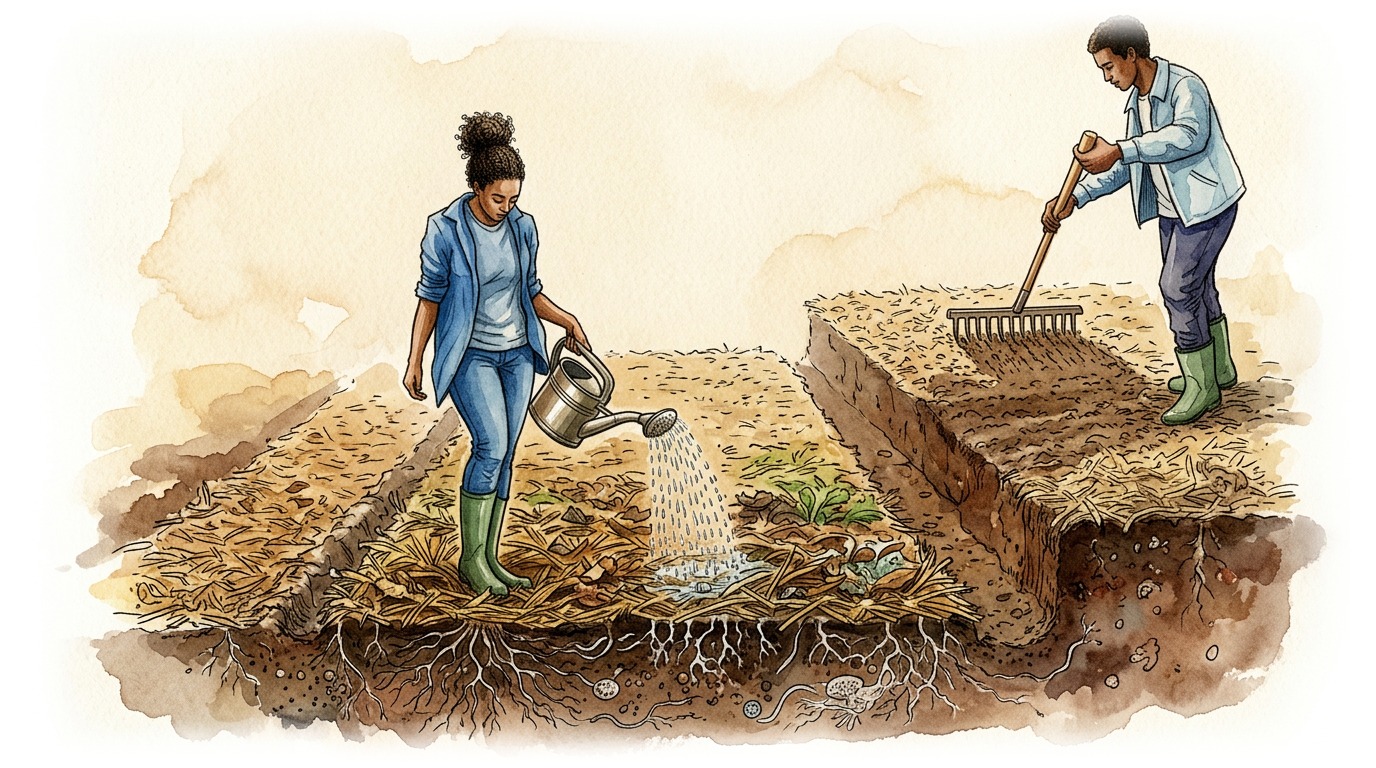
You will make 10 cultivation beds of 10 m length in this plot.

7
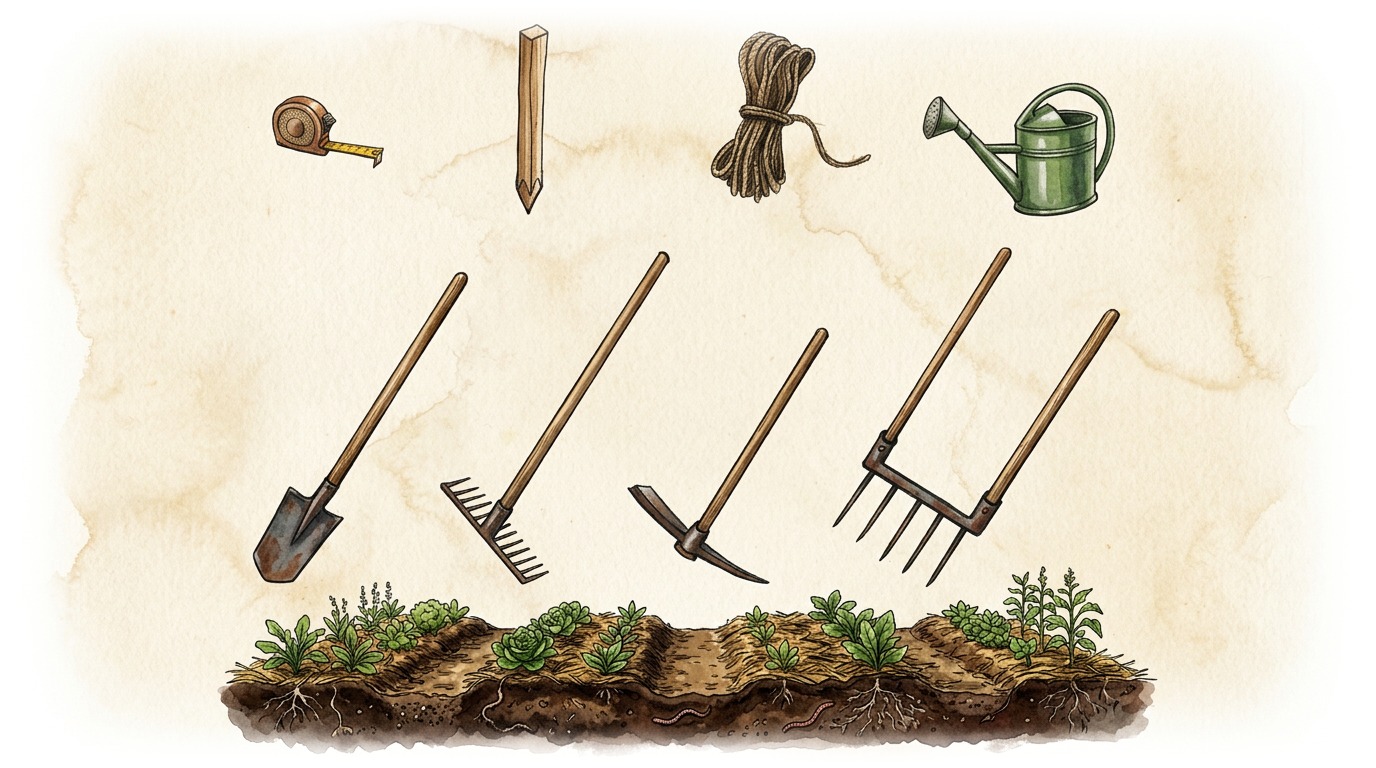
PARTIE 7 SUR 36 You will need the following tools: a meter, 40 stakes of 45-50 cm, 30 meters of string/small rope, a shovel or a
You will need the following tools: a meter, 40 stakes of 45-50 cm, 30 meters of string/small rope, a shovel or a

You will need the following tools: a meter, 40 stakes of 45-50 cm, 30 meters of string/small rope, a shovel or a

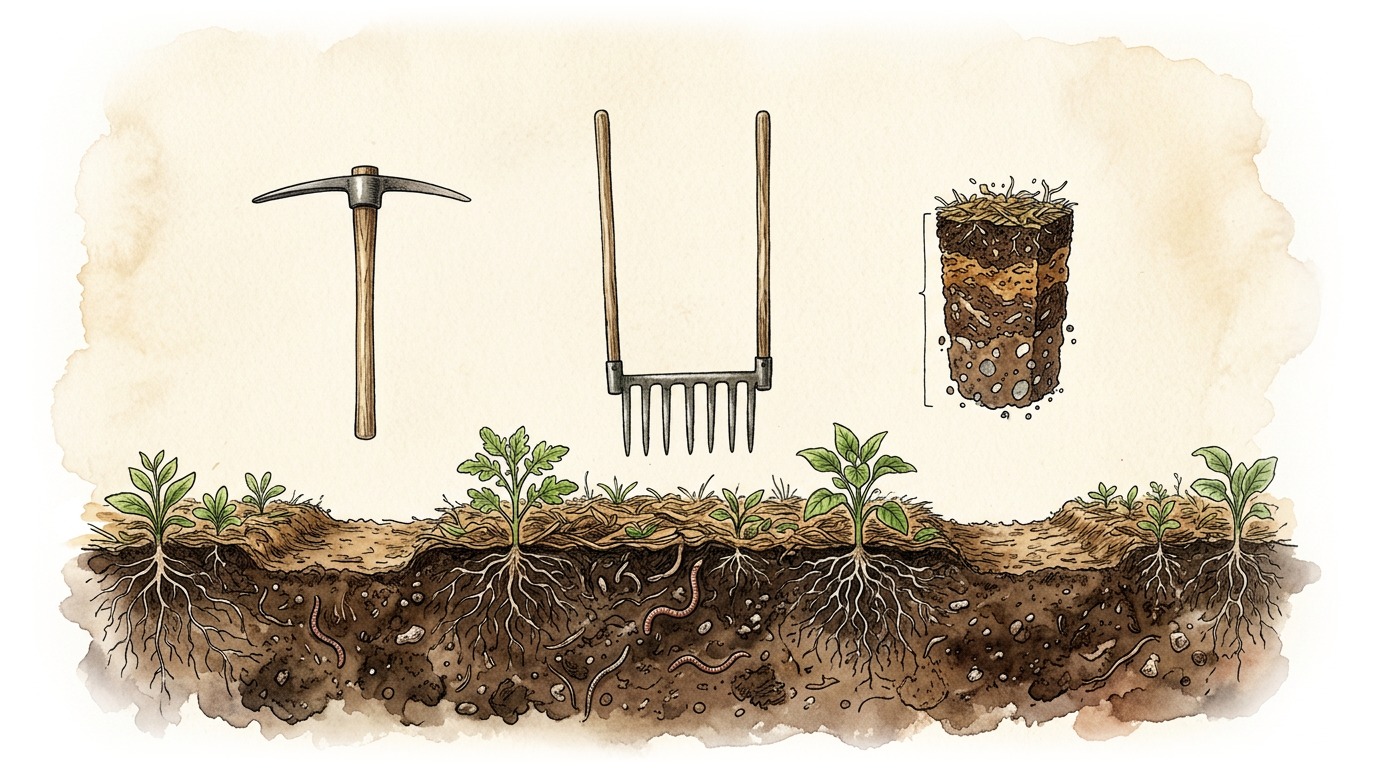
hoe, a pickaxe if the soil is hard, a rake, a broadfork (wide fork) or a pickaxe, a watering can or a hose for watering.

8
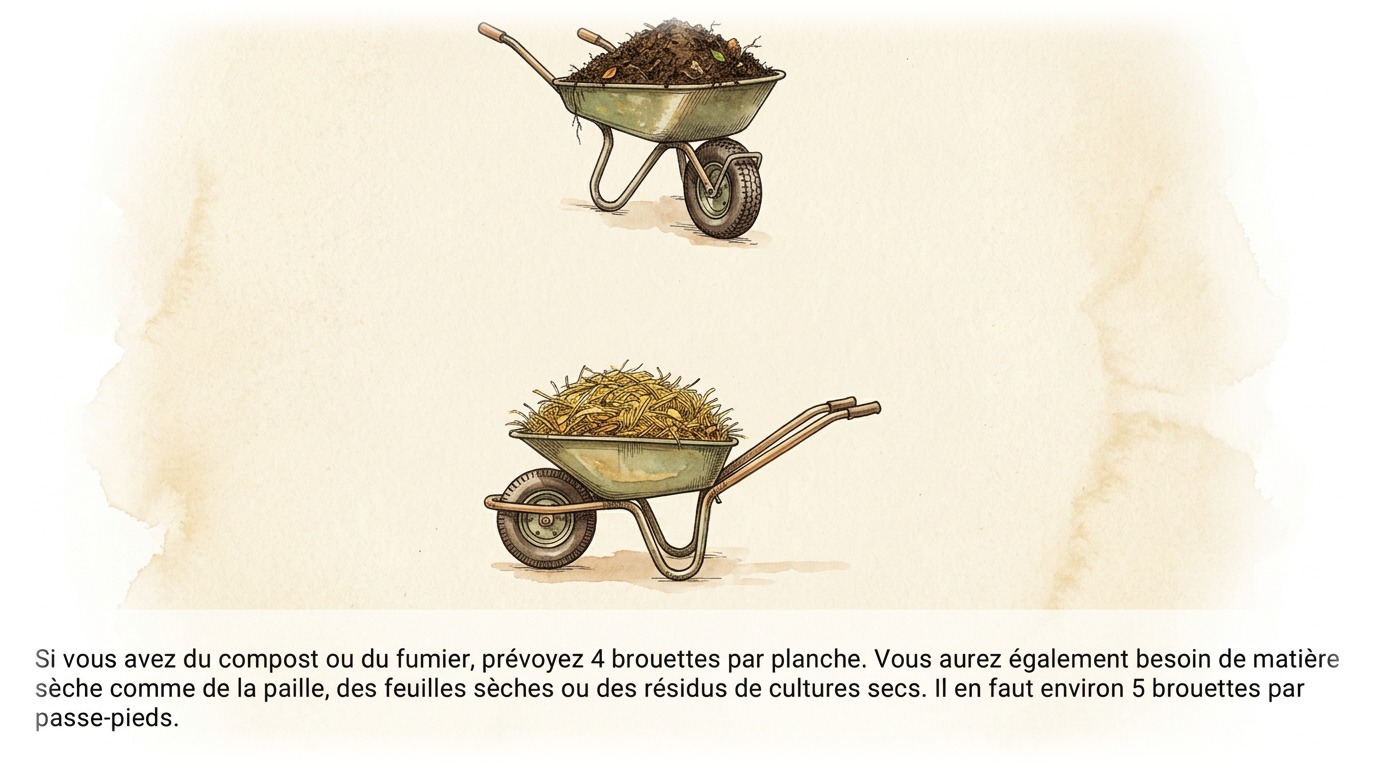
PARTIE 8 SUR 36 If you have compost or manure, plan for 4 wheelbarrows per bed.
If you have compost or manure, plan for 4 wheelbarrows per bed.

If you have compost or manure, plan for 4 wheelbarrows per bed.

You will also need dry matter like straw, dry leaves, or dry crop residues. You will need about 5 wheelbarrows per

footpath.

9
PARTIE 9 SUR 36 The setup of the beds is done in 7 steps.
The setup of the beds is done in 7 steps.

The setup of the beds is done in 7 steps.

If all the materials are gathered, it’s a task that takes no more than one day for 2 people.

10
PARTIE 10 SUR 36 STEP 1 : CHOOSING AND PREPARING YOUR PLOT
STEP 1 : CHOOSING AND PREPARING YOUR PLOT

STEP 1 : CHOOSING AND PREPARING YOUR PLOT

STEP 1 : CHOOSING AND PREPARING YOUR PLOT

11
PARTIE 11 SUR 36 12 m
12 m

12 m

12 m

Choose a plot of 12 m long by 12 m wide, preferably near a water source.

12
PARTIE 12 SUR 36 If necessary, level the surface of the soil.
If necessary, level the surface of the soil.

If necessary, level the surface of the soil.

If the soil is too dry, water the plot abundantly to facilitate the next steps.

13
PARTIE 13 SUR 36 STEP 2 : MEASURING THE BEDS
STEP 2 : MEASURING THE BEDS

STEP 2 : MEASURING THE BEDS

STEP 2 : MEASURING THE BEDS

14
PARTIE 14 SUR 36 First, you must take the necessary measurements to make the beds.
First, you must take the necessary measurements to make the beds.

First, you must take the necessary measurements to make the beds.

The beds are 75 cm wide,

The footpaths 40 cm.

You must start and end with a footpath.

15
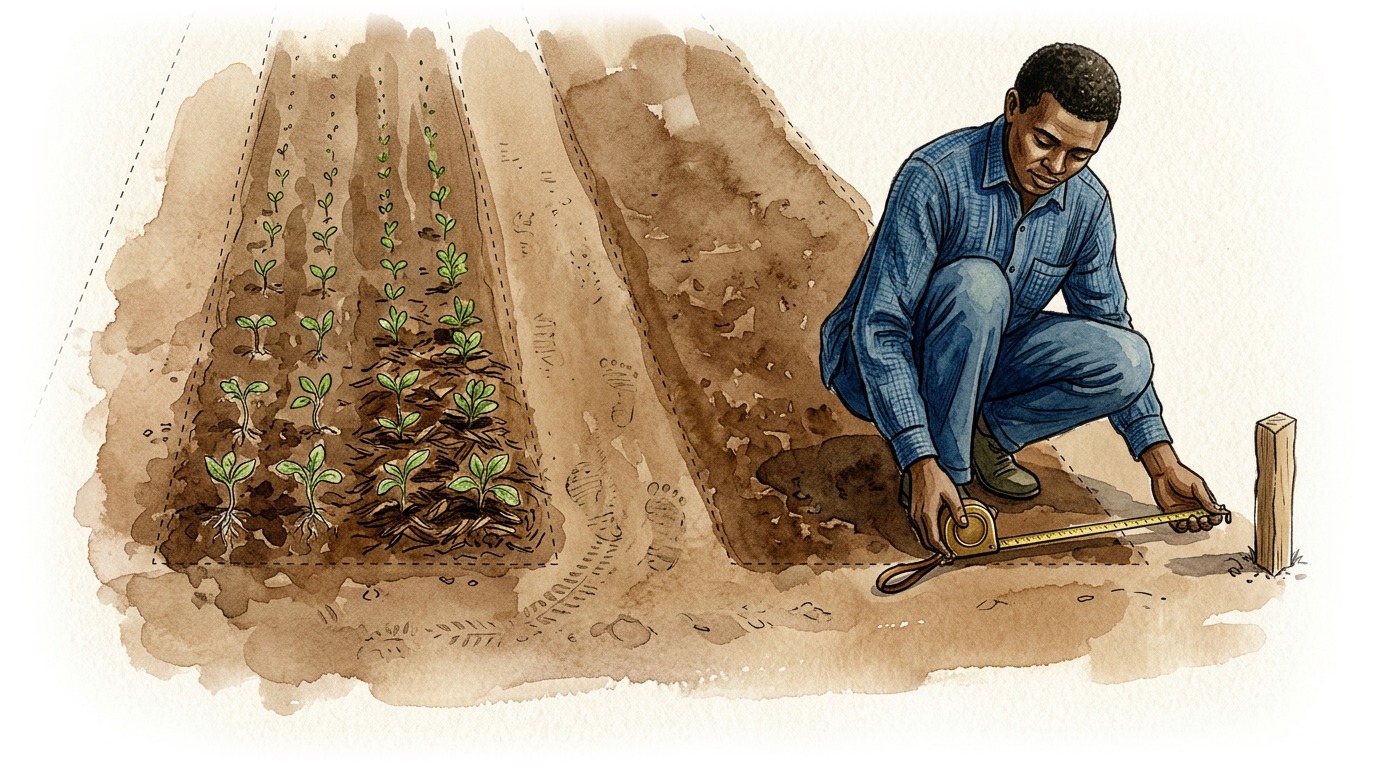
PARTIE 15 SUR 36 Start at one end of the field. Plant a stake. Use a meter to measure 40 cm in width.
Start at one end of the field. Plant a stake. Use a meter to measure 40 cm in width.

Start at one end of the field. Plant a stake. Use a meter to measure 40 cm in width.

Plant a second stake.

You have the boundary of the first footpath.

16
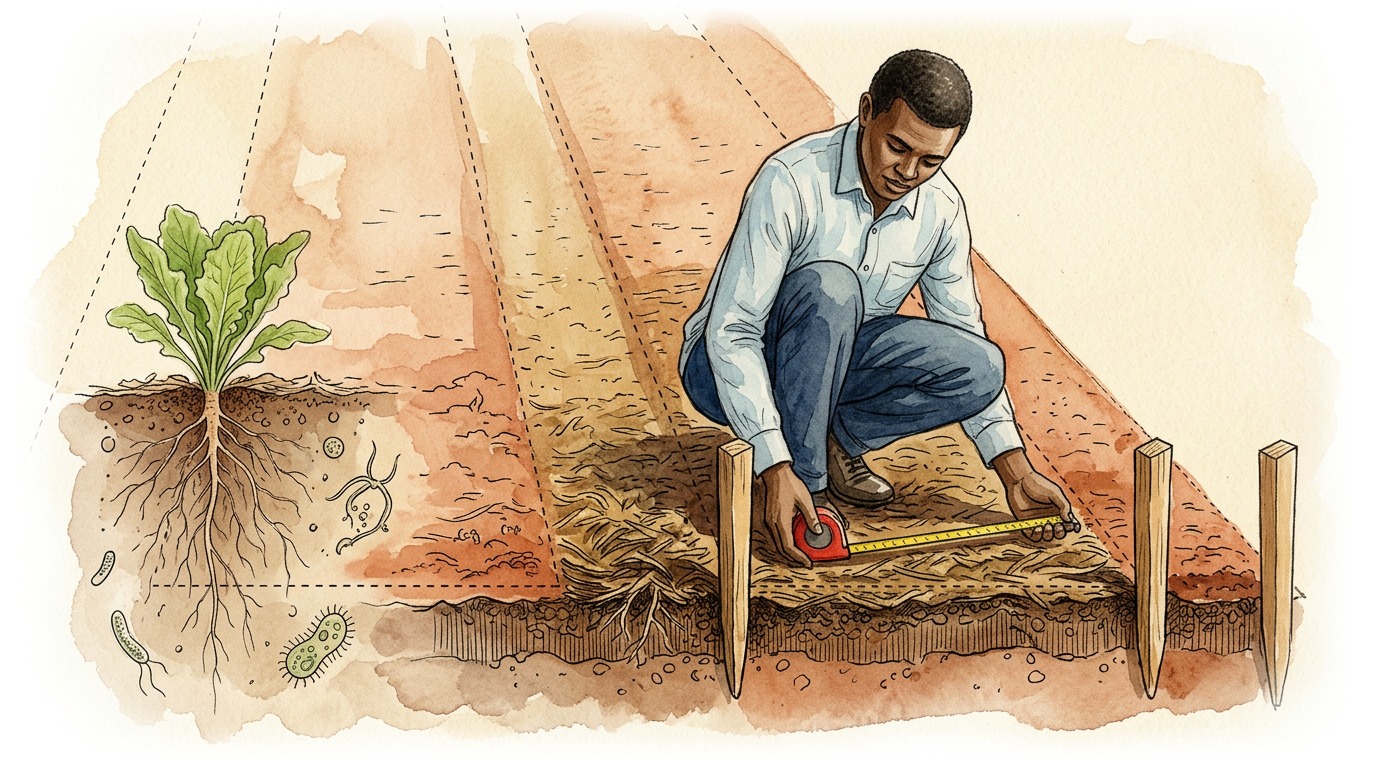
PARTIE 16 SUR 36 Then measure the width of the first bed, plant a 3rd stake at 75 cm.
Then measure the width of the first bed, plant a 3rd stake at 75 cm.

Then measure the width of the first bed, plant a 3rd stake at 75 cm.

Then measure the width of the first bed, plant a 3rd stake at 75 cm.

17
PARTIE 17 SUR 36 10 BEDS
10 BEDS

10 BEDS

11 FOOTPATHS

Then repeat these operations: bed/footpaths across the width of the plot, until you have the 10 beds and the 11

footpaths.

18
PARTIE 18 SUR 36 Cross the field in length, over 10 meters.
Cross the field in length, over 10 meters.

Cross the field in length, over 10 meters.

Measure the beds and the footpaths opposite in the same way by planting stakes.

19
PARTIE 19 SUR 36 STEP 3 : DIGGING THE FOOTPATHS AND PUTTING
STEP 3 : DIGGING THE FOOTPATHS AND PUTTING

STEP 3 : DIGGING THE FOOTPATHS AND PUTTING

SOIL ON THE BEDS

20
PARTIE 20 SUR 36 To clearly delineate the beds and footpaths, and to make straight lines, you will use a taut rope in the length
To clearly delineate the beds and footpaths, and to make straight lines, you will use a taut rope in the length

To clearly delineate the beds and footpaths, and to make straight lines, you will use a taut rope in the length

between the stakes. Stretch a rope between the stakes that define the footpath.

21
PARTIE 21 SUR 36 Dig the footpath with a shovel following the ropes.
Dig the footpath with a shovel following the ropes.

Dig the footpath with a shovel following the ropes.

Distribute the recovered soil evenly to the right and left on the beds.

22
PARTIE 22 SUR 36 The footpaths should have a depth of 10 to 20 cm.
The footpaths should have a depth of 10 to 20 cm.

The footpaths should have a depth of 10 to 20 cm.

The footpaths should have a depth of 10 to 20 cm.

23
PARTIE 23 SUR 36 11 FOOTPATHS
11 FOOTPATHS

11 FOOTPATHS

Repeat the operation for the 11 footpaths.

24
PARTIE 24 SUR 36 STEP 4 : AMENDING THE CULTIVATION BEDS
STEP 4 : AMENDING THE CULTIVATION BEDS

STEP 4 : AMENDING THE CULTIVATION BEDS

STEP 4 : AMENDING THE CULTIVATION BEDS

25
PARTIE 25 SUR 36 It is essential to enrich the soil and improve its texture. For this, you can use compost or manure.
It is essential to enrich the soil and improve its texture. For this, you can use compost or manure.

It is essential to enrich the soil and improve its texture. For this, you can use compost or manure.

About 4 wheelbarrows of compost are needed per bed. Distribute it evenly over the entire surface with a rake or by

hand.

26
PARTIE 26 SUR 36 STEP 5 : AERATING THE SOIL OF THE BEDS AND
STEP 5 : AERATING THE SOIL OF THE BEDS AND

STEP 5 : AERATING THE SOIL OF THE BEDS AND

INCORPORATING THE COMPOST OR MANURE

27
PARTIE 27 SUR 36 This step allows both to aerate the soil and to mix the earth with the compost or manure deposited in the previous
This step allows both to aerate the soil and to mix the earth with the compost or manure deposited in the previous

This step allows both to aerate the soil and to mix the earth with the compost or manure deposited in the previous

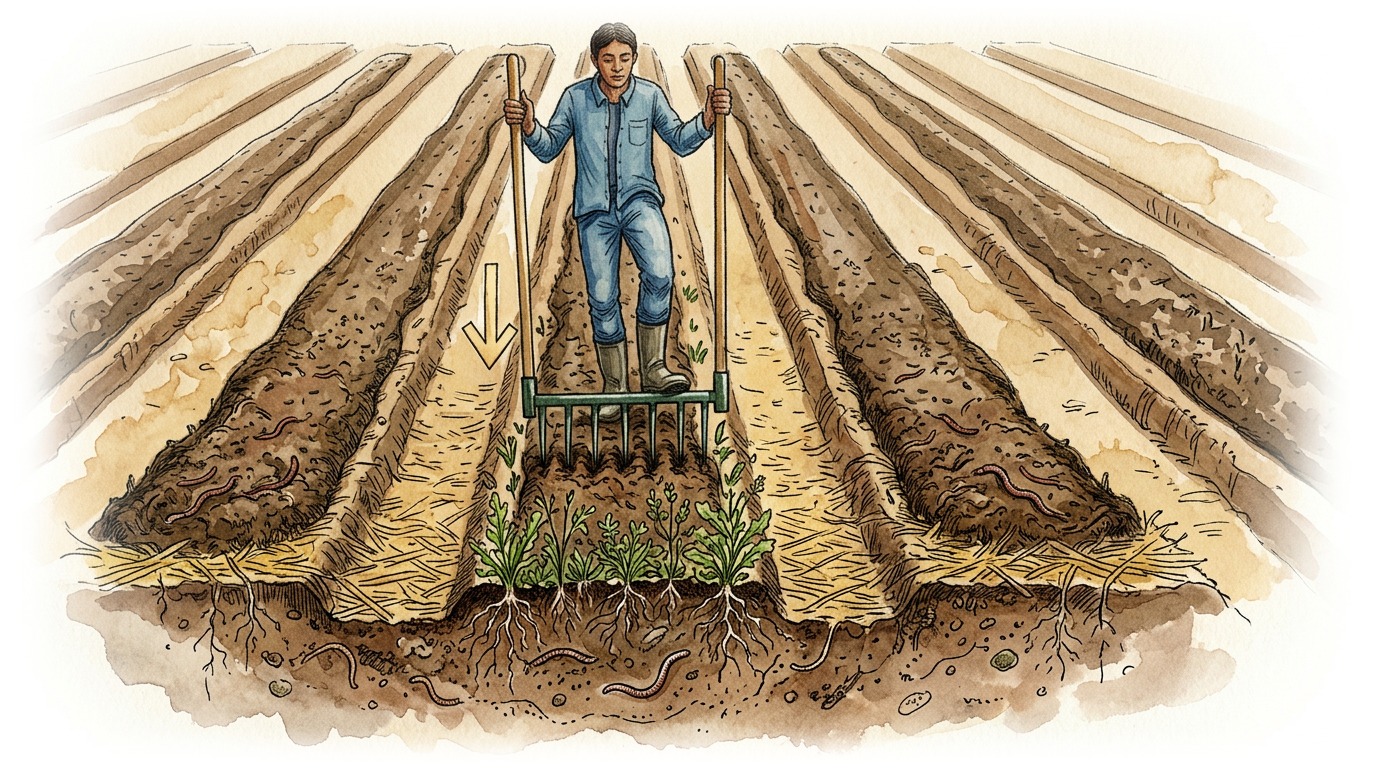
step. Soil aeration is done with a broadfork or a large fork. If you don’t have one, you can use a pickaxe.

28
PARTIE 28 SUR 36 Insert the tool as deeply as possible into the soil.
Insert the tool as deeply as possible into the soil.

Insert the tool as deeply as possible into the soil.

Insert the tool as deeply as possible into the soil.

29
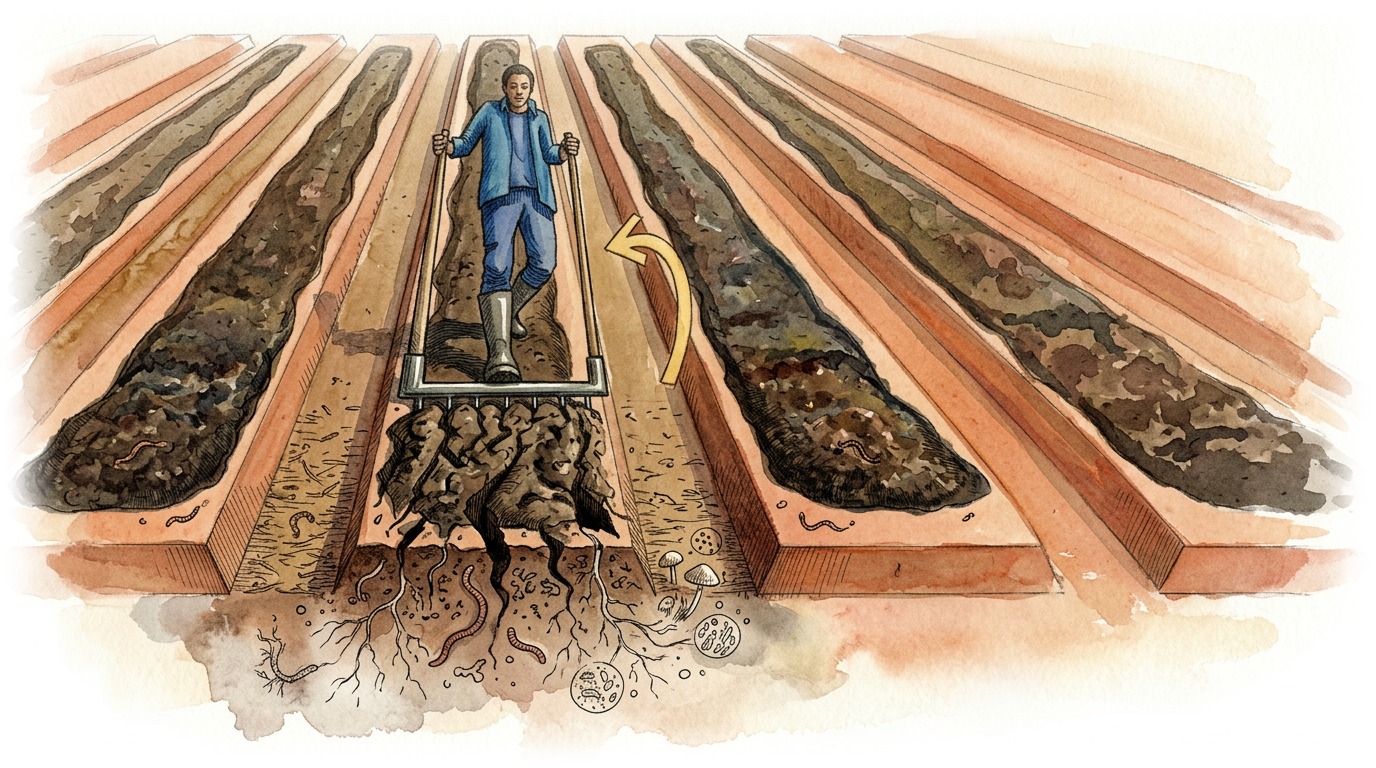
PARTIE 29 SUR 36 Gently lift the soil, taking care not to turn it over. Be careful not to disturb the soil layers, the amendment should
Gently lift the soil, taking care not to turn it over. Be careful not to disturb the soil layers, the amendment should

Gently lift the soil, taking care not to turn it over. Be careful not to disturb the soil layers, the amendment should

simply fall into the cracks created when you lift the tool.

30
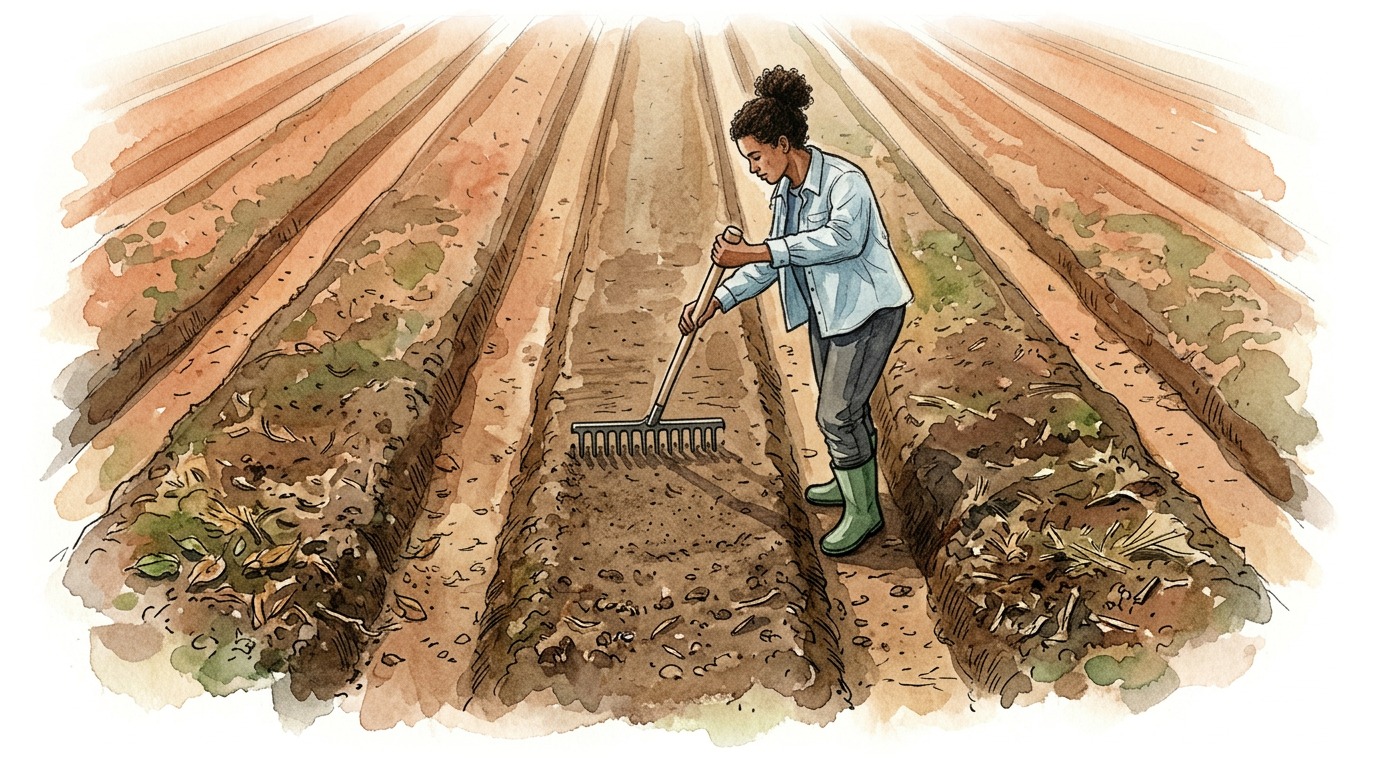
PARTIE 30 SUR 36 Use a rake to level the soil of the beds.
Use a rake to level the soil of the beds.

Use a rake to level the soil of the beds.

Use a rake to level the soil of the beds.

31
PARTIE 31 SUR 36 STEP 6 : MULCHING THE FOOTPATHS
STEP 6 : MULCHING THE FOOTPATHS

STEP 6 : MULCHING THE FOOTPATHS

STEP 6 : MULCHING THE FOOTPATHS

32
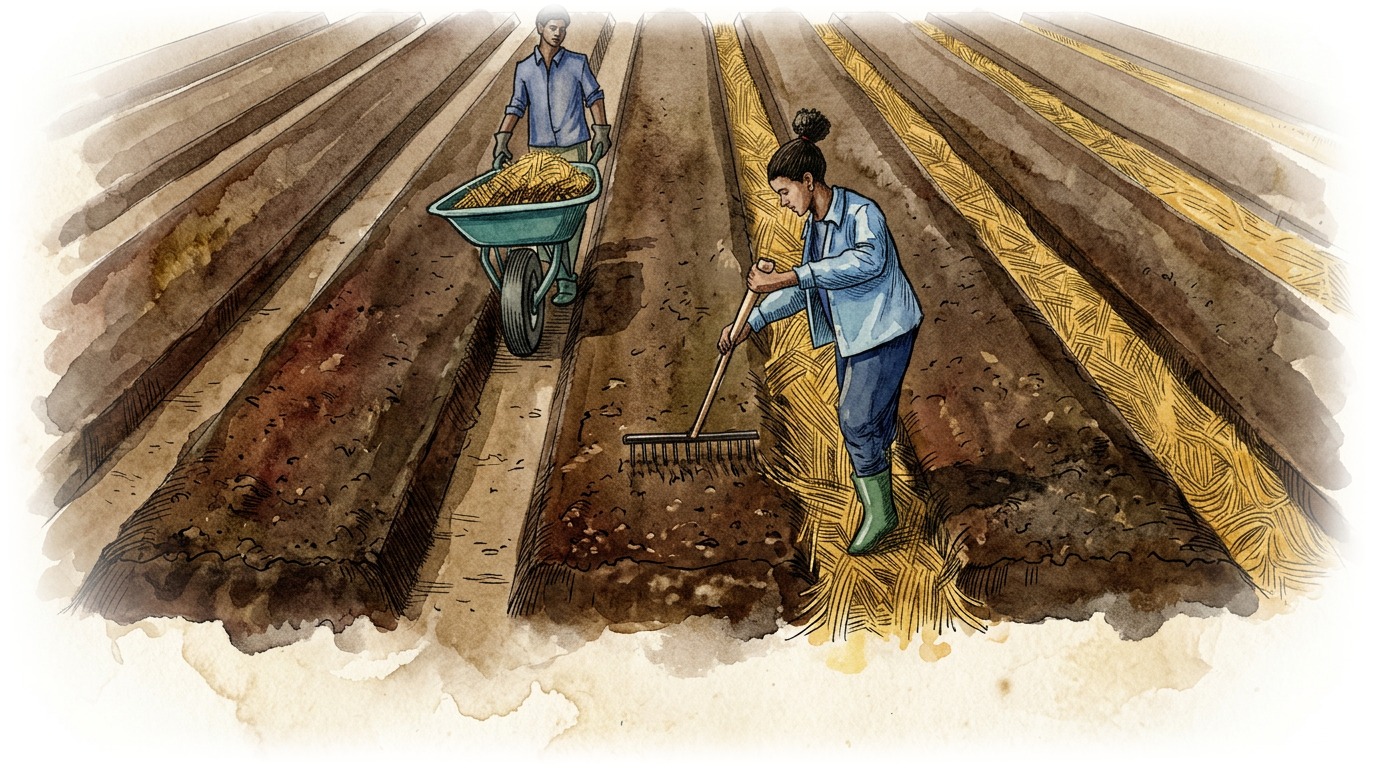
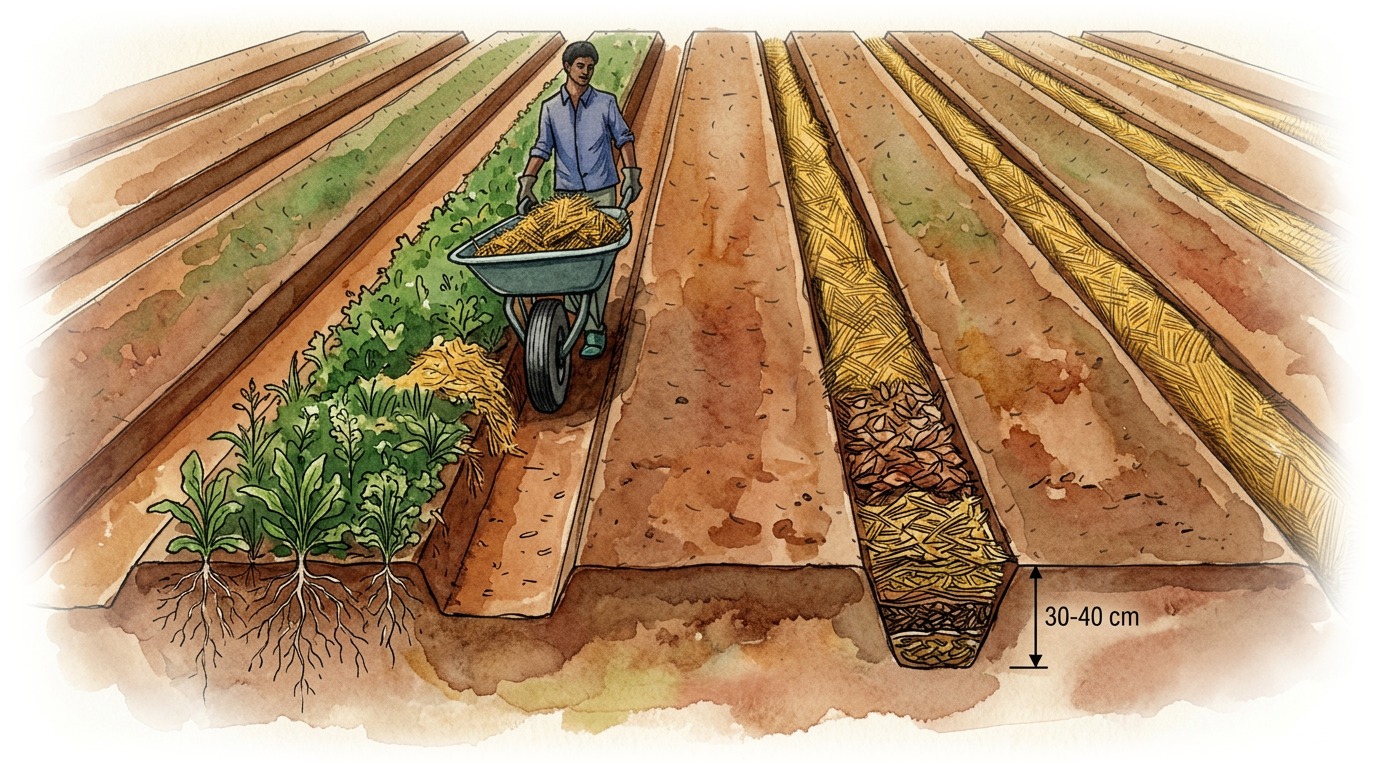
PARTIE 32 SUR 36 Fill the footpaths with dry organic matter. This can be straw, leaves, or dry crop residues.
Fill the footpaths with dry organic matter. This can be straw, leaves, or dry crop residues.

Fill the footpaths with dry organic matter. This can be straw, leaves, or dry crop residues.

An amount of 30 to 40 cm is needed.

33
PARTIE 33 SUR 36 This straw will be compacted over time and as you walk on it. Its role is to prevent weeds in the footpaths and to
This straw will be compacted over time and as you walk on it. Its role is to prevent weeds in the footpaths and to

This straw will be compacted over time and as you walk on it. Its role is to prevent weeds in the footpaths and to

retain excess water. Moreover, this dry matter will turn into compost over time.

34
PARTIE 34 SUR 36 STEP 7 : WATERING
STEP 7 : WATERING

STEP 7 : WATERING

STEP 7 : WATERING

35
PARTIE 35 SUR 36 Once you have finished preparing the beds, water the entire plot generously.
Once you have finished preparing the beds, water the entire plot generously.

Once you have finished preparing the beds, water the entire plot generously.

Once you have finished preparing the beds, water the entire plot generously.

36
PARTIE 36 SUR 36 Congratulations, your plot now has 10 beds ready for intensive organic market gardening in living soil.
Congratulations, your plot now has 10 beds ready for intensive organic market gardening in living soil.

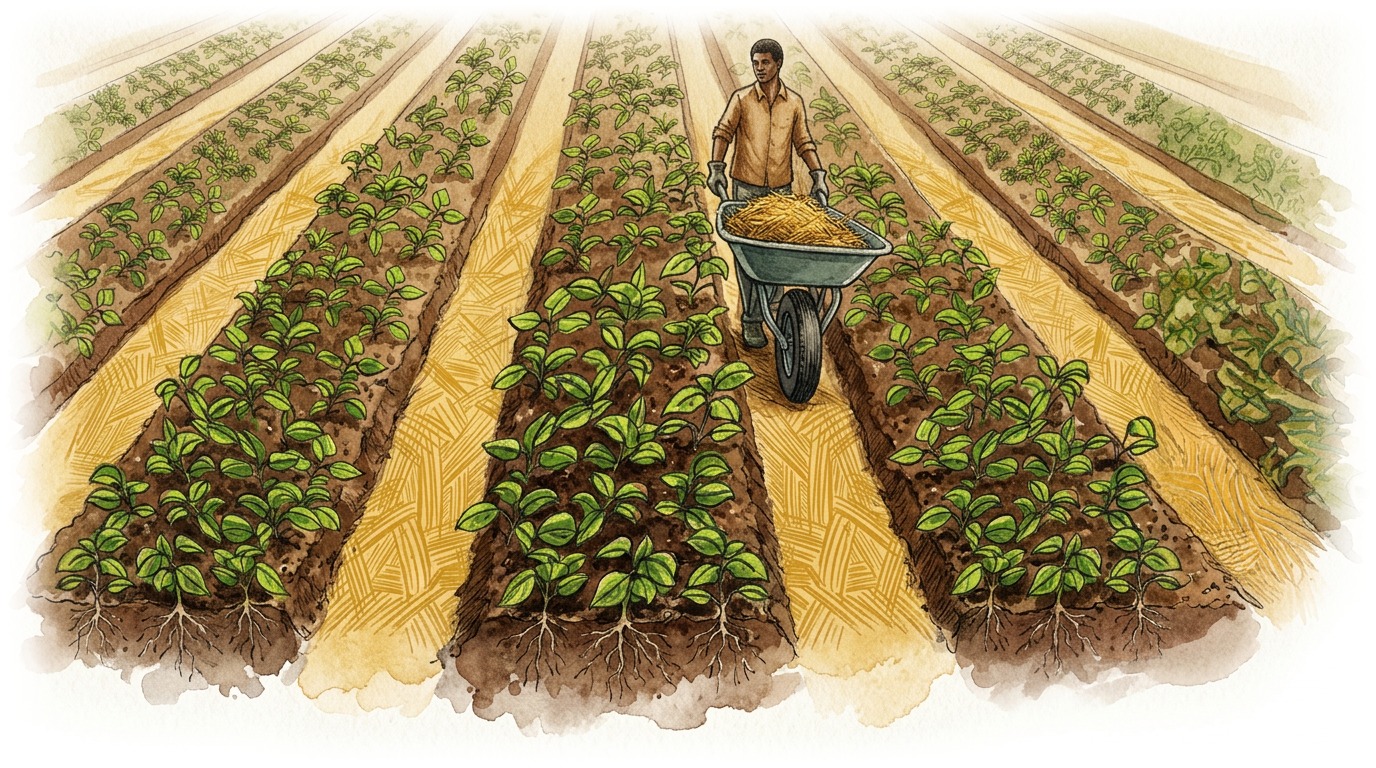
Congratulations, your plot now has 10 beds ready for intensive organic market gardening in living soil.
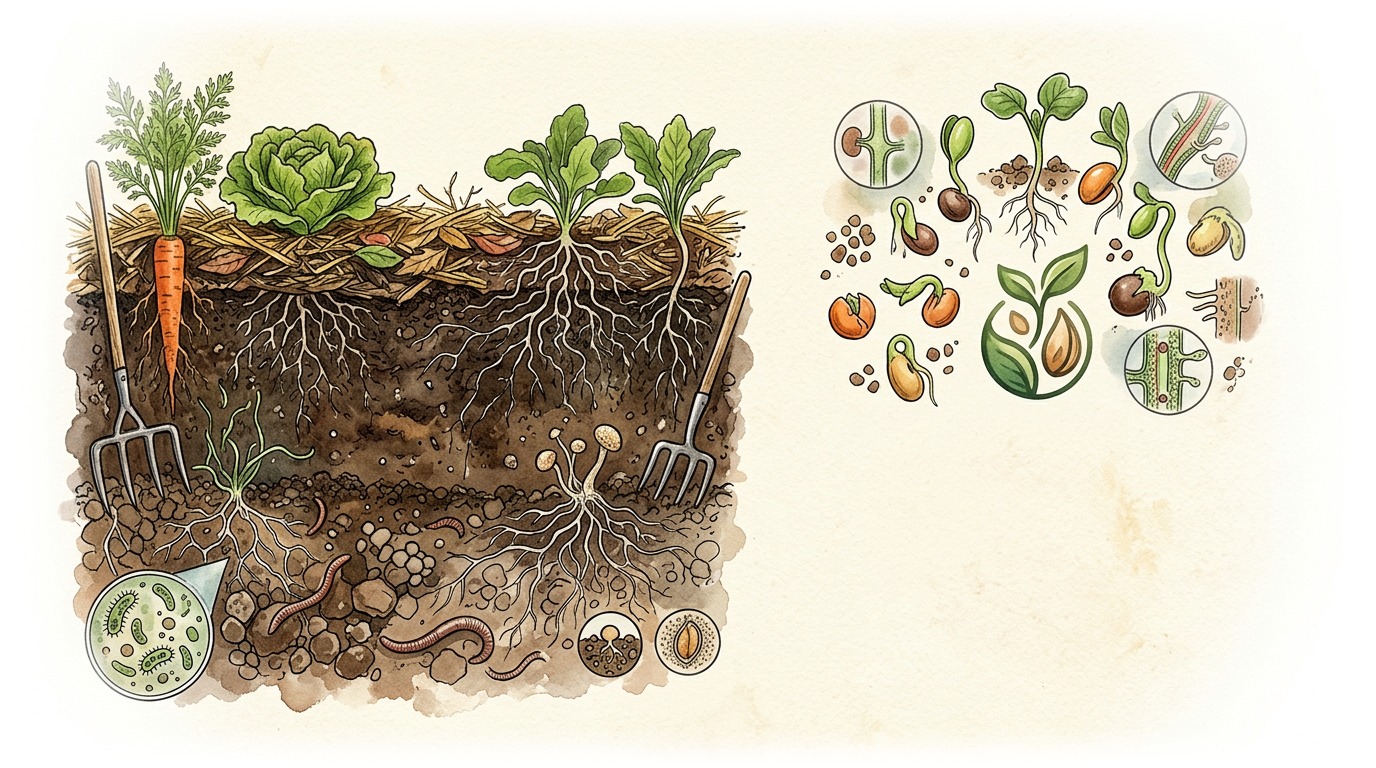
Congratulations, your plot now has 10 beds ready for intensive organic market gardening in living soil.