Campus
M4.3 🌱 Protection & Conception 📖 18 parties ☀️ Terroir tropical & sahélien 🌐 English

The Design Principles of a Micro-Farm

Agencement spatial ergonomique, orientation des planches, brise-vents, gestion des flux d'eau, chemins et optimisation de chaque zone.

📋 Sommaire des chapitres (18 parties) Afficher / Masquer
1
PARTIE 1 SUR 18 The design of a micro-farm helps you produce more efficiently, with less effort, and maintain a farm that will last
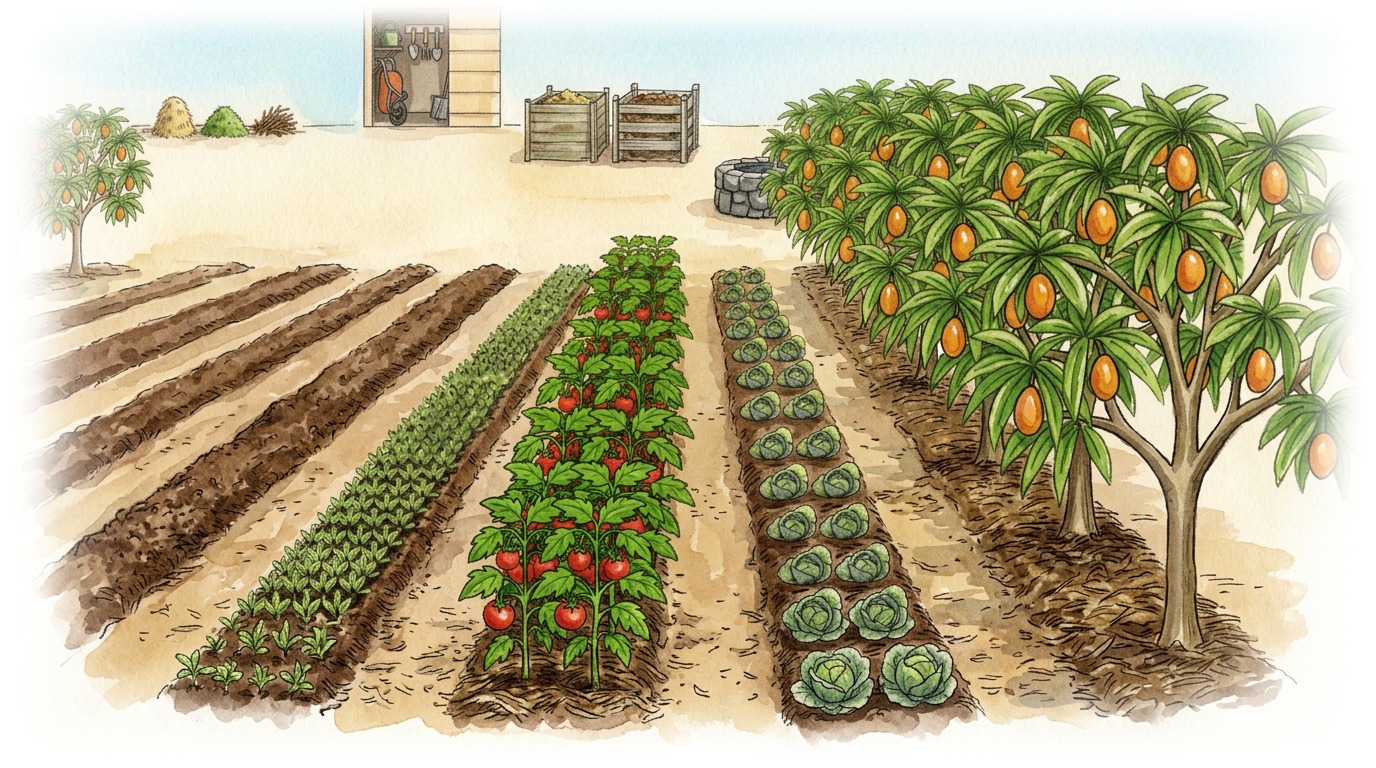
The design of a micro-farm helps you produce more efficiently, with less effort, and maintain a farm that will last

The design of a micro-farm helps you produce more efficiently, with less effort, and maintain a farm that will last

over time.

This module shows you how to organize your farm according to your needs and your land.

2
PARTIE 2 SUR 18 MARKET GARDENING
MARKET GARDENING

MARKET GARDENING

TRAINING

THE DESIGN PRINCIPLES OF A

MICRO-FARM

3
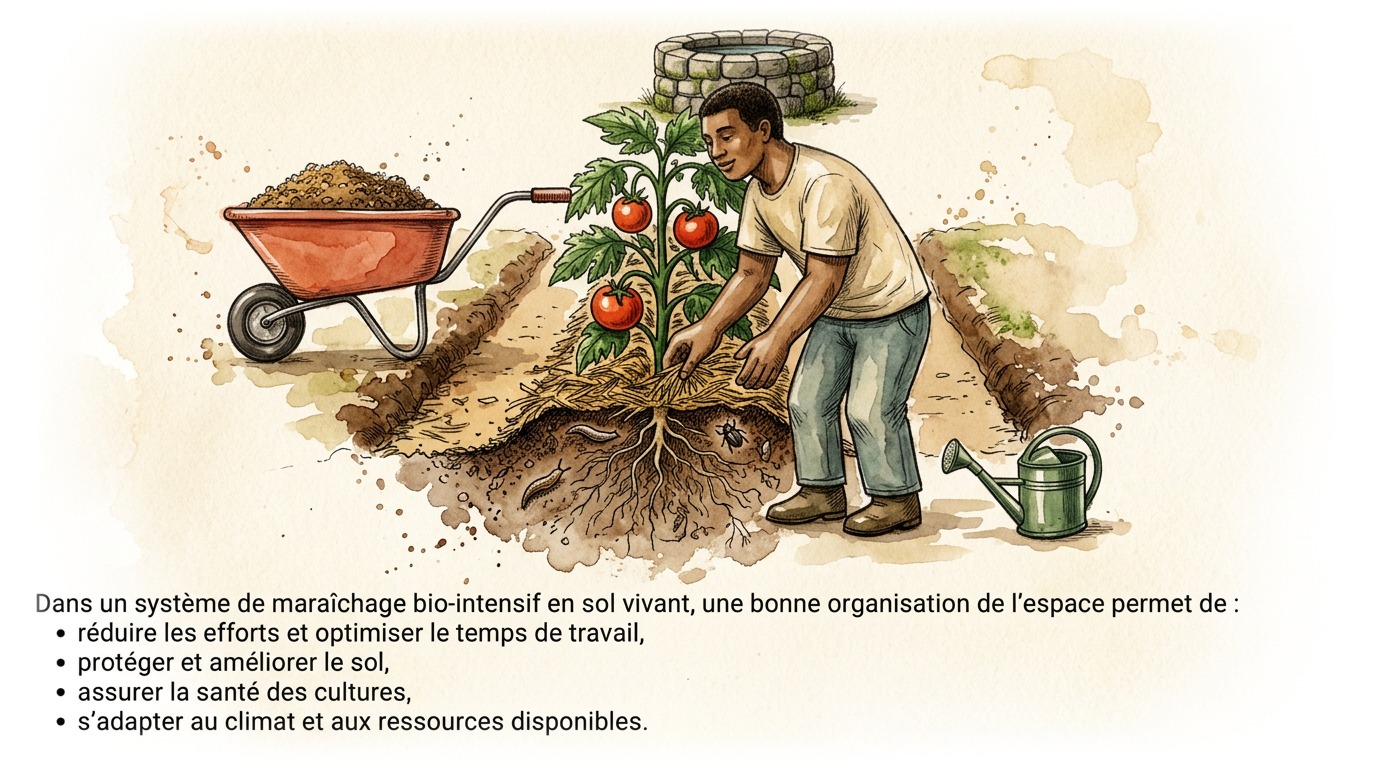
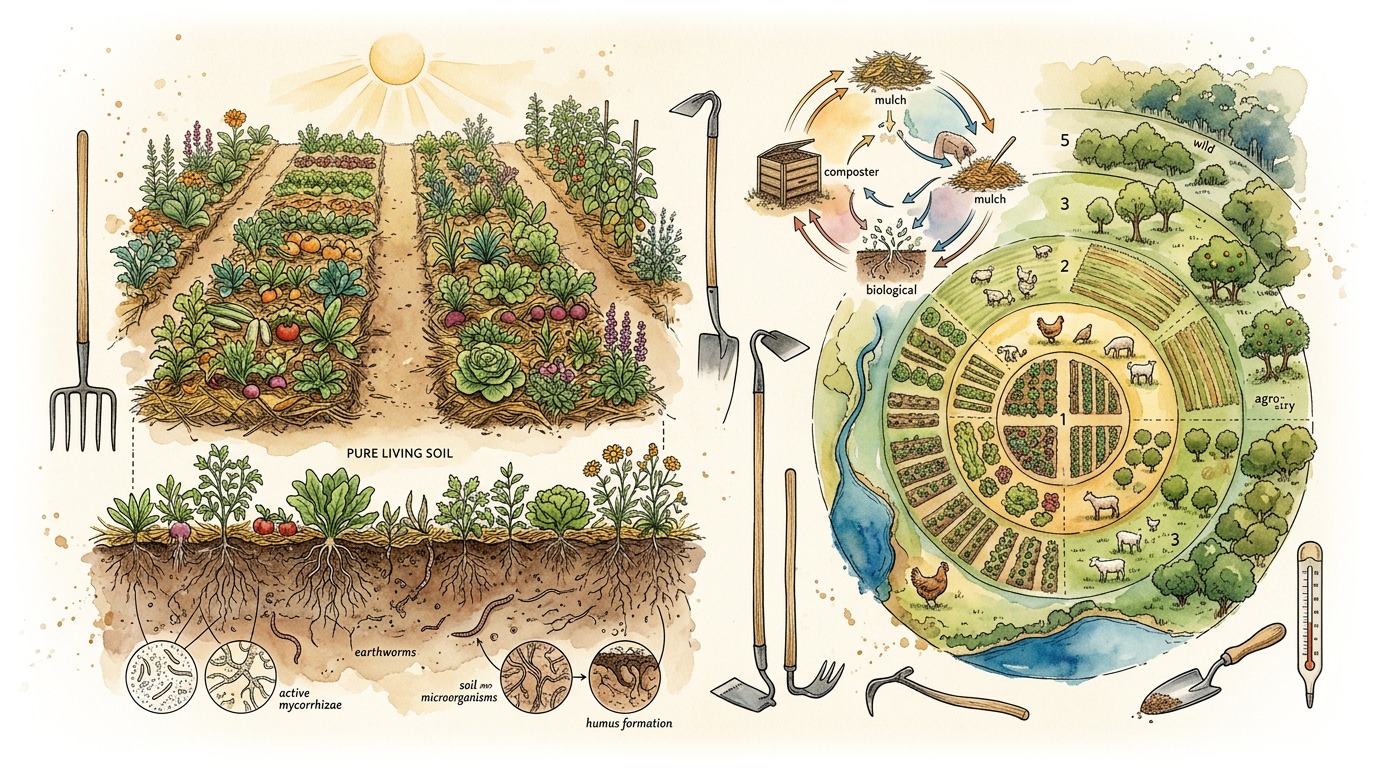
PARTIE 3 SUR 18 In a bio-intensive market gardening system using living soil, good spatial organization makes it possible to:
In a bio-intensive market gardening system using living soil, good spatial organization makes it possible to:

In a bio-intensive market gardening system using living soil, good spatial organization makes it possible to:

reduce effort and optimize working time,

protect and improve the soil,

ensure crop health,

adapt to the climate and available resources.

4
PARTIE 4 SUR 18 The principles of effective organization
The principles of effective organization

The principles of effective organization

The principles of effective organization

5
PARTIE 5 SUR 18 A good design makes use of every corner of the farm: corners, edges, the backs of buildings, spaces under certain
A good design makes use of every corner of the farm: corners, edges, the backs of buildings, spaces under certain

A good design makes use of every corner of the farm: corners, edges, the backs of buildings, spaces under certain

structures, or areas near fences are not wasted space.

They can be used for compost bins, educational displays, tool storage, organic material storage, sheltered

nurseries, medicinal plants, or useful hedges (windbreaks, fodder, wood production). When used effectively, these

spaces free up central areas for cultivation and improve traffic flow and the overall organization of the farm.

6
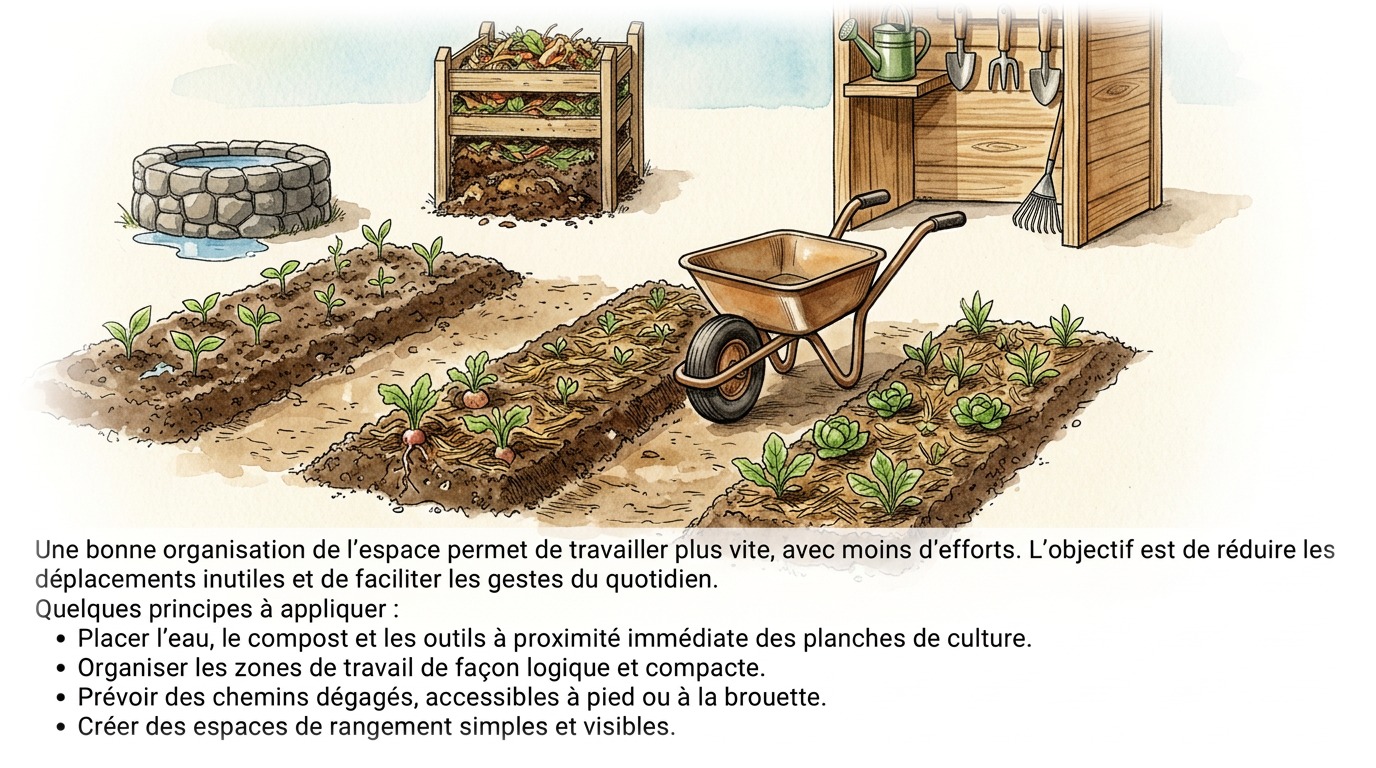
PARTIE 6 SUR 18 Good space organization allows you to work faster and with less effort. The goal is to reduce unnecessary
Good space organization allows you to work faster and with less effort. The goal is to reduce unnecessary

Good space organization allows you to work faster and with less effort. The goal is to reduce unnecessary

movement and make everyday tasks easier.

Here are a few principles to apply:

Place water, compost, and tools in close proximity to the growing beds.

Organize work areas in a logical and compact manner.

Provide clear paths that are accessible on foot or by wheelbarrow.

Create simple and visible storage spaces.

7
PARTIE 7 SUR 18 Use the zoning technique
Use the zoning technique

Use the zoning technique

Use the zoning technique

8
PARTIE 8 SUR 18 ZONE 0
ZONE 0

ZONE 0

ZONE 1

ZONE 2

ZONE 3

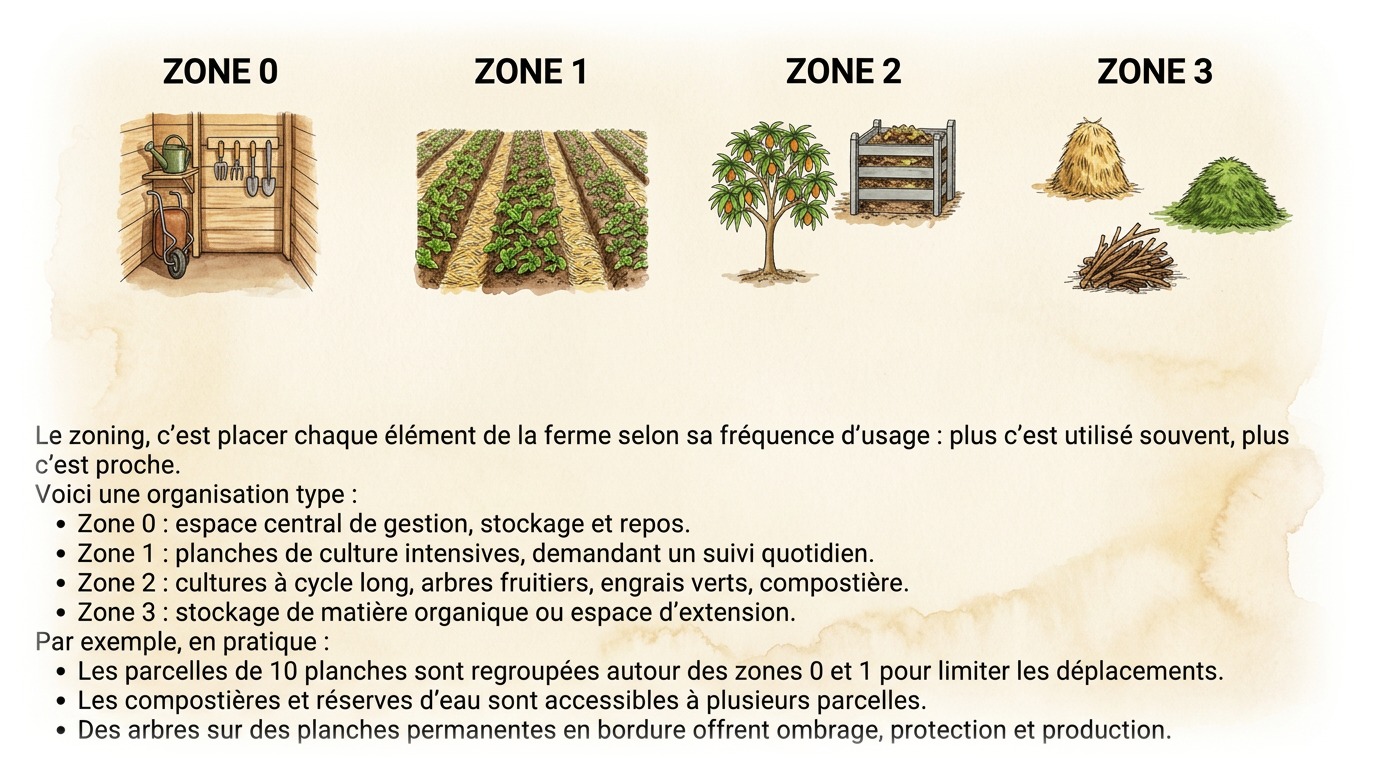
Zoning means placing each element of the farm according to how often it is used: the more often it is used, the

closer it is.

Here is a typical layout:

Zone 0: central management, storage, and rest area.

Zone 1: intensive cultivation beds requiring daily monitoring.

Zone 2: long-cycle crops, fruit trees, green manure, compost bin.

Zone 3: organic matter storage or extension space.

For example, in practice:

The 10 bed plots are grouped around zones 0 and 1 to limit movement.

The compost bins and water reserves are accessible to several plots.

Trees on permanent beds at the edge provide shade, protection, and production.

9
PARTIE 9 SUR 18 Taking climate into account in your organization
Taking climate into account in your organization

Taking climate into account in your organization

Taking climate into account in your organization

10
PARTIE 10 SUR 18 1
1

1

5

4

3

2

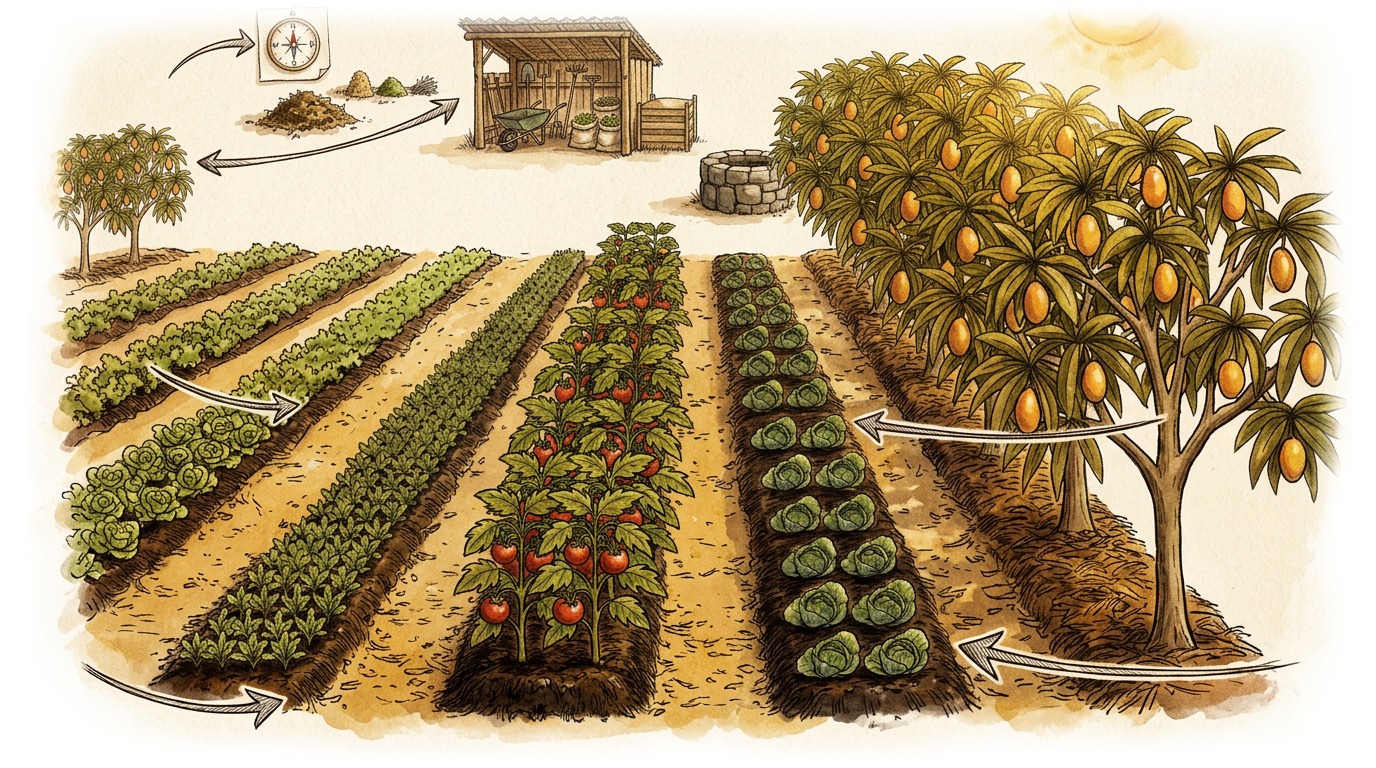
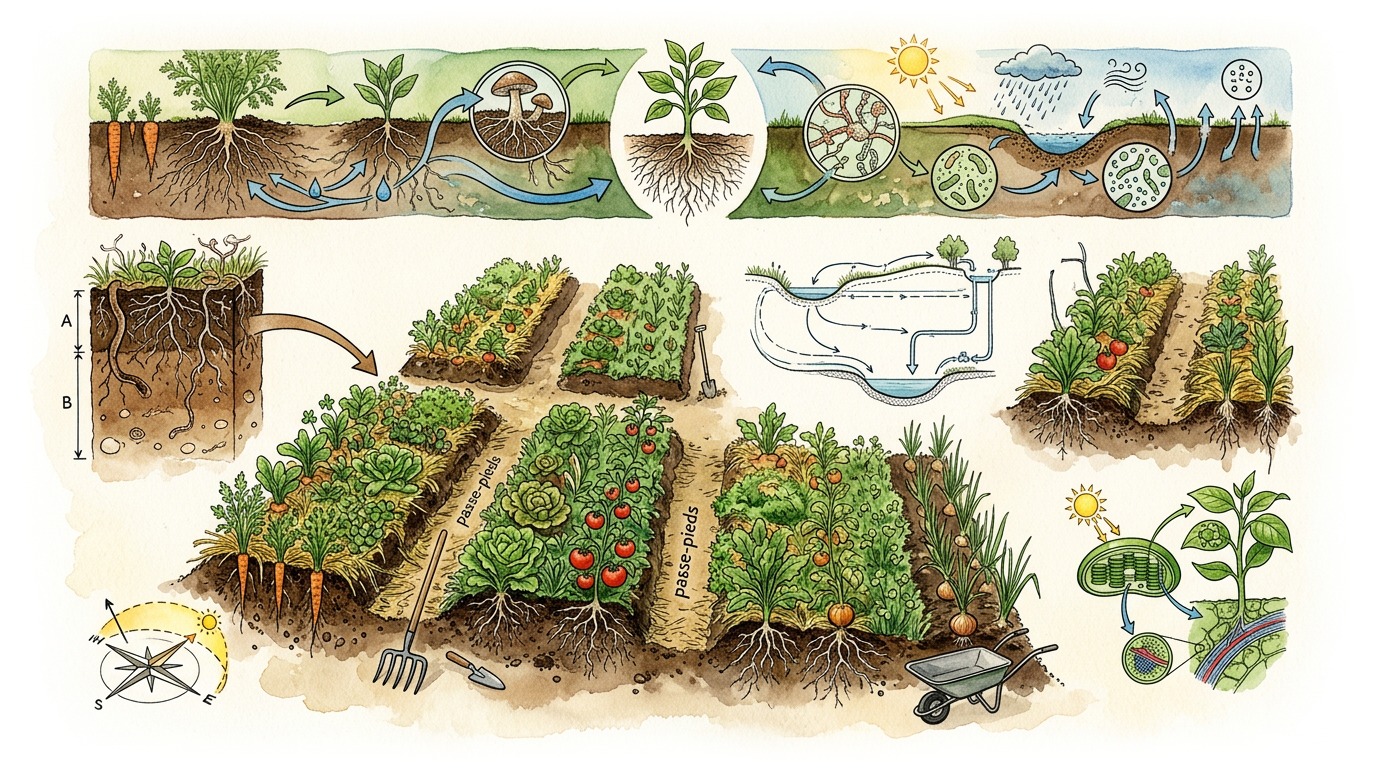
Once the space is well organized, you need to think about the orientation and protection of crops from the climate.

  1. Orient the beds according to the sun's path (north-south or east-west depending on the crops).
  2. Protect sensitive areas (nurseries, lettuce, etc.) with natural shade or shade nets.
  3. Protect against wind and dust with windbreaks or trees along the edges.
  4. Manage rainwater with ditches, raised beds, or good drainage.
  5. Install small shelters for tools, young plants, or seeds.

Considering these elements from the design stage ensures good crop growth and limits losses.

11
PARTIE 11 SUR 18 Key features of a micro-farm
Key features of a micro-farm

Key features of a micro-farm

Key features of a micro-farm

12
PARTIE 12 SUR 18 SHELTER AND STORAGE
SHELTER AND STORAGE

SHELTER AND STORAGE

ACCESSIBLE WATER SOURCES

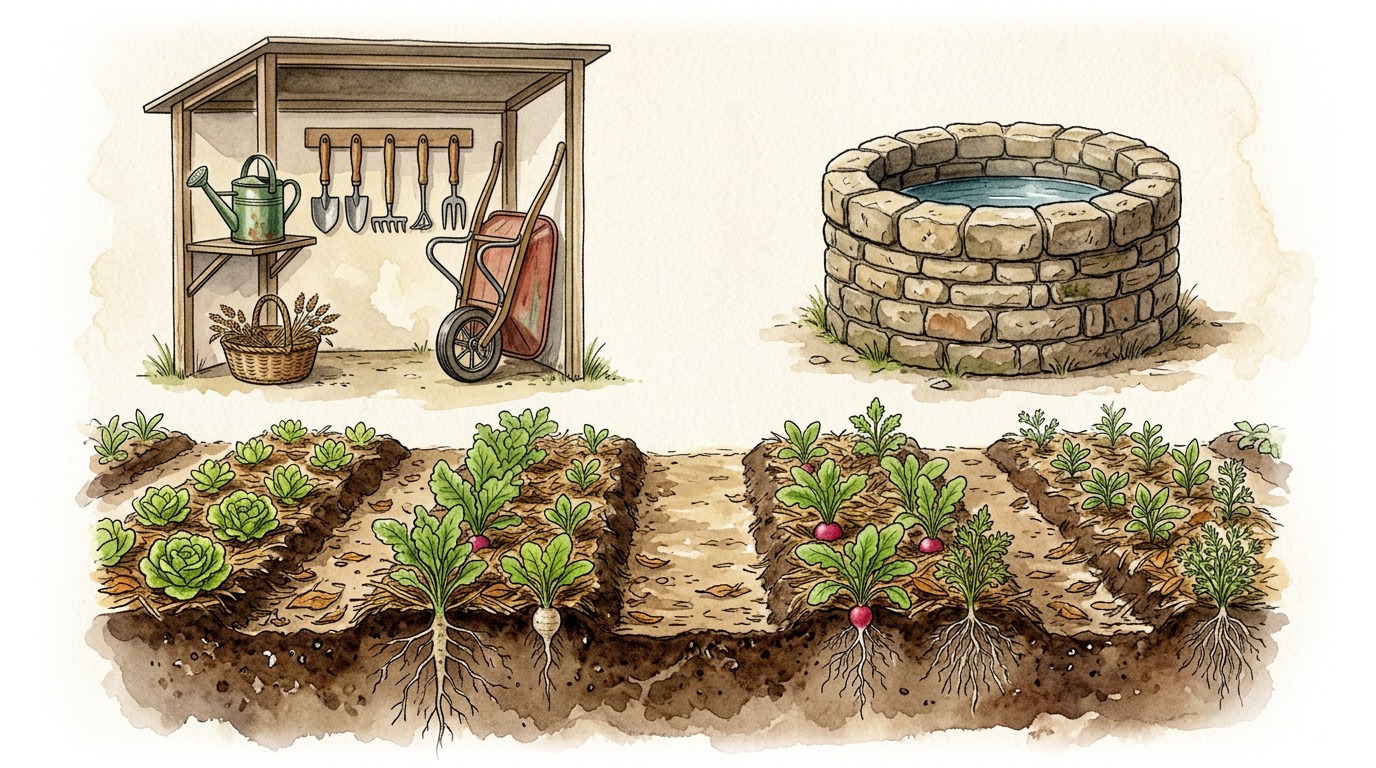
Once the space has been organized and protected, you need to plan for the structures that are essential to the

smooth running of the micro-farm.

Storage: Seeds and tools protected from moisture. Harvests to be kept in the shade before sale or processing.

Tool shelters: Large tools under a simple roof. Small tools hung up or stored so they remain accessible.

Water: Main reserve + small water points close to crops.

13
PARTIE 13 SUR 18 COMPOST BIN
COMPOST BIN

COMPOST BIN

FRUIT TREES

CLOSING

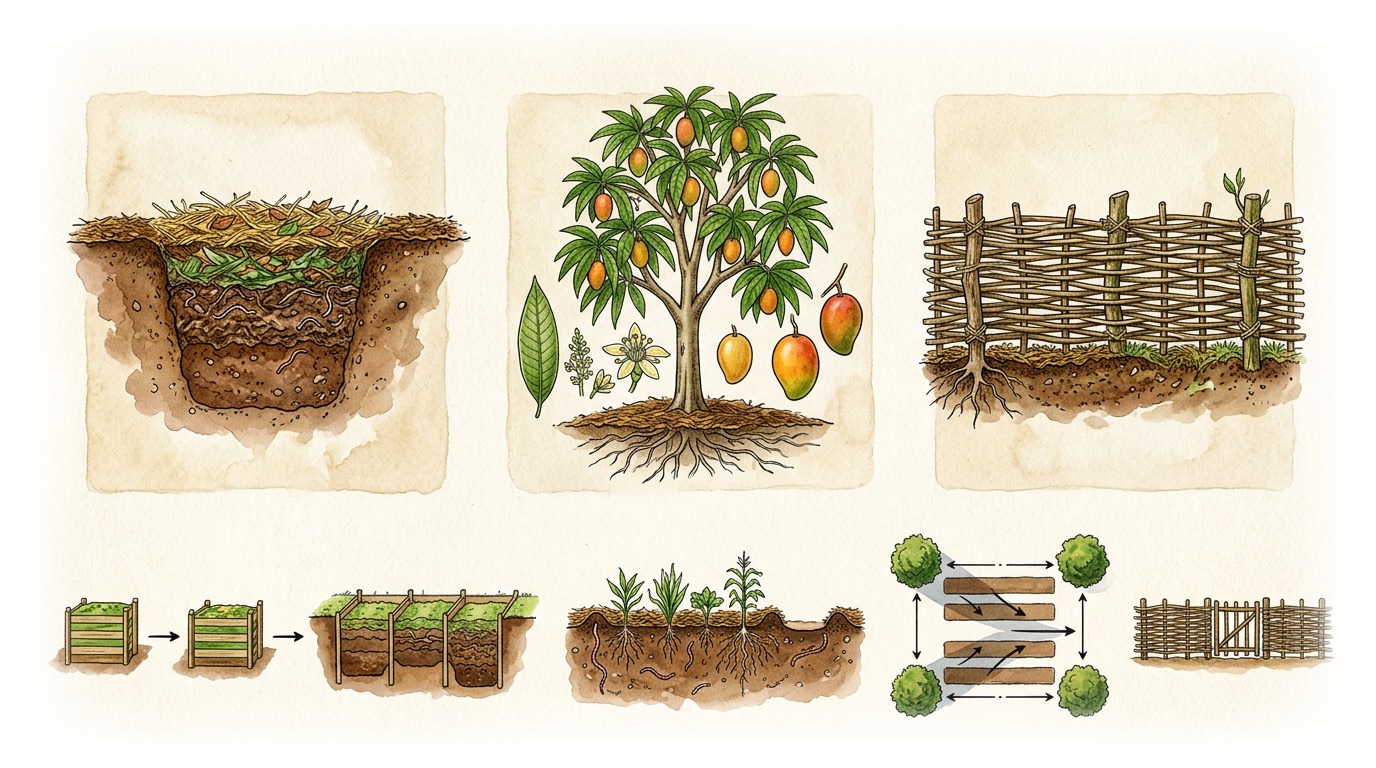
Compost: 1 compost bin for a small farm, 2 for a medium-sized farm, up to 4 for a large farm. It is advisable to

place compost bins slightly away from living and working areas to avoid nuisances related to odors, insects, or foot

traffic, while ensuring that they remain easily accessible from growing areas.

Fruit trees: Plant one row at the front edge of the crops and another at the end of the plot (spaced 1.5 m apart).

They provide shade, fruit, and protection.

Fence: Sturdy, well-placed, with an easy-to-access gate.

Anticipating these elements avoids costly reorganizations and makes the system run more smoothly from the start.

14
PARTIE 14 SUR 18 Examples of organizational models
Examples of organizational models

Examples of organizational models

Examples of organizational models

15
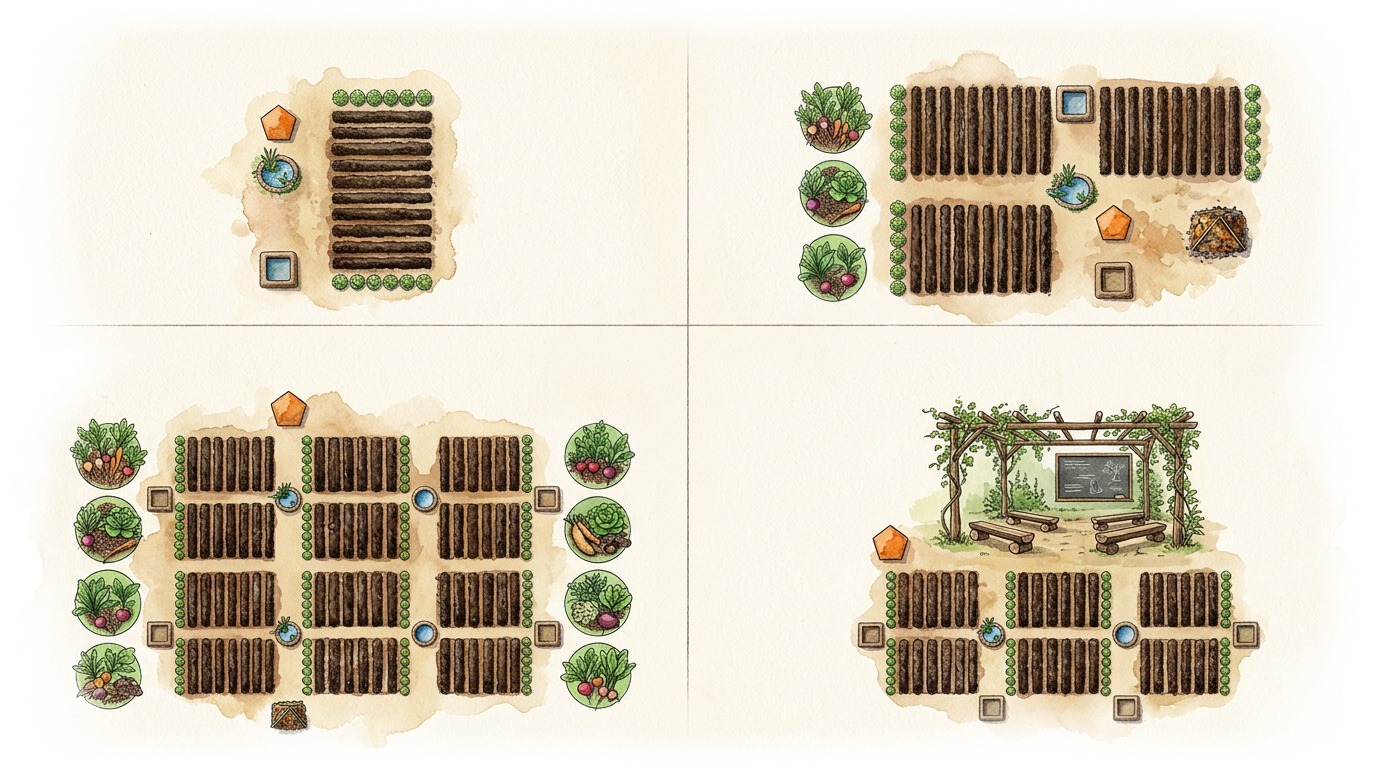
PARTIE 15 SUR 18 SUBSISTENCE FARM
SUBSISTENCE FARM

SUBSISTENCE FARM

LARGE FARM-BUSINESS

MEDIUM FARM

FARM SCHOOL

TRAINING AREA

There is no single right model: how a farm is organized depends on its objectives, resources, and land. Here are four

concrete examples, which can be adapted as needed.

The important thing is to design a coherent, functional, and scalable system that is tailored to your circumstances.

16
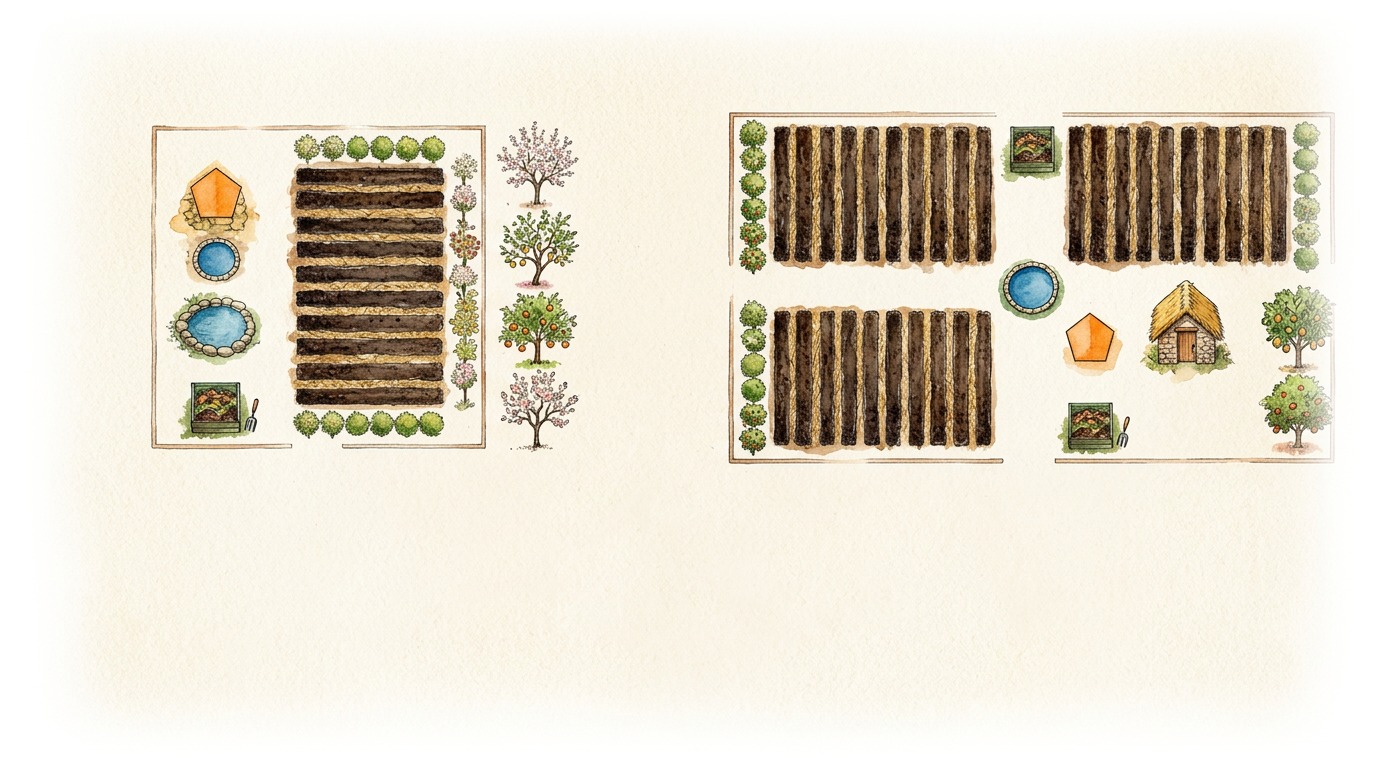
PARTIE 16 SUR 18 SUBSISTENCE FARM
SUBSISTENCE FARM

SUBSISTENCE FARM

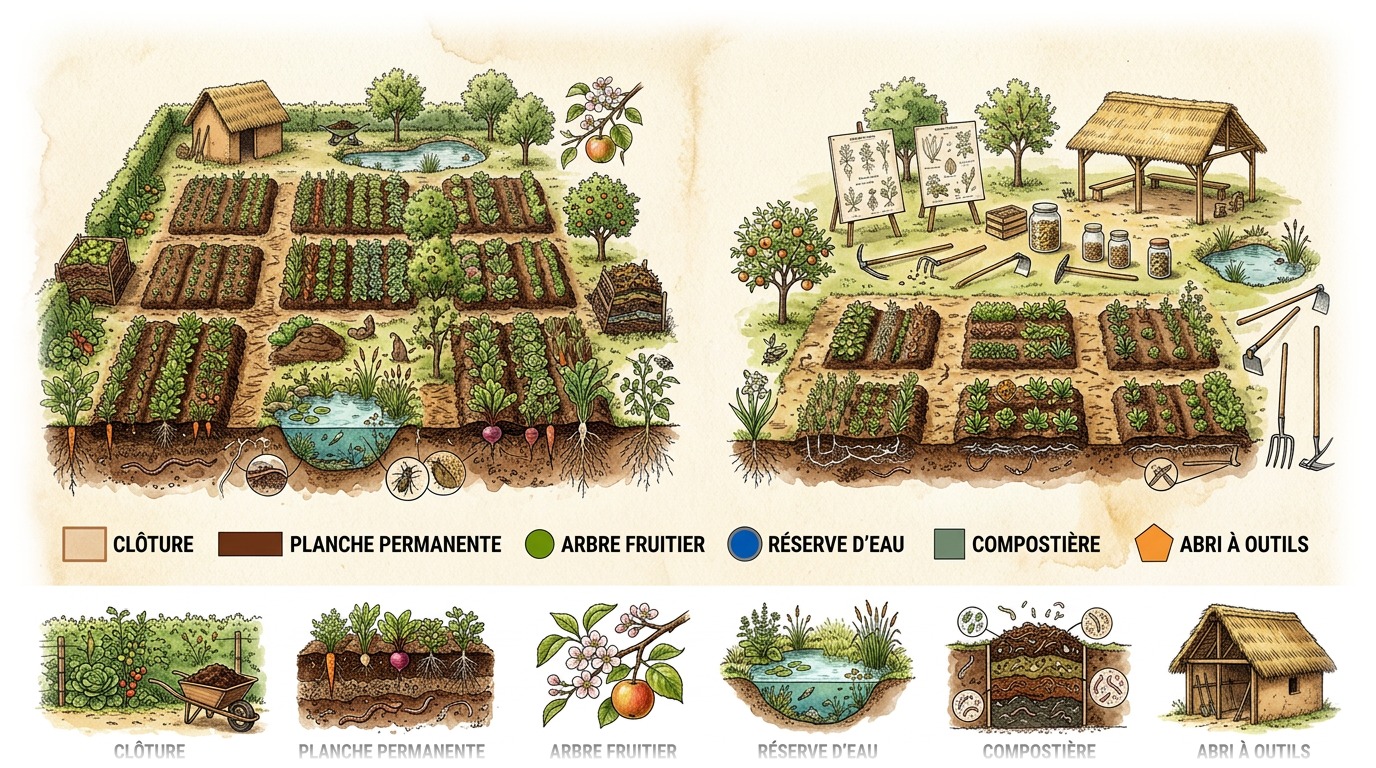
CLOSURE

PERMANENT BED

Subsistence farm

1 plot (10 beds) + 1 compost bin

Fruit trees along the edge

MEDIUM FARM

FRUIT TREE

WATER RESERVOIR

COMPOST BIN

TOOL SHED

Medium-sized farm

3 plots (10 beds each) + 2 compost bins

Shared water supply for all plots

17
PARTIE 17 SUR 18 LARGE FARM-BUSINESS
LARGE FARM-BUSINESS

LARGE FARM-BUSINESS

FARM SCHOOL

TRAINING AREA

CLOSURE

PERMANENT BED

FRUIT TREE

Large farm business

12 plots + 4 compost bins spread across the site

Easy access for wheelbarrows and carts

WATER RESERVOIR

COMPOST BIN

TOOL SHED

Farm school

Production area (6 to 12 plots)

Training area (shelter, educational storage)

3 to 4 compost bins + wooded area

18
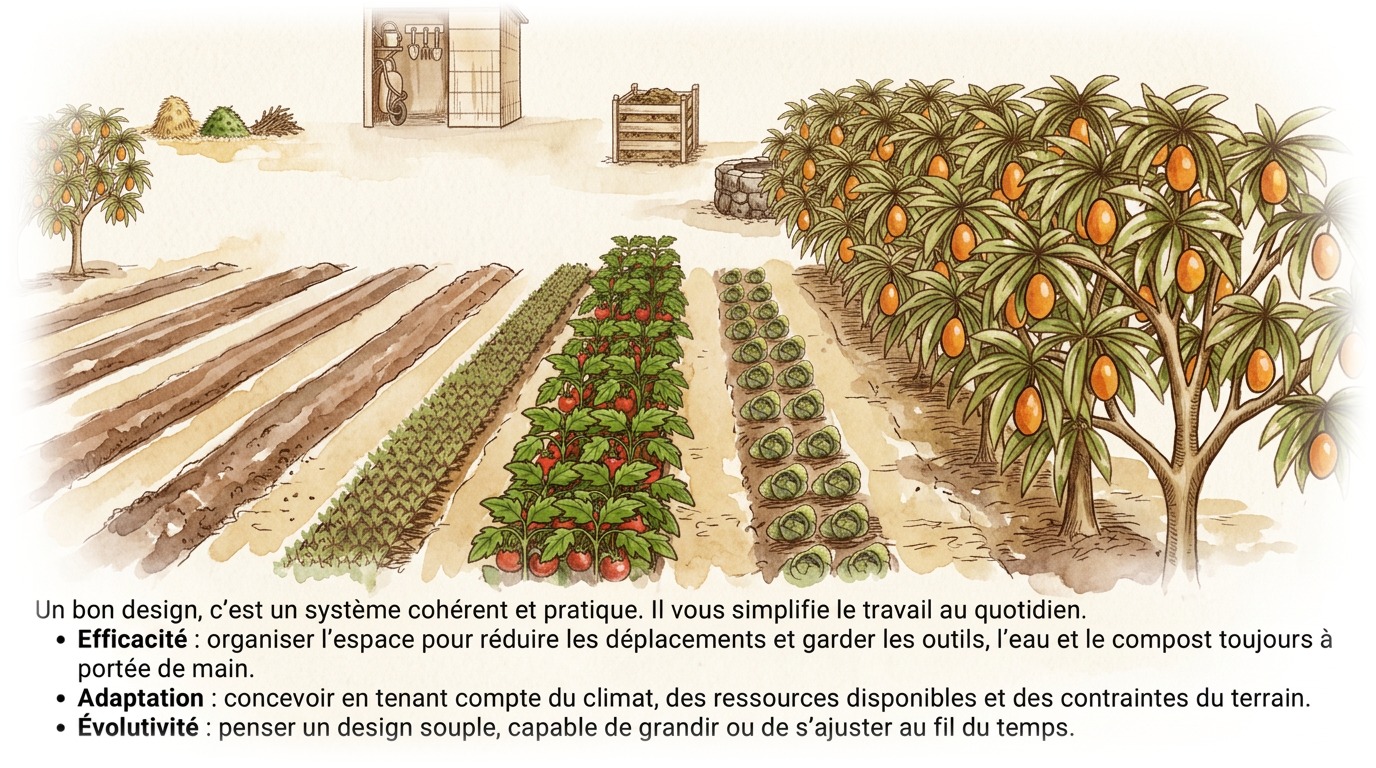
PARTIE 18 SUR 18 A good design is a coherent and practical system. It simplifies your daily work.
A good design is a coherent and practical system. It simplifies your daily work.

A good design is a coherent and practical system. It simplifies your daily work.

Efficiency: organize the space to reduce movement and keep tools, water, and compost always within reach.

Adaptability: design with climate, available resources, and terrain constraints in mind.

Scalability: think of a flexible design that can grow or adjust over time.