Campus
S2.14 🌱 Crop Production Guide 📖 12 parties ☀️ Terroir tropical & sahélien 🌐 English

Producing Your Own Carrot Seeds

Learn how to select and produce your own carrot seeds: discover the difference between annual tropical/oriental carrots and biennial carrots, master root selection digging to pick the best sweet taproots, and harvest beautiful primary dry umbels for easy threshing and debearding.

📋 Sommaire des chapitres (12 parties) Afficher / Masquer
1
PARTIE 1 SUR 12 Welcome to carrot seed production
Welcome to carrot seed production

Welcome to carrot seed production

The carrot is a crunchy, sweet root rich in vitamins, highly valued by households and profitable at the market.

Producing your own carrot seeds requires method: to know if a carrot is good, you must first dig it up and look underground!

Discover all professional practices to harvest abundant seeds adapted to your local terroir.
2
PARTIE 2 SUR 12 What we will learn
What we will learn

What we will learn

In this practical lesson, we will cover 5 key steps:

  1. Discovering the umbel flower and cross-pollination risk with wild carrot.
  2. Prioritizing varieties adapted to hot climates (annual/tropical types).
  3. The seed saver's secret gesture: digging up roots, tasting the tip, and selecting the best.
  4. Replanting mother roots and staking flower stalks.
  5. Harvesting primary umbels, rubbing spiny seeds to debeard them and preserving them for 5 years.
3
PARTIE 3 SUR 12 Step 1: The umbel and cross-pollination
Step 1: The umbel and cross-pollination

Step 1: The umbel and cross-pollination

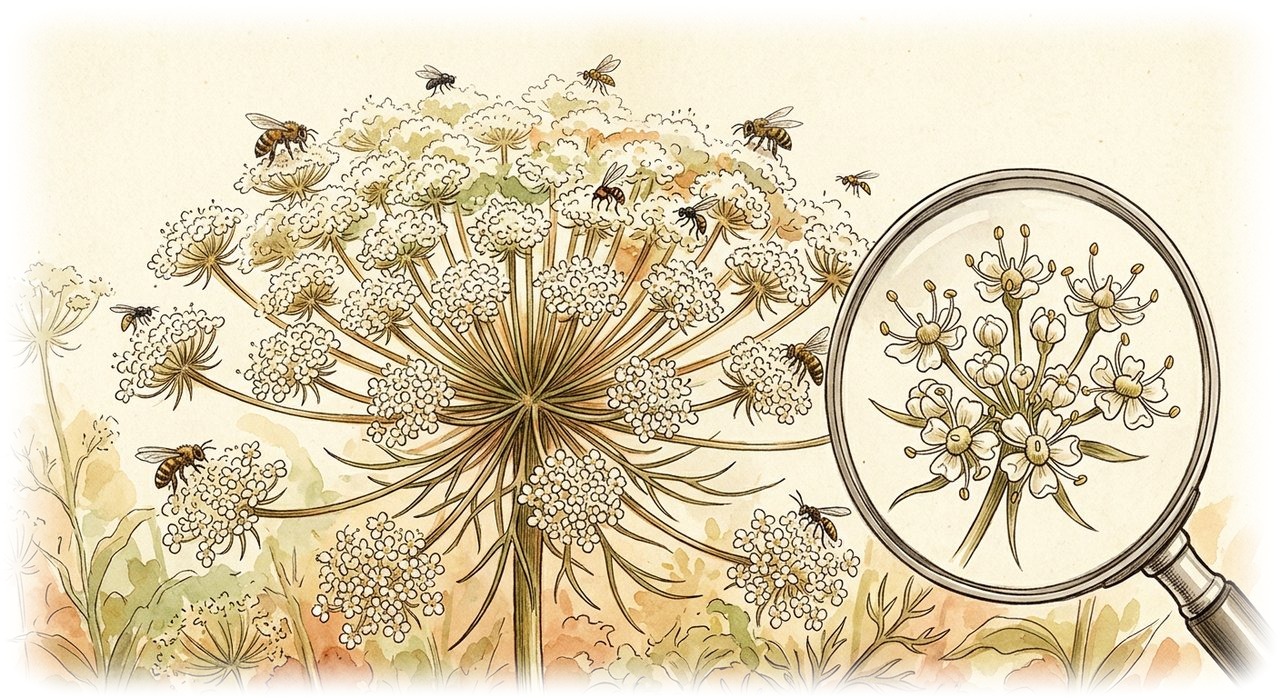
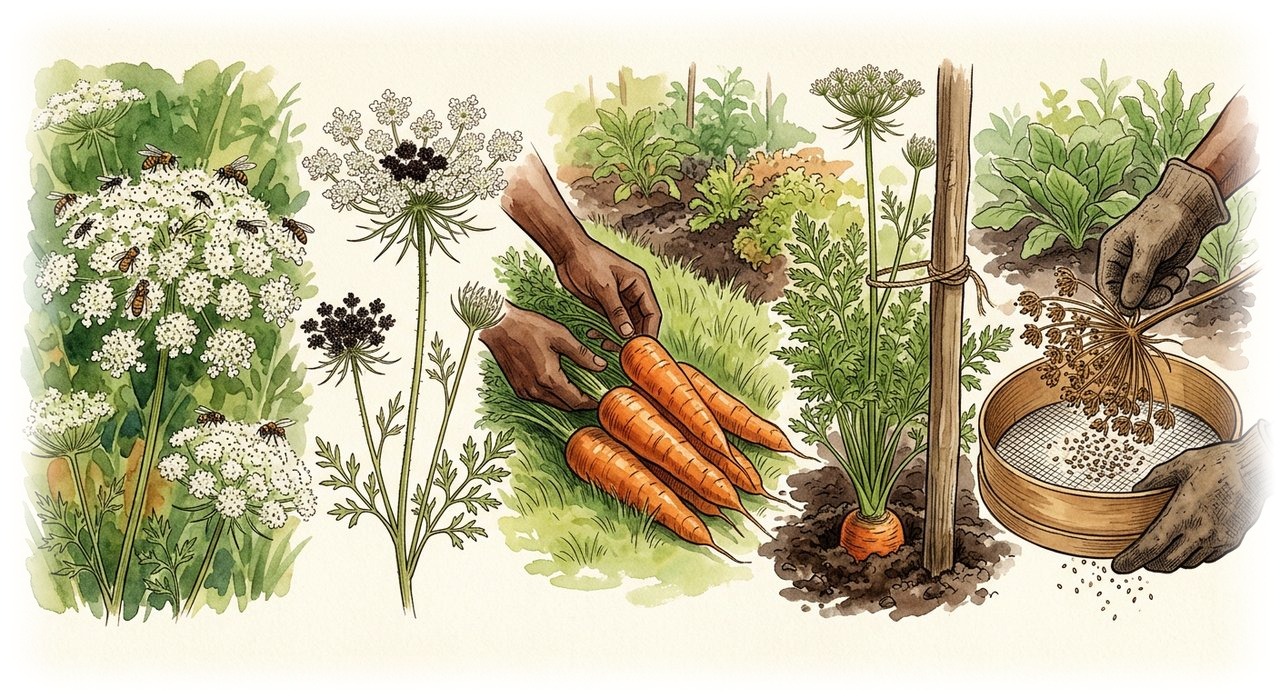
The carrot inflorescence is shaped like a beautiful umbrella made of hundreds of small white flowers. This is called an umbel.

In each tiny flower, male organs produce pollen before the female organ is ready.

The flower cannot self-pollinate alone: it relies entirely on visiting insects (flies, small bees, beetles). It is a cross-pollinating (allogamous) plant.

4
PARTIE 4 SUR 12 Beware of wild carrot danger!
Beware of wild carrot danger!

Beware of wild carrot danger!

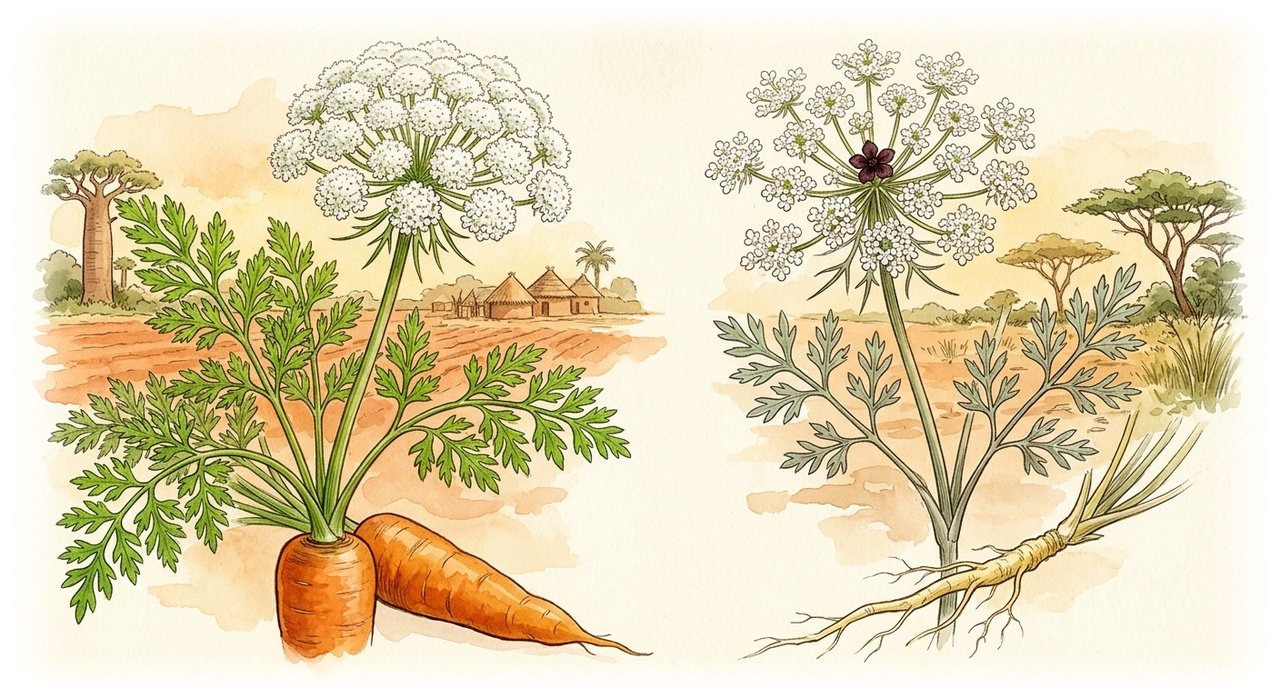
⚠️ Cultivated carrots readily cross with wild carrot growing along roadsides and fallow fields.

Wild carrot has dominant genes: if it fertilizes your carrot, the following year your roots will turn hard, white, fibrous, and inedible!

To distinguish them: wild carrot umbels almost always have a tiny black or dark purple flower right in the center.

✅ Remove all wild carrots within a 500 m to 1 km radius around your seed plot.

5
PARTIE 5 SUR 12 Step 2: Varieties adapted to hot climates
Step 2: Varieties adapted to hot climates

Step 2: Varieties adapted to hot climates

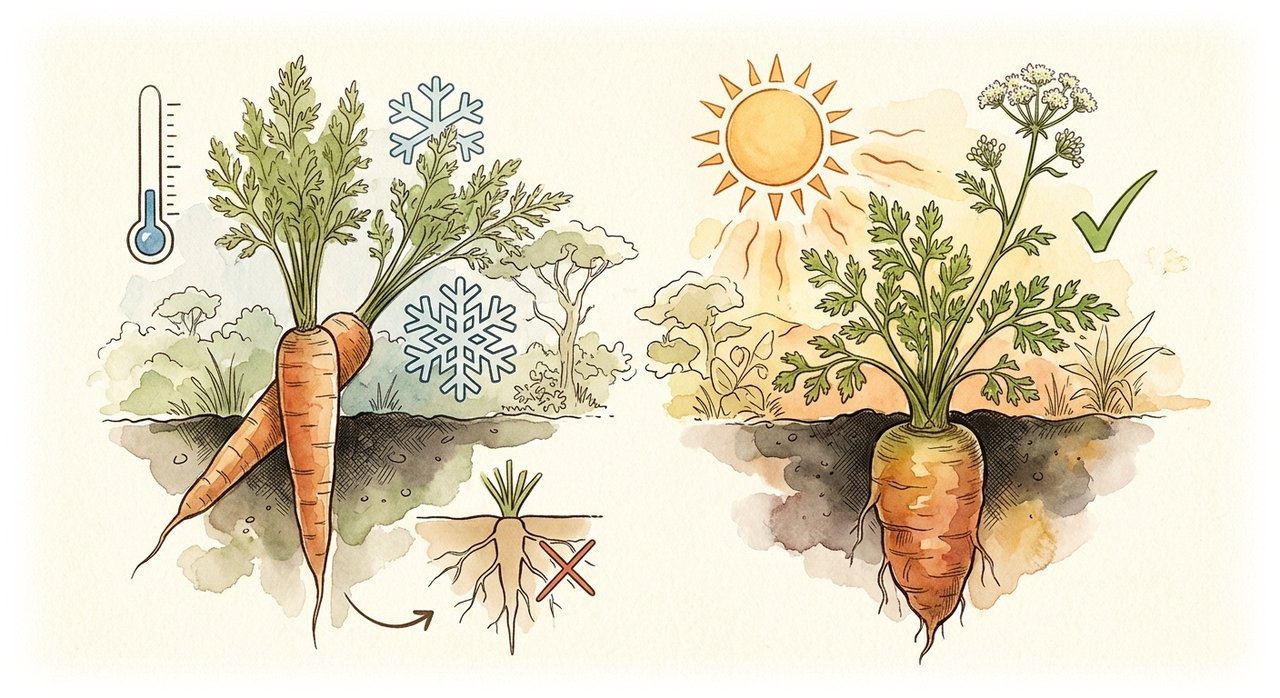
There are two main types of carrots:

  • Western carrots (such as Nantes): require cold winter conditions to flower. In tropical lowlands, they rarely set seed!
  • Oriental / tropical carrots (Kuroda, New Kuroda types, Asian varieties): very vigorous, heat tolerant, flowering in their first season without heavy cold.

✅ Always choose tropical varieties suited to hot climates for successful seed production.

6
PARTIE 6 SUR 12 Step 3: Root selection digging
Step 3: Root selection digging

Step 3: Root selection digging

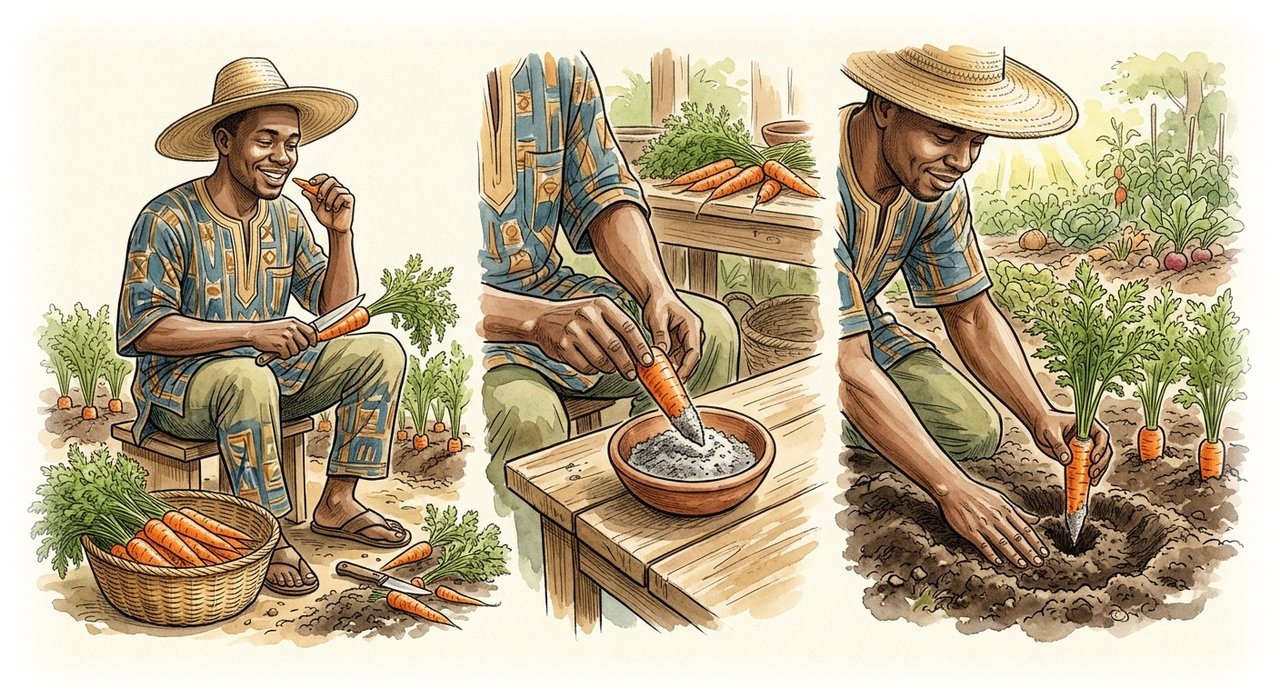
To produce high quality seeds, do not leave roots in the ground blindly.

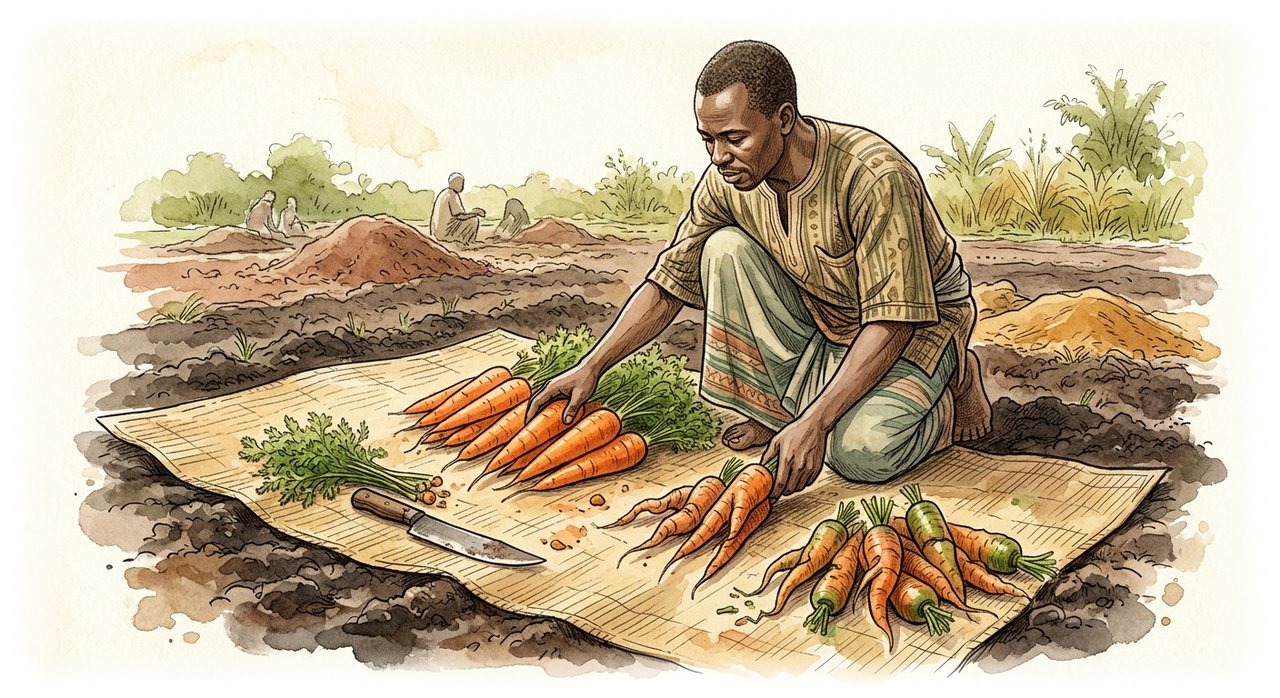
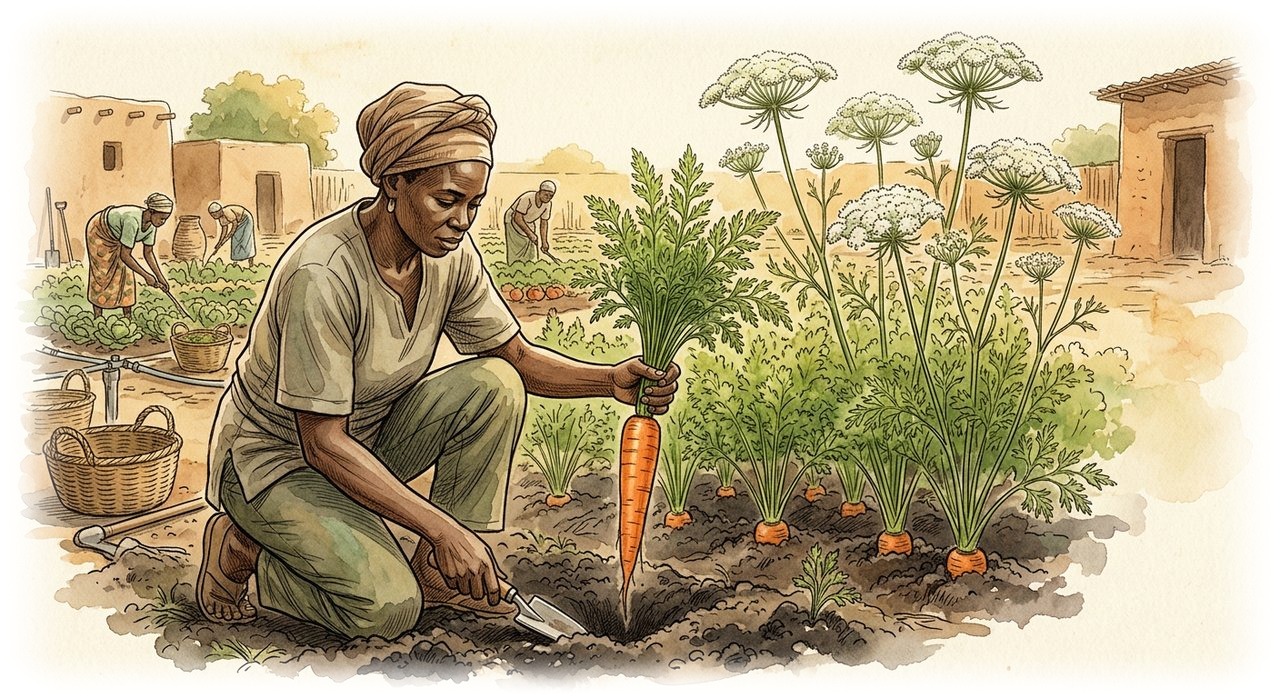
At maturity, gently dig up 30 to 50 healthy carrots.

Carefully inspect each root:

  • Keep straight, uniform, deep-orange carrots.
  • Eliminate branched, split, or pale roots.
  • Cut the very tip of the root to taste sweetness and crunchiness.
  • Dip the cut tip in clean wood ash to prevent rot.
7
PARTIE 7 SUR 12 Step 4: Replanting mother roots
Step 4: Replanting mother roots

Step 4: Replanting mother roots

Selected roots are called mother roots.

  1. Trim the foliage back to 5 cm above the crown.
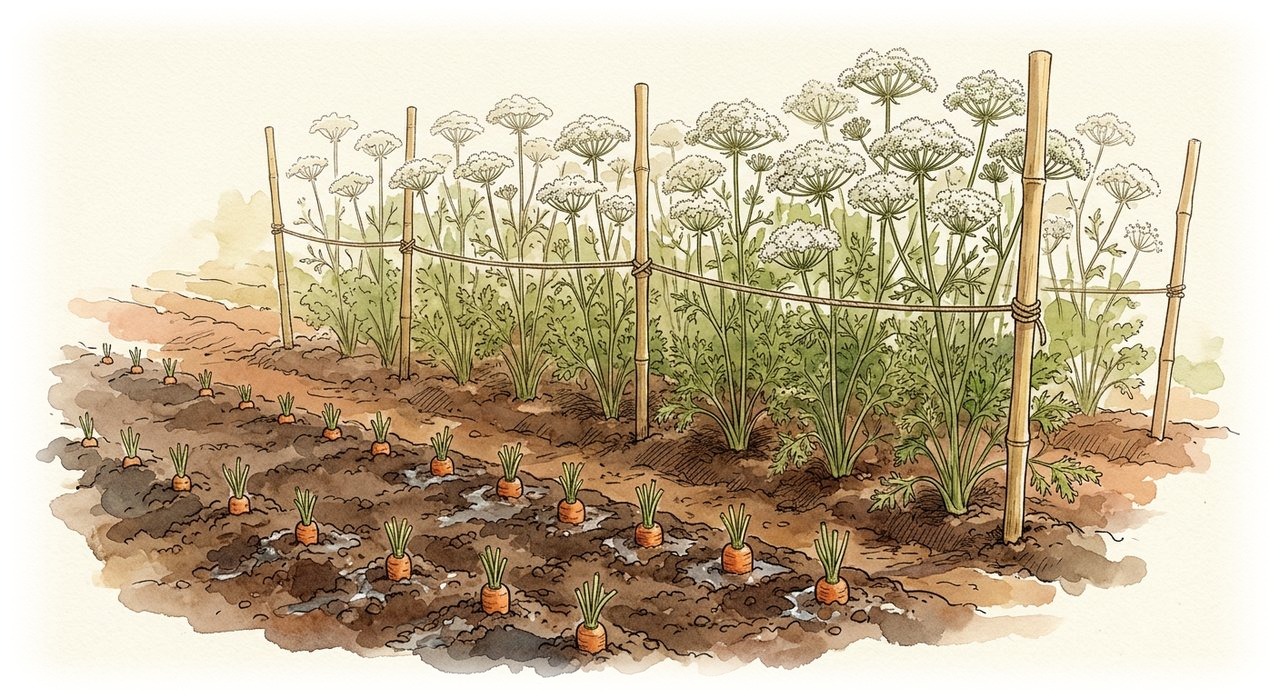
  2. Replant them in fertile, well-drained soil spaced 50 cm apart.
  3. Water well after transplanting.
  4. As the flower stalk grows up to 1.5 m, stake it firmly to resist strong winds.
8
PARTIE 8 SUR 12 Flowering and ripening of umbels
Flowering and ripening of umbels

Flowering and ripening of umbels

The main central umbel (primary umbel) blooms first and produces the largest, most vigorous seeds.

Secondary umbels follow on side branches.

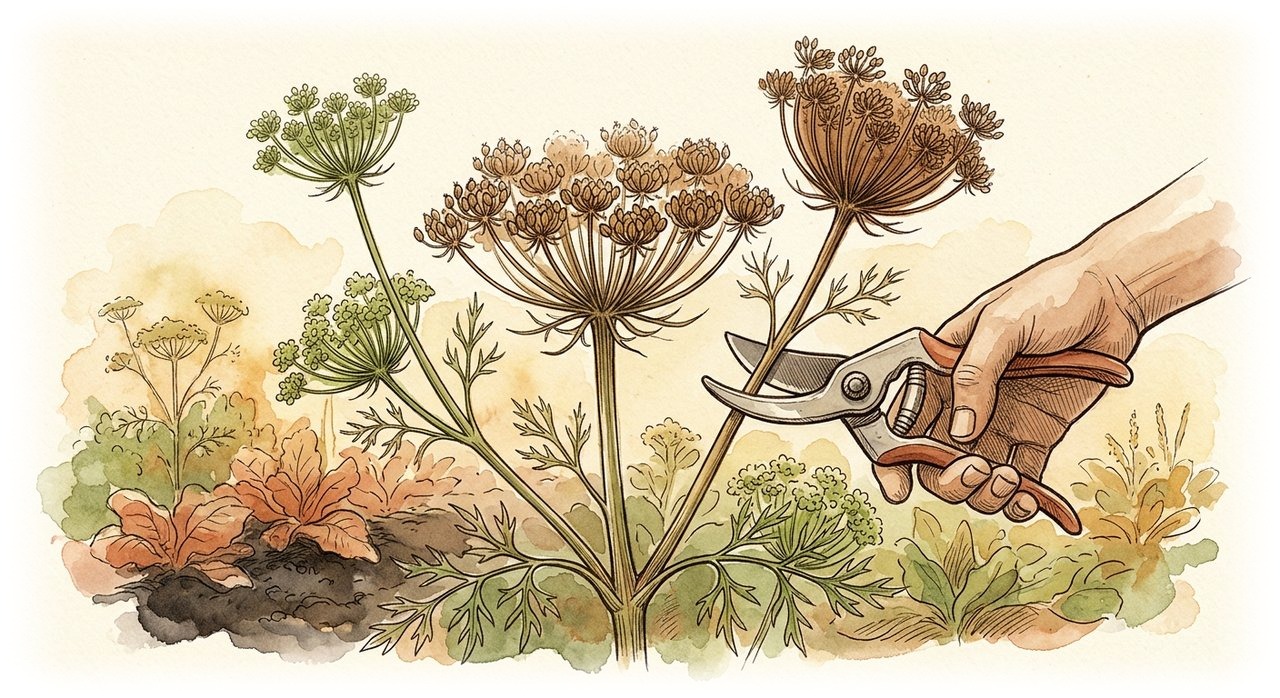
As seeds mature, the flat white umbel curls inwards like a bird's nest and turns from green to light brown.

9
PARTIE 9 SUR 12 Harvesting dry umbels
Harvesting dry umbels

Harvesting dry umbels

Harvest on a dry, sunny morning when umbels have turned crisp and brown.

Cut the primary umbels with 5 cm of stem attached.

Place them in a dry, ventilated cloth bag or basket in the shade for a few days to complete drying.

10
PARTIE 10 SUR 12 Debearding and threshing carrot seeds
Debearding and threshing carrot seeds

Debearding and threshing carrot seeds

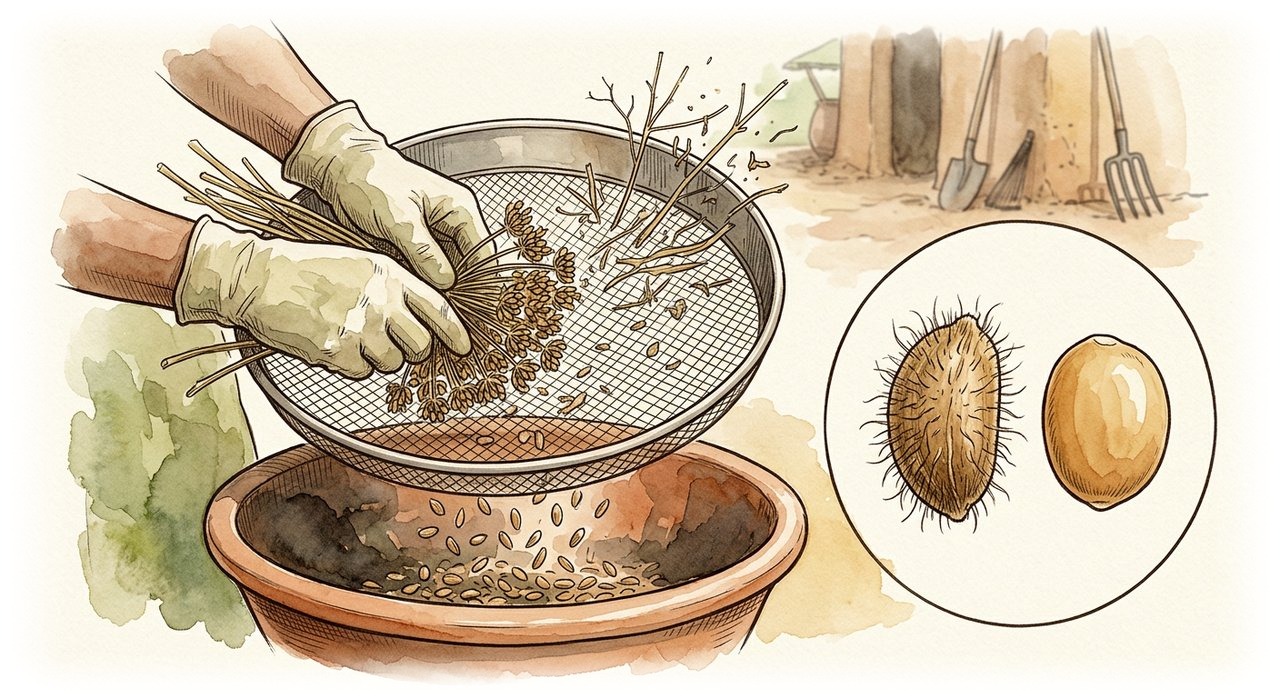
Carrot seeds are covered with tiny hooked hairs that make them cling together!

To obtain easy-to-sow individual seeds:

  1. Wear work gloves to protect your hands.
  2. Rub dry umbels vigorously between your hands or against a wire kitchen sieve.
  3. This friction breaks off the spiny hairs: this is called debearding.
  4. Seeds separate smoothly, ready for sowing.
11
PARTIE 11 SUR 12 Winnowing and airtight storage
Winnowing and airtight storage

Winnowing and airtight storage

To finish cleaning:

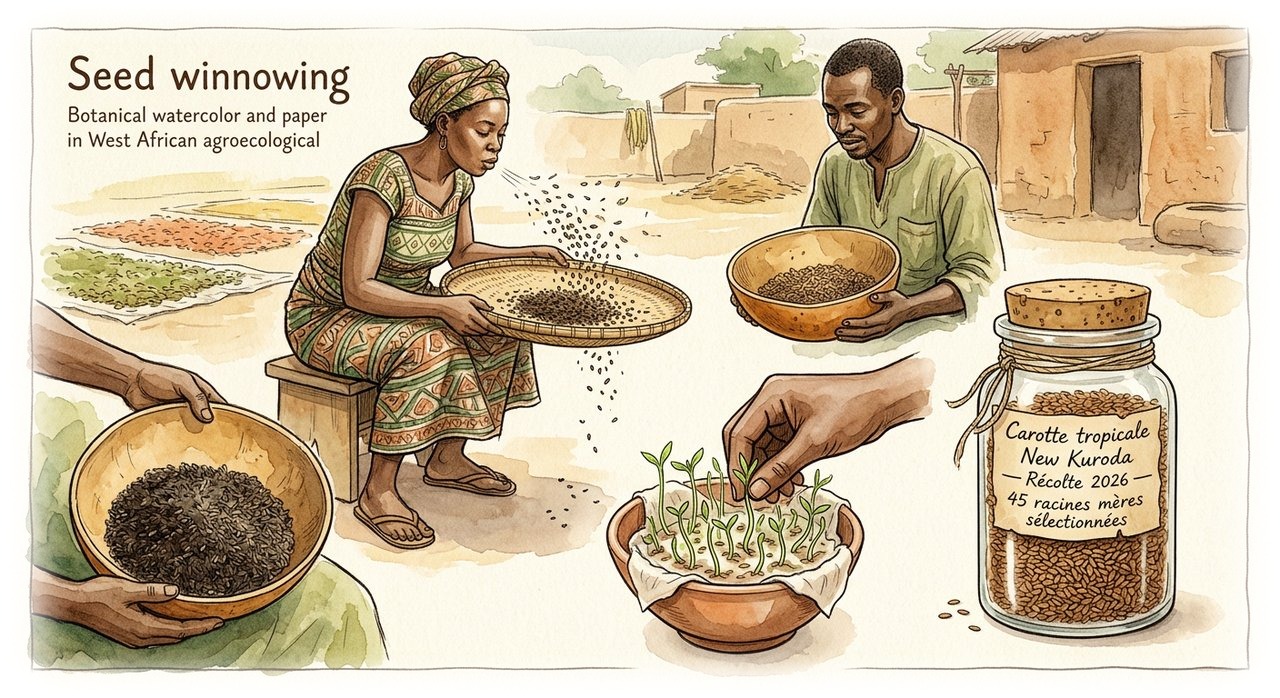
  1. Pour debearded seeds into a flat bowl or calabash.
  2. Blow gently or winnow in a light breeze to blow away dust and chaff.
  3. Store clean seeds in an airtight jar with a small sachet of dry wood ash.
  4. Label with variety and harvest year.
  5. 🌱 Carrot seeds retain strong germination power for 4 to 5 years.
12
PARTIE 12 SUR 12 Congratulations! You master carrot seed saving
Congratulations! You master carrot seed saving

Congratulations! You master carrot seed saving

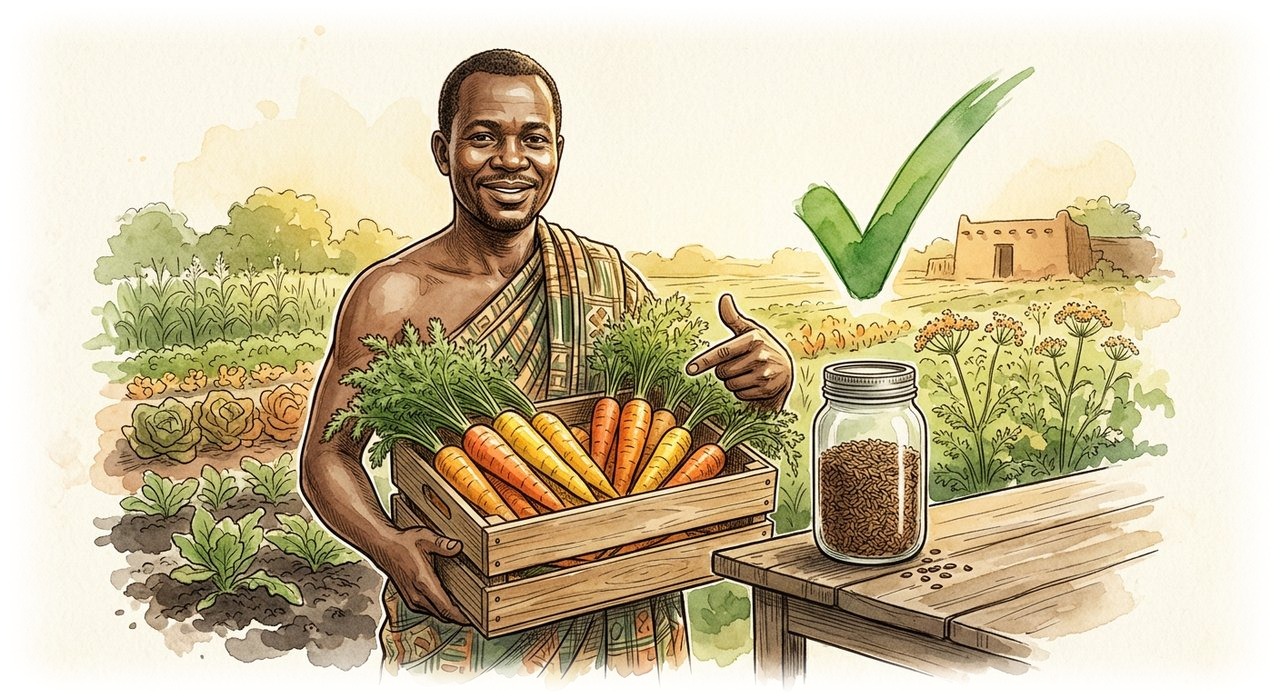
Well done! You now possess a rare and valuable skill among market gardeners: autonomous production of top quality carrot seeds!

Season after season, you improve your variety to become sweeter, tougher, and perfectly adapted to your land.

Key takeaways:

  • ✅ Select tropical/oriental varieties adapted to warm climates.
  • ✅ Dig up 30 to 50 roots to inspect shape, color and taste.
  • ✅ Dip cut root tips in ash before replanting.
  • ✅ Isolate 500 m to 1 km from wild carrots.
  • ✅ Harvest primary brown umbels and rub through a sieve to debeard.