The Seed: The Farmer's Treasure
Every harvest begins with a seed.
In this module, you will discover how a seed works, how to check if it is viable before planting, and how to store it long-term in the village without a refrigerator or freezer.

Discover what's hidden inside a seed, how to test its germination capacity with next to nothing, and how to keep it alive in a hot climate without electricity.
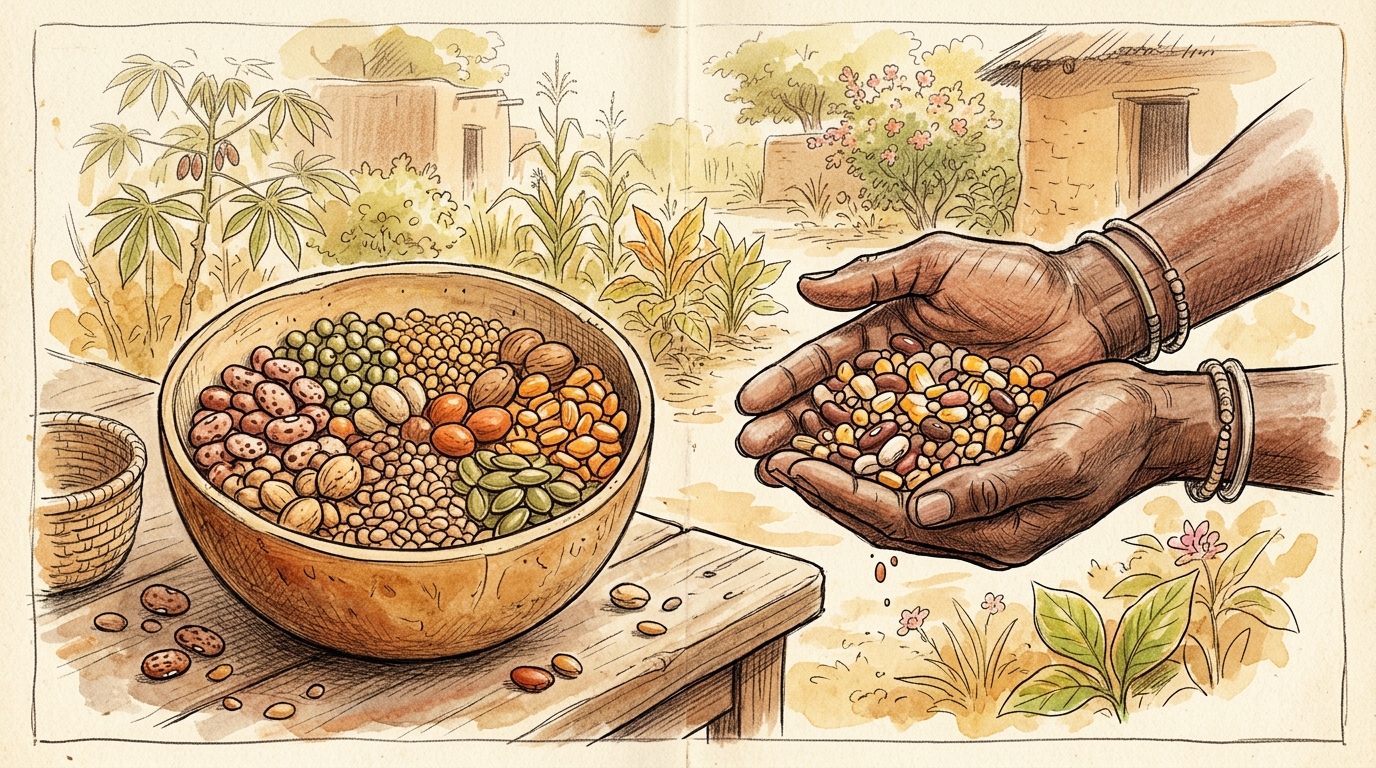
« Plan moyen chaleureux en extérieur : une paysanne ou un maraîcher souriant, paumes ouvertes montrant de belles graines saines et variées. En arrière-plan, une parcelle maraîchère verdoyante baignée de soleil. »
Every harvest begins with a seed.
In this module, you will discover how a seed works, how to check if it is viable before planting, and how to store it long-term in the village without a refrigerator or freezer.
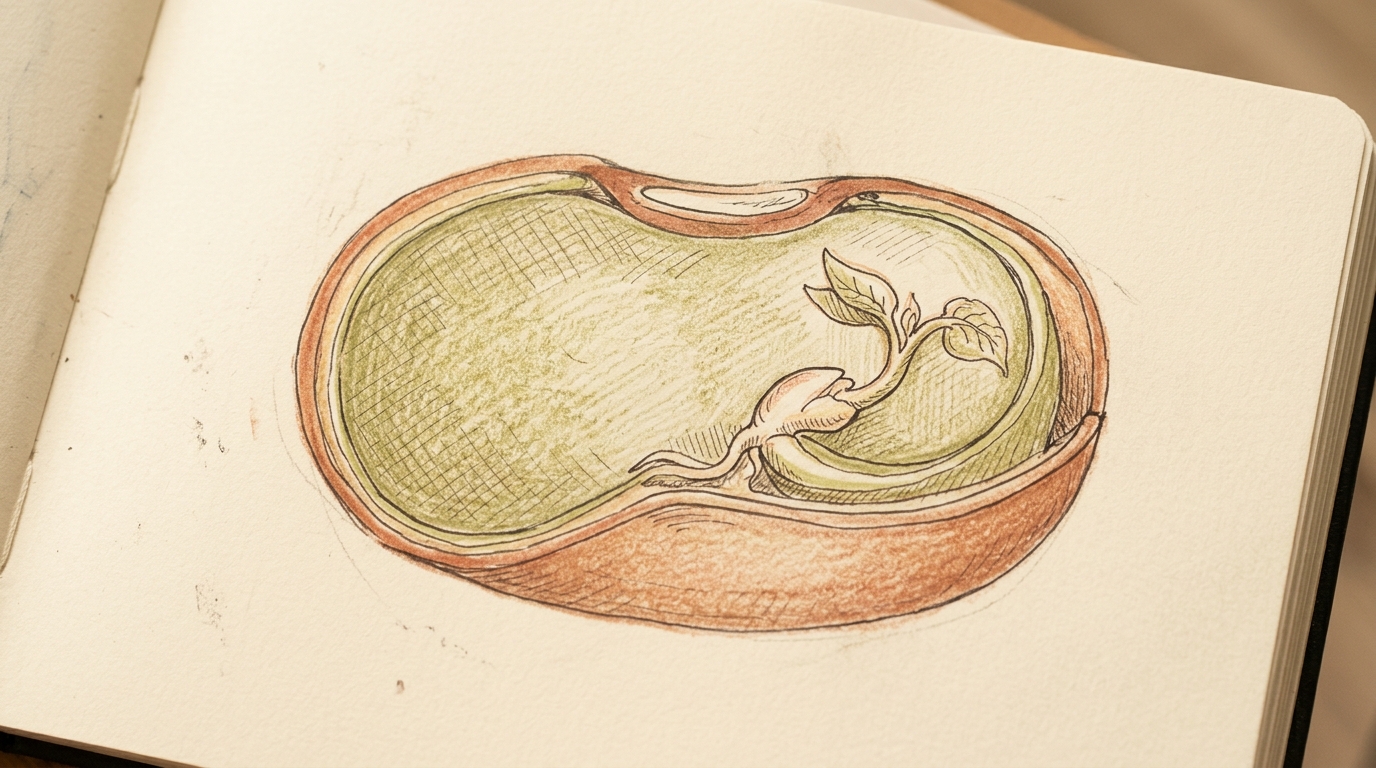
« Gros plan en coupe schématique d'une grosse graine (type haricot) bien lisible : - Flèche 1 pointant la couche extérieure : "Peau protectrice (tégument)" - Flèche 2 pointant le germe miniature : "Bébé plante (embryon)" - Flèche 3 pointant la partie charnue blanche : "Réserve de nourriture" »
Beneath its protective skin, the seed hides a sleeping baby plant and a pantry. It contains:
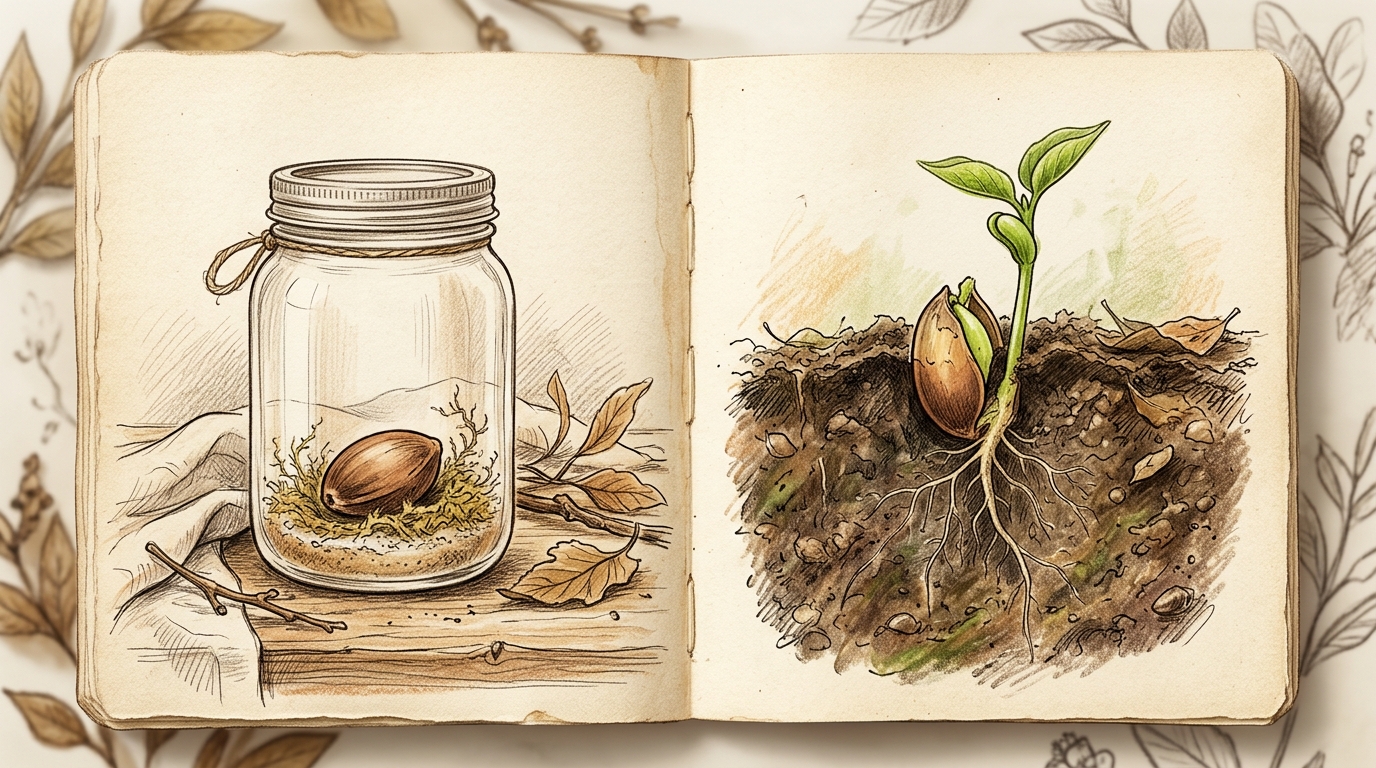
« Dessin en deux temps : - À gauche : graine au sec dans un bocal, dessinée avec un symbole "Zzz" pour montrer qu'elle dort paisiblement. - À droite : graine mise en terre, recevant une goutte d'eau, qui commence à s'ouvrir en laissant sortir un germe vert vif vers le haut et une petite racine blanche vers le bas. »
Tant qu'elle reste au sec, la graine dort tranquillement. Elle respire très lentement. C'est ce qu'on appelle la dormance.
Elle attend le bon moment : de l'eau, de la chaleur et de l'air pour se réveiller et faire sortir sa racine.
Si l'air est trop humide ou trop chaud pendant le stockage, elle s'épuise et meurt.

« Comparaison visuelle de deux sachets ou jarres : - À gauche : dessin d'un oignon avec une étiquette "1 à 2 ans seulement ⚠️". - À droite : dessin d'une courge et d'une tomate avec une étiquette "4 à 8 ans de vie ✅". »
Chaque espèce a sa propre durée de vie :

« Scène sur une table maraîchère : le paysan prépare un test avec sérieux devant lui. Bulle de pensée au-dessus de sa tête montrant une planche de culture avec plein de manques (levée irrégulière barrée d'une croix rouge ❌) à côté d'une belle planche homogène et verte validée d'un crochet vert ✅. »
Avant de gaspiller votre temps, votre compost et votre eau sur toute une planche de culture, vérifiez vos graines !
Un simple test permet de savoir à l'avance si vos semences vont bien lever.
C'est ce qu'on appelle le test de germination.
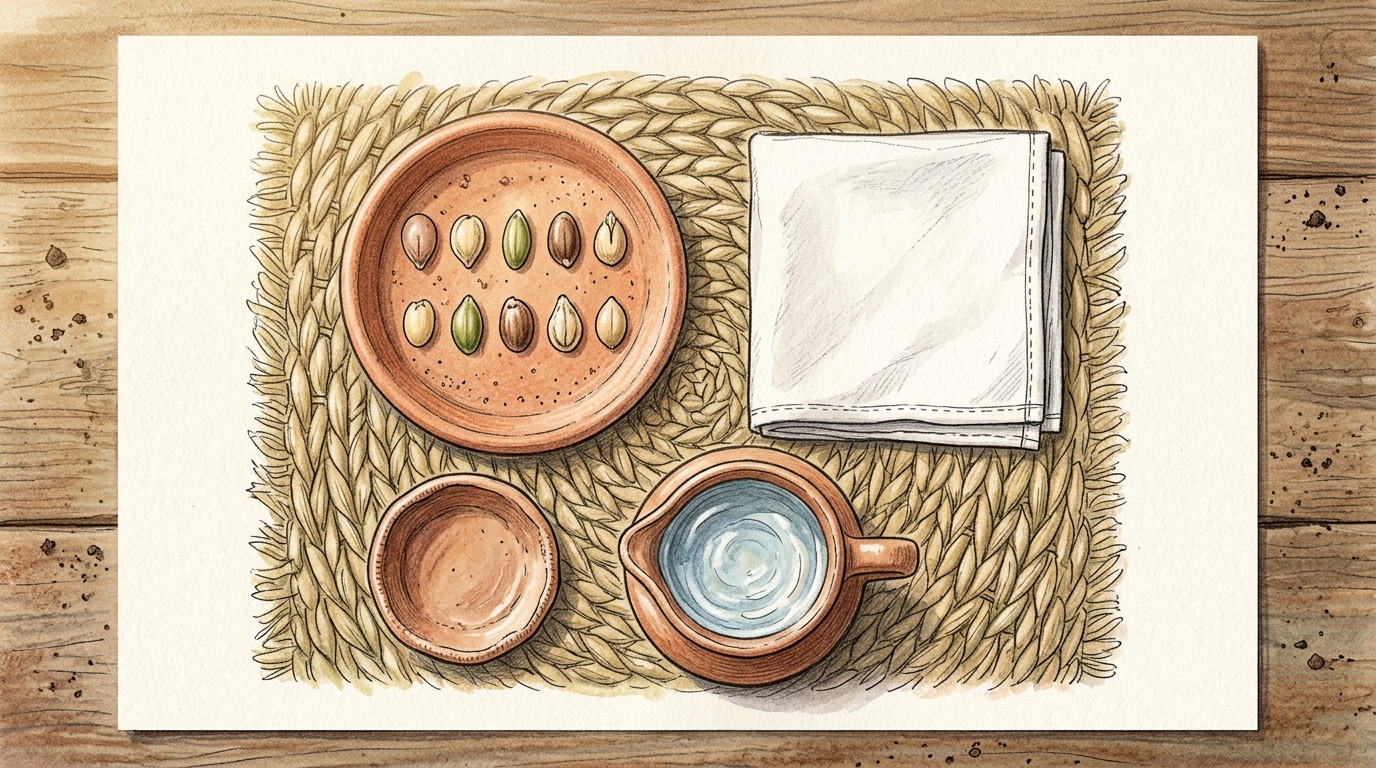
« Vue du dessus des 4 éléments posés proprement sur une natte ou une table en bois : - Une coupelle avec exactement 10 graines alignées - Un tissu en coton plié - Une assiette plate - Une gourde ou petite bouteille d'eau »
To test your seeds, you will need:

« Vue rapprochée des deux mains du maraîcher posant soigneusement les graines bien espacées sur la moitié d'un chiffon blanc humide posé dans une assiette creuse. »

« - Vignette 1 : le tissu replié en deux recouvrant les graines comme une couverture. - Vignette 2 : l'assiette posée sur une étagère à l'ombre dans une pièce aérée de la maison. - Symbole thermomètre indiquant une chaleur modérée (pas en plein soleil). »

« Gros plan sur le tissu ouvert révélant 8 graines avec de jolies racines blanches qui pointent et 2 graines non réveillées. Un compteur en gros caractères : "8 / 10 = 80% ✅ Excellent pour le semis !". »
After 4 to 8 days (depending on the vegetable), open the cloth and count the seeds that have sprouted a small root.

« Dessin percutant avec 3 loupes d'alerte : 1. Goutte d'eau avec moisissure bleue ❌ 2. Soleil brûlant avec flammes de chaleur ❌ 3. Petit insecte/charançon grignotant une graine trouée ❌ »
En climat chaud, trois ennemis détruisent rapidement vos réserves de semences :

« Vue d'une claie de séchage surélevée sous un abri ombragé et ventilé. En encadré zoom : un doigt appuyant fermement son ongle sur une graine de haricot ou de maïs avec la mention "L'ongle ne laisse aucune trace = bien sec ✅". »
NEVER put a still-damp seed into a closed container!
Dry your seeds in the shade, in a very airy place, on a mosquito net, mat, or fabric.
To know if a seed is dry enough: try to scratch it with your fingernail. If it doesn't leave a mark, it's ready!

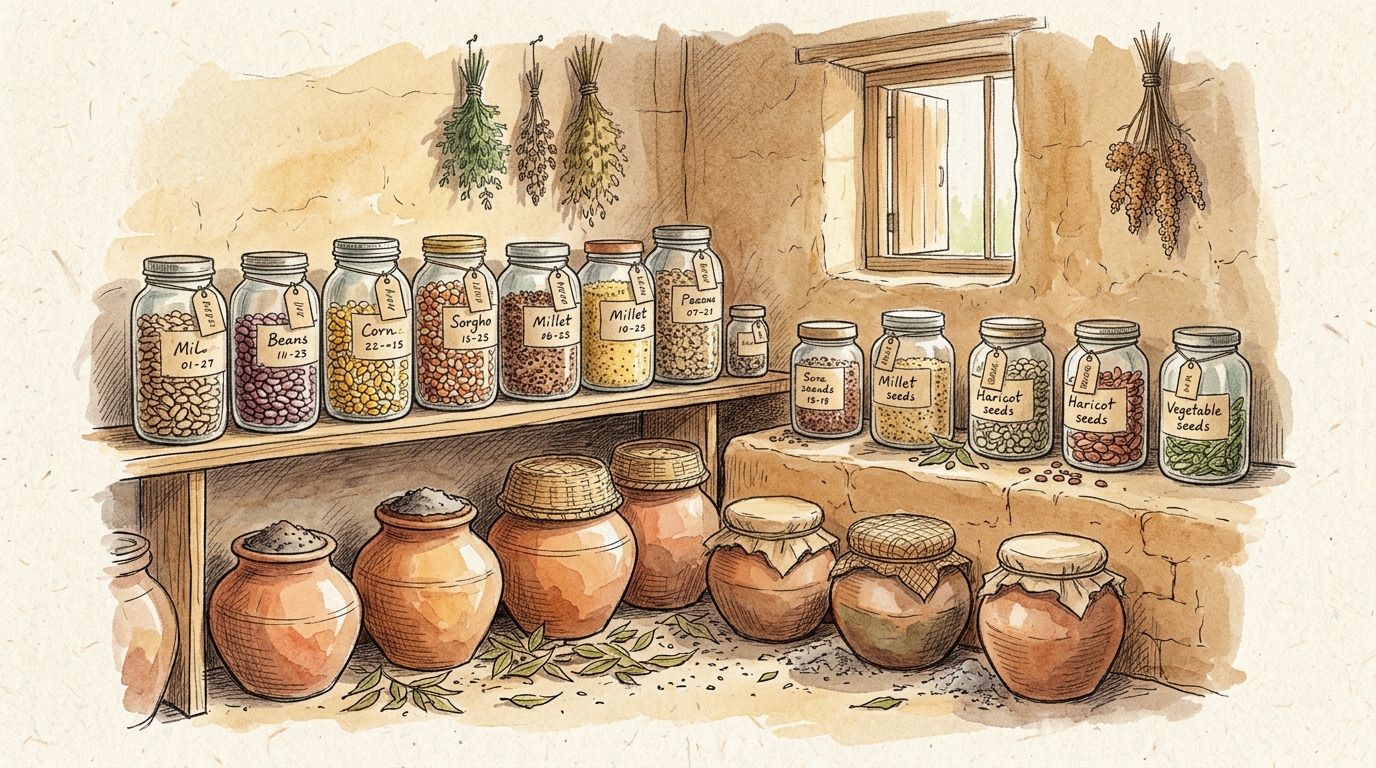
« Rangée de récipients adéquats posés sur une étagère propre : - Bocal en verre avec rondelle caoutchouc - Bouteille plastique propre et opaque bien vissée - Jarre en argile traditionnelle fermée d'un couvercle scellé Annotation : "Air et humidité bloqués à l'extérieur ✅". »
Pour bloquer l'air humide, utilisez des récipients étanches :

« Séquence en 2 étapes : 1. Un tamis fin versant une poudre grise soyeuse (cendre tamisée) dans une calebasse. 2. Main mélangeant les graines et la cendre dans un bocal en verre, formant une pellicule protectrice grise sur les graines. »
To protect your seeds from insects without using dangerous chemicals:
Take well-cooled and very finely sieved wood ash from your kitchen.
Mix 1 glass of ash for every 4 glasses of seeds in your container.
The fine ash dust suffocates and injures small insects.

« - Rameau de feuilles de neem fraîches facilement reconnaissables. - Feuilles sèches émiettées entre les doigts au-dessus d'un lot de graines de légumineuses. - Picto insecte fuyant avec un symbole d'interdiction. »
You can also use neem tree leaves, often called neem.
Their bitter smell repels pests and naturally protects your reserves.

« Intérieur d'une maison en terre ou bâtiment de stockage bien ventilé : - Une étagère en bois solide à mi-hauteur. - Flèche montrant la fraîcheur du bas de la pièce et l'éloignement du toit en tôle chaud. - Croix rouge sur le sol et sur la zone sous le toit ❌. »
Stockez vos récipients dans la pièce la plus fraîche et la plus sombre de la maison :

« Gros plan sur une étiquette blanche collée sur un bocal transparent : - "Tomate locale précoce" - "Parcelle Nord - Mopti" - "Récolte : Mars 2026" Écriture très lisible et claire. »
Une graine sans nom est une graine perdue.
Sur chaque bocal ou sachet, écrivez au marqueur ou glissez un papier avec :

« Dessin cyclique avec 3 flèches formant une boucle : 1. Récolte de belles semences au champ 2. Conservation soignée au village pendant la saison sèche 3. Semis et floraison en saison des pluies Titre de la boucle : "Le cycle perpétuel de la semence vivante". »
La meilleure façon de conserver une semence, c'est de la faire vivre !
Resemez vos variétés locales chaque année ou tous les deux ans.
En vivant au champ, la plante s'habitue au climat qui change, aux fortes chaleurs et aux maladies de votre terroir.
« Le maraîcher brandit fièrement un canari bien scellé et étiqueté au milieu de son jardin luxuriant. Autour de lui flottent 3 coches vertes éclatantes ✅ symbolisant la maîtrise de la graine, du test et de la conservation villageoise. »
Bravo ! Vous savez maintenant protéger le premier capital de votre exploitation :
✅ Vous comprenez la vie cachée à l'intérieur de la graine
✅ Vous savez tester la germination avant tout semis
✅ Vous savez chasser l'humidité et les insectes avec la cendre et le neem
Prochaine étape : apprendre à reconnaître les familles de plantes pour éviter les mauvais croisements !
Vous avez parcouru l'ensemble des 18 parties de « What is a Seed? ». Vous pouvez télécharger ce support au format PDF pour vos interventions au champ ou explorer un autre module.